₹ 999.00
$149.00
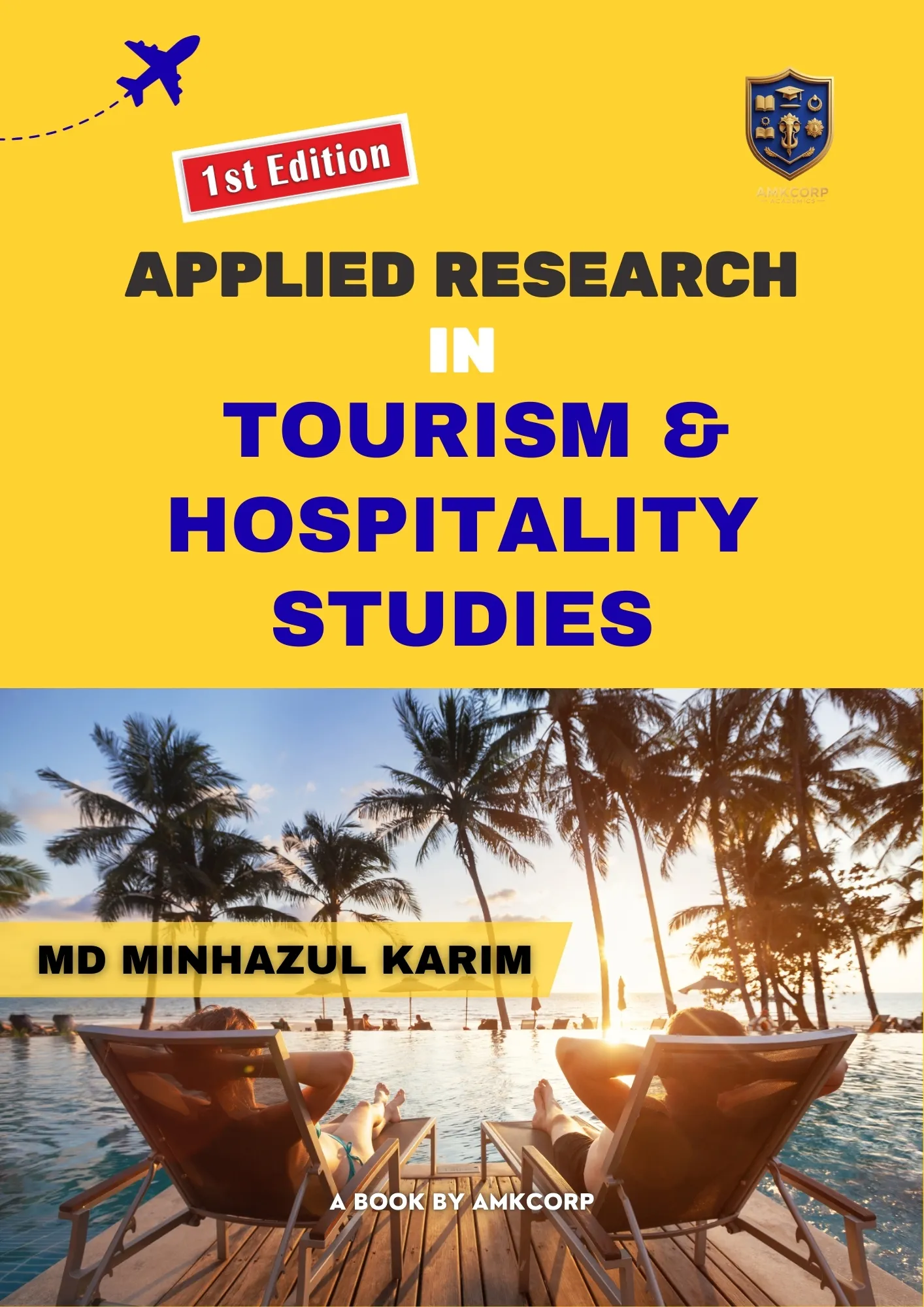
APPLIED RESEARCH IN TOURISM & HOSPITALITY STUDIES
AUTHOR -
MD MINHAZUL KARIM

DOI – 10.61909/AMKEDTB122548
Genre/Subject – Tourism, Hospitality, Applied Research
Book code – AMKEDTB122548 pgs: 270
ISBN(P) – 978-93-6556-209-5
Published – 15/12/2025
ISBN(E) – 978-93-6556-298-9
Published – 15/12/2025
Edition – 1
BUY PRINT

BUY EBOOK
INTRODUCTION VIDEO

AUTHOR

MD MINHAZUL KARIM
Md Minhazul Karim is an academician and hospitality professional currently serving as Assistant Director (Research) and Assistant Professor of Hotel Management at Sangam University, Bhilwara, Rajasthan. His academic journey spans Hospitality Administration, Tourism Studies, and Hotel Management, holding an M.Sc. in Hospitality Administration with a specialization in Sales and Marketing from NCHM-Noida, a B.Sc. in Hospitality & Hotel Administration from IHM Bhubaneswar, and a Master of Tourism and Travel Management from IGNOU, New Delhi.
His professional trajectory reflects a blend of industry exposure and academic engagement. He began his hospitality career with JA The Resort, Dubai, where he worked in Food & Beverage operations, gaining hands-on experience in service excellence, leadership, and customer engagement. Transitioning into academics, he contributed as Faculty at the Alliance College of Hotel Management, Visakhapatnam, before joining Sangam University, where he now plays an active role in institutional research development, curriculum enhancement, and student mentorship.
Karim’s research focuses on hospitality marketing, sustainable hotel operations, entrepreneurial behavior in tourism, digital distribution channels, and customer experience in the service sector. His scholarly contributions include publications in UGC-listed and national journals, such as studies on sustainable hotel practices, social-media marketing benefits in the hotel industry, entrepreneurial intentions among university students, and customer satisfaction in independent hotels. He has also authored multiple chapters in national and international conference proceedings with ISBN publications, contributing to discourses on hospitality entrepreneurship, digital transformation, and government policy impacts on tourism enterprises.
He has undergone extensive professional development through multiple Faculty Development Programs and advanced workshops on qualitative research methods, research ethics, statistical analysis, and technology-enhanced learning. He is UGC-NET qualified in Tourism Administration and Management and holds certifications including WSET Level 2 – Wine. His academic and professional pursuits are driven by a commitment to bridging theoretical frameworks with practical industry applications, fostering skill-based learning, and advancing research in hospitality and tourism education.
His work continues to reflect a dedication to nurturing future hospitality professionals, promoting sustainable industry practices, and contributing to the evolving academic landscape of tourism and hotel management.
ABOUT BOOK / ABSTRACT
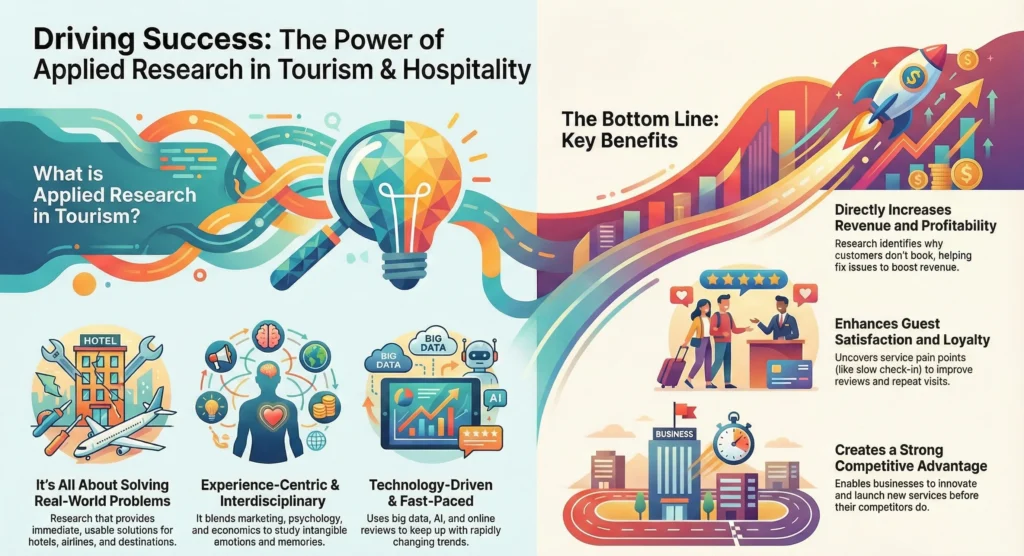
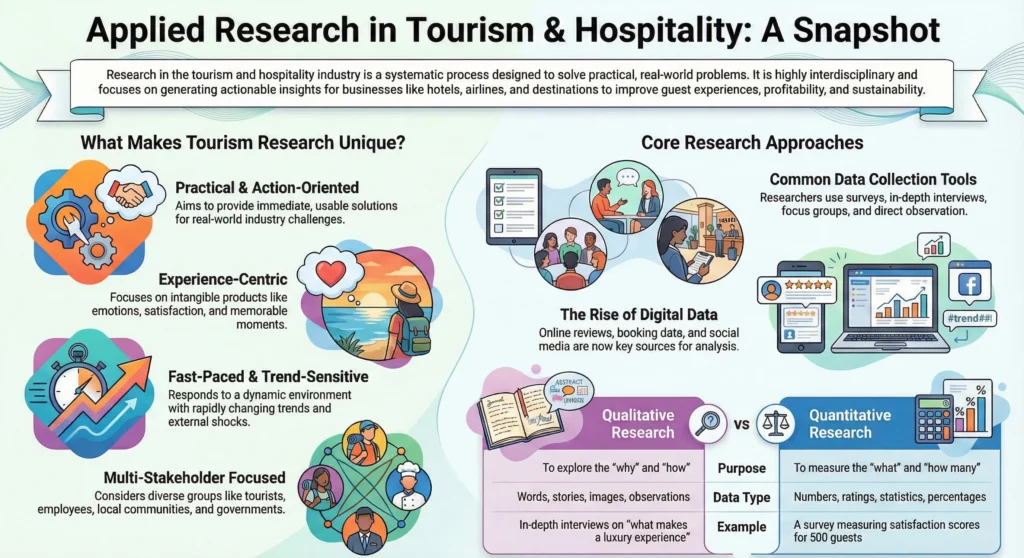
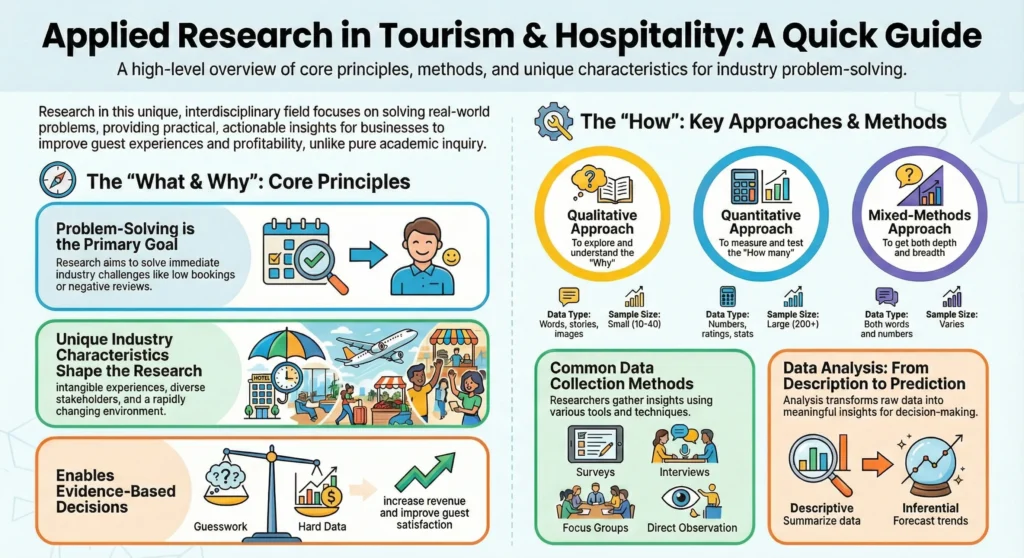
Applied Research in Tourism & Hospitality Studies is a comprehensive and practice-oriented guide designed to equip students, researchers, educators, and industry professionals with the knowledge and skills required to conduct high-quality research in the dynamic tourism and hospitality sector. In an industry driven by consumer behavior, service quality, sustainability, and rapid technological change, informed decision-making depends heavily on the effective application of research methods. This book bridges the gap between academic research and real-world industry challenges, emphasizing applied research that delivers actionable insights and measurable impact.
The book begins by establishing a strong foundation in research principles, helping readers understand the nature, scope, and ethical dimensions of applied research within tourism and hospitality contexts. It guides readers through the entire research process—from identifying relevant research problems and developing conceptual frameworks to selecting appropriate methodologies and ensuring validity and reliability. Both qualitative and quantitative approaches are presented in a balanced manner, enabling readers to choose methods that best suit their research objectives and operational constraints.
Special attention is given to data collection and analysis techniques commonly used in tourism and hospitality studies. Traditional tools such as surveys, interviews, and observations are discussed alongside modern digital data sources, online analytics, and software-based analysis tools. By integrating statistical methods with qualitative analysis and data visualization, the book empowers readers to transform raw data into meaningful insights that can inform strategic planning, policy formulation, and operational improvements.
Consumer behavior research forms a core component of the book, reflecting its central importance in tourism and hospitality success. Topics such as tourist motivation, customer experience, decision-making models, and trend forecasting are explored using applied research perspectives. The book also addresses destination management, hotel operations, service quality, revenue management, and supply chain efficiency, demonstrating how research supports competitiveness and performance enhancement.
Recognizing the growing emphasis on sustainability and innovation, dedicated chapters examine environmental and socio-cultural impacts, responsible tourism practices, community development, and policy evaluation. Emerging technologies—including AI, IoT, big data, and smart tourism systems—are explored as both research subjects and research tools, preparing readers to engage with future-oriented studies. The book concludes with practical guidance on research writing, publication, and real-world case studies, offering valuable insights into best practices and lessons learned. Overall, Applied Research in Tourism & Hospitality Studies serves as a practical roadmap for conducting rigorous, ethical, and impactful research that supports sustainable growth and innovation in the tourism and hospitality industry.
BOOK MAP
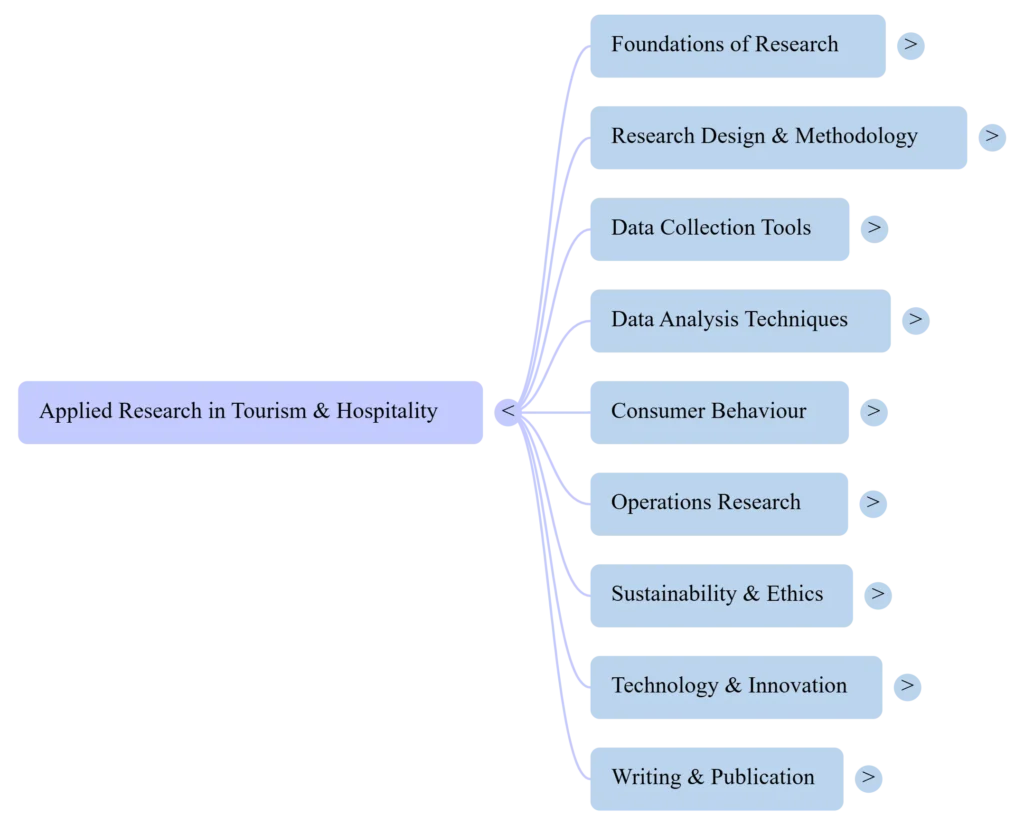
TOC / BOOK MAP (Extd.)
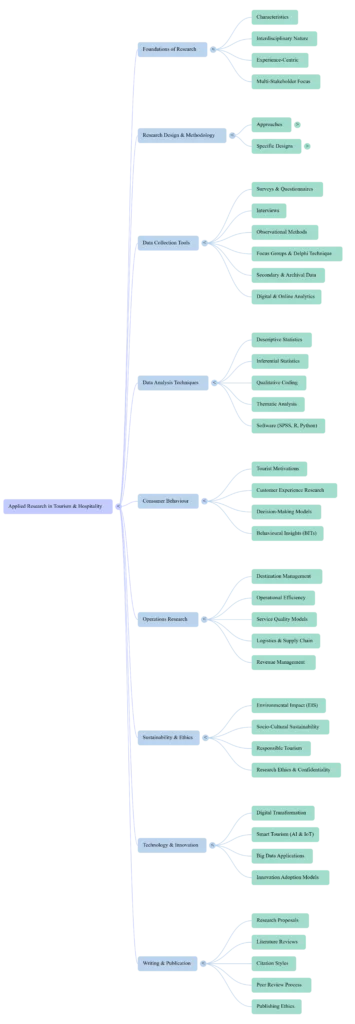
CHAPTERS
Chapter 1: Foundations of Applied Research
Introduces the fundamentals of research in tourism and hospitality, focusing on problem identification, theoretical frameworks, and ethical considerations.
Chapter 2: Research Design and Methodology
Explores qualitative, quantitative, and mixed research designs, sampling techniques, and methods to ensure validity and reliability.
Chapter 3: Data Collection Methods in Tourism & Hospitality
Covers primary and secondary data collection tools, including surveys, interviews, observations, focus groups, and digital analytics.
Chapter 4: Data Analysis Techniques
Presents statistical and qualitative analysis methods, use of software tools, data visualization, and effective reporting of research findings.
Chapter 5: Consumer Behaviour in Tourism & Hospitality
Examines tourist motivations, customer experience, decision-making processes, and trend prediction using behavioral data and analytics.
Chapter 6: Destination and Hotel Operations Research
Focuses on destination management, operational efficiency, service quality measurement, logistics, and revenue management research.
Chapter 7: Sustainability & Responsible Tourism Research
Addresses environmental, social, and cultural sustainability, community participation, and evaluation of responsible tourism policies.
Chapter 8: Technology and Innovation Research
Explores digital transformation, smart tourism, AI, IoT, big data applications, and innovation adoption in tourism research.
Chapter 9: Applied Research Writing and Publication
Provides guidance on academic writing, citation standards, literature reviews, peer review processes, and proposal development.
Chapter 10: Case Studies and Practical Applications
Presents real-world case studies across destinations, hospitality management, crisis response, and market trends, highlighting practical research implications.