₹ 2499.00
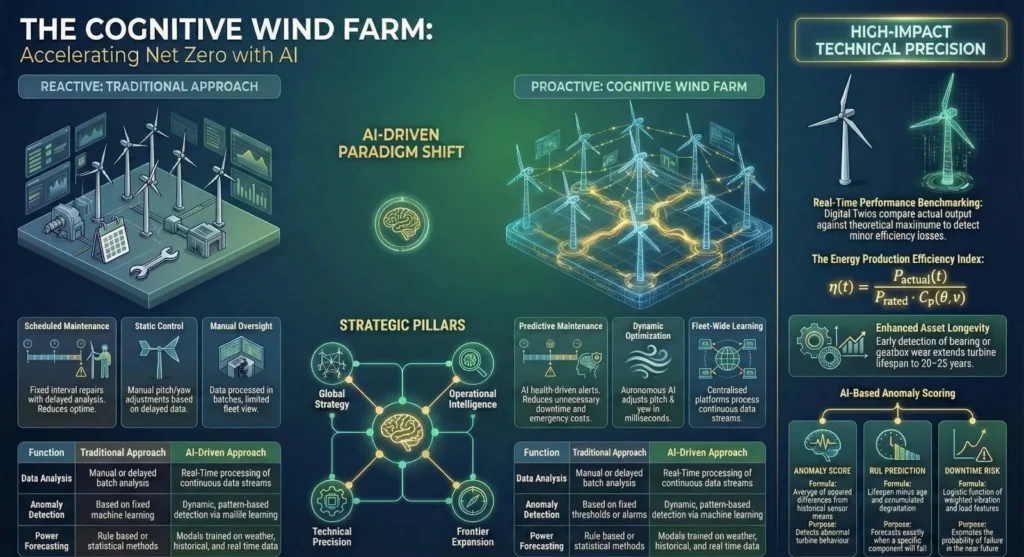
NET 0
Part 2
ARTIFICIAL INTELLIGENCE IN WIND ENERGY SYSTEMS
AUTHOR(S) -
Dr. ANURAG GOUR, Dr. PAULAMI SAHU, TARUN KUMAR AHIRWAR, AMIT KUSHWAHA

DOI – 10.61909/AMKEDTB022652
Genre/Subject – Wind Energy, Energy Systems, AI
Book code – AMKEDTB022652 pgs:
ISBN(P) – 978-93-6556-700-7
ISBN(E) – 978-93-6556-144-9
Published – 16/02/2026
BUY PRINT

BUY EBOOK
INTRODUCTION VIDEO

AUTHOR(S)

Dr. ANURAG GOUR
Dr. Anurag Gour is an accomplished academician, researcher, and innovator in the field of Renewable Energy and Sustainable Technologies. He serves as an Assistant Professor at the School of Energy & Environment Management, UniversityTeaching Department, Rajiv Gandhi Proudyogiki Vishwavidyalaya (State Technological University of Madhya Pradesh), Bhopal, India.
With over 21 years of rich academic and research experience, Dr. Gour has made notable contributions to Wind Energy Optimization, Solar Energy Systems, Hybrid Renewable Technologies, Energy Efficiency, and Climate Change Mitigation. He has successfully executed and contributed to several nationallyfunded research projects supported byAICTE, DST, MNRE, and MPCST, and holds multiple 12 granted patents, including pioneering work on Dual-Rotor Wind Turbine Technology, Wind Turbine design and Biomass Gasification Systems.
A prolific author, Dr.Gour has published extensively in reputed international journals and conferences, and has played a key role in developing Government Technical Reports, Energy Audits, and Training Manuals. His work bridges academic research with real-world applications,aimingtoacceleratethetransitiontowardsclean,resilient,andsustainableenergy systems.

Dr. PAULAMI SAHU
Dr. Paulami Sahu is an award-winning geologist and environmental scientist with over a decade of teaching and research experience. A Gold Medalist from the University of Calcutta, she currently serves as Assistant Professor at the School of Environment and Sustainable Development, Central University of Gujarat. With 86 publications, 10 design patents, and numerous accolades—including including the Order of Merit (2002) and Gold medal (2012) from University of Calcutta for securing First Class First position in M.Sc. in Geology; Best technical paper in 1st National Essay Competition (Category-II, Technical Papers) under Jal-Kranti Abhiyan 2015-16 organized by Central Ground Water Board (CGWB), Govt. of India (2016) Gangadas Sharda Scholarship (2001); Prof. N.N. Chatterjee Memorial Book Grant (2001) from Presidency College Kolkata, National Scholarship (1995) etc.Dr. Sahu is a leading voice in sustainable development. Her work spans national and international research projects funded by CSIR (GoI), DST (GoI), UGC (GoI) etc., and she has mentored dozens of scholars across Ph.D., M.Phil., and M.Sc. levels. This book reflects her passion for science, innovation, and environmental stewardship.

TARUN KUMAR AHIRWAR
Mr. Tarun Kumar Ahirwar is an Energy Scientist and PhD Research Scholar at the Sustainable Energy Laboratory, School of Environment and Sustainable Development, Central University of Gujarat. His doctoral research, Sustainable Wind Energy System Development for Low-Wind Speed Regions and its Potential Application for Green Hydrogen, CO₂ Abatement, and Green Buildings, focuses on optimizing wind-energy systems to enhance performance in low-wind regions and enable sustainable hydrogen production and carbon mitigation.
Holding 12 Intellectual Property Rights in sustainable energy—including utility and design patents for low wind speed turbine systems and velocity-regulation devices—he represents a new generation of innovators bridging laboratory research with practical application. His public-engagement footprint includes 25+ articles on energy and environmental conservation in national and regional media. He was conferred “Environmentalist of the Year” (2011) at the 4th International Congress of Environmental Research (SVNIT, Surat).
Within academia, he has served as Member, Academic Council (2018) and Convener, Students’ Council (2016–2018) at Central University of Gujarat, where he actively contributed to institutional governance, academic policy and sustainability initiatives. Alongside research, he works as a Renewable Energy Consultant, specializing in micro-wind, hybrid wind–solar systems and green-hydrogen infrastructure for campuses and communities.
Affiliation: Sustainable Energy Laboratory, SESD, Central University of Gujarat
Focus Areas: Wind-energy concentrators (Frusta-Flow), green hydrogen, low-wind optimization, CO₂ mitigation, sustainable campuses

AMIT KUSHWAHA
With an impressive track record spanning over 15 years, Mr. Amit Kumar Kushwaha stands as a paragon of experience and innovation. Armed with a Master’s in Thermal Engineering and a Bachelor’s in Automobile Engineering, his expertise embodies a perfect synergy of technical brilliance and creative thinking. As the driving force behind his company, Amit’s dynamic leadership propels his team towards excellence. Beyond the boardroom, his fervent commitment to academia and research shines brightly. Active participation in scholarly pursuits reflects his dedication to ongoing learning and intellectual growth.
ABOUT BOOK / ABSTRACT
NET 0 – Part 2: Artificial Intelligence in Wind Energy Systems explores the transformative role of Artificial Intelligence (AI) in advancing wind energy technologies. As the global energy transition accelerates toward carbon neutrality, the integration of AI with renewable energy systems has become essential for enhancing efficiency, reliability, and sustainability.
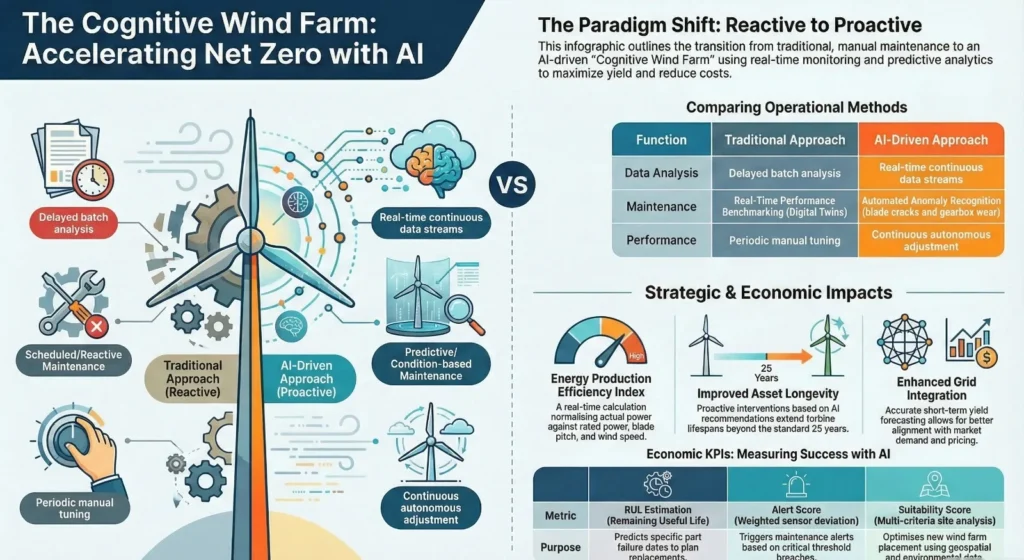
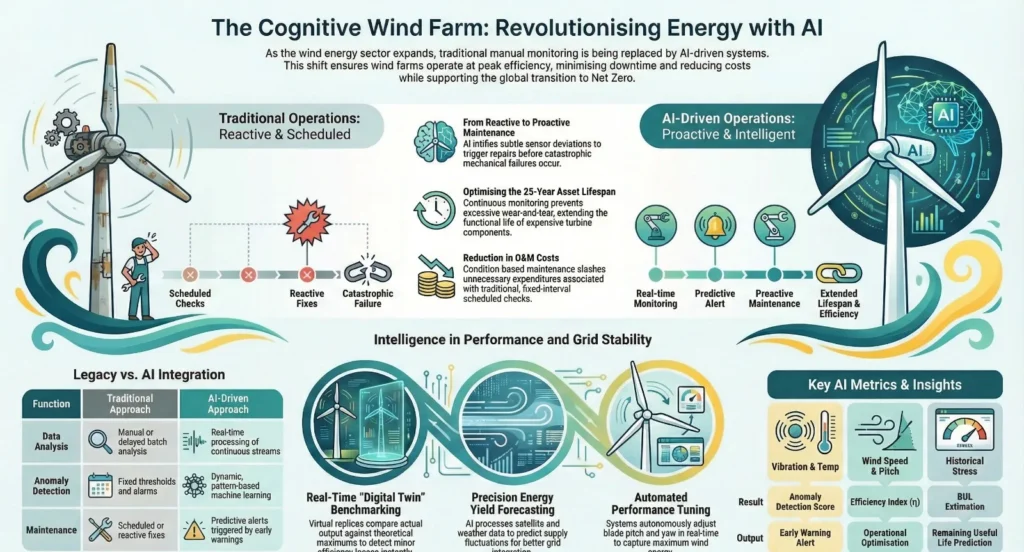
This volume focuses specifically on the application of AI across modern wind energy systems — from performance monitoring and predictive maintenance to offshore optimization, market forecasting, policy support, and ethical considerations. The book presents advanced AI-driven methodologies for turbine control, energy yield forecasting, grid integration, load management, and downtime prevention.
Through practical models, case studies, and real-world implementations, the authors demonstrate how machine learning, deep learning, and intelligent automation are reshaping wind farm operations. Special emphasis is given to:
AI in real-time performance monitoring
Predictive maintenance and anomaly detection
Energy yield forecasting and market analytics
Offshore wind optimization
AI-based turbine control systems
Economic benefits and ROI analysis
Ethical and environmental implications of AI adoption
Challenges and future prospects of AI integration
Designed for researchers, engineers, policymakers, industry professionals, and advanced students, this book bridges the gap between theoretical AI concepts and practical wind energy applications.
As part of the NET 0 series, this edition contributes to the global vision of achieving sustainable and intelligent renewable energy systems. By combining innovation with environmental responsibility, the book provides a roadmap for building smarter wind farms and accelerating the journey toward a carbon-neutral future.
BOOK MAP
CHAPTERS
PART 1
Chapter 1: Introduction to Wind Energy and AI
1.1 Overview of Wind Energy
1.2 The Role of AI in Renewable Energy
1.3 How AI Integrates with Wind Energy Systems
1.4 History and Evolution of Wind Energy Technologies
1.5 The Need for Innovation in Wind Power
1.6 Market Growth and Trends in Wind Energy
1.7 Key Benefits of AI in Wind Power Systems
Chapter 2: The Fundamentals of Wind Energy Systems
2.1 Components of a Wind Turbine
2.2 Types of Wind Turbines
2.3 Wind Energy Conversion Process
2.4 Energy Production and Efficiency Metrics
2.5 Environmental Impact of Wind Energy
2.6 Site Selection for Wind Farms
2.7 Technological Challenges in Wind Energy Systems
2.8 Performance Metrics of Wind Energy Systems
Chapter 3: AI Techniques for Wind Energy Optimization
3.1 Machine Learning Algorithms in Wind Energy
3.2 Predictive Analytics for Wind Turbine Performance
3.3 AI for Predictive Maintenance of Turbines
3.4 Optimization of Turbine Placement Using AI
3.5 Wind Resource Assessment with AI
3.6 AI in Load Forecasting and Energy Management
3.7 AI-Driven Control Systems for Wind Farms
3.8 Real-time Data Processing for Wind Energy Systems
Chapter 4: AI-Powered Predictive Maintenance in Wind Turbines
4.1 Introduction to Predictive Maintenance
4.2 Vibration Monitoring and AI Algorithms
4.3 Using AI for Fault Detection and Diagnosis
4.4 AI for Wear and Tear Analysis in Turbines
4.5 Remote Monitoring of Turbine Health with AI
4.6 Maintenance Scheduling Using AI Predictions
Chapter 5: Data Acquisition and Management for Wind Energy
5.1 Importance of Data in Wind Energy Systems
5.2 Sensor Networks for Wind Farms
5.3 Real-time Data Collection and Monitoring
5.4 Data Storage and Cloud Solutions
5.5 Big Data Analytics in Wind Energy
5.6 Managing Large Datasets in Wind Farms
5.7 Data Security and Privacy in Wind Energy
5.8 Data Integration and Interoperability
Chapter 6: AI for Wind Forecasting and Power Generation Prediction
6.1 Importance of Accurate Wind Forecasting
6.2 AI Models for Wind Speed and Direction Forecasting
6.3 Time-Series Data Analysis for Wind Prediction
6.4 Deep Learning in Wind Forecasting
6.5 Enhancing Power Generation Predictions with AI
6.6 Case Studies of AI in Wind Power Forecasting
6.7 Limitations of AI in Wind Prediction
6.8 Future Trends in Wind Forecasting with AI
Chapter 7: Optimization of Wind Farm Layouts with AI
7.1 Importance of Wind Farm Layouts
7.2 AI for Site Suitability Analysis
7.3 Optimization Algorithms for Turbine Spacing
7.4 Minimizing Wake Effects Using AI
7.5 AI for Turbine Positioning in Complex Terrain
7.6 Computational Models for Wind Farm Layout
7.7 Case Study: AI in Wind Farm Layout Optimization
Chapter 8: AI in Wind Turbine Design and Innovation
8.1 Role of AI in Turbine Design
8.2 Generative Design for Turbine Components
8.3 AI in Blade Design and Material Selection
8.4 Aerodynamics and Performance Enhancements with AI
8.5 Smart Sensors for Monitoring Turbine Design Performance
8.6 Innovations in Turbine Control Systems with AI
8.7 AI in Reducing Turbine Maintenance Costs
8.8 Future Trends in Turbine Design Using AI
Chapter 9: AI for Energy Storage Solutions in Wind Energy
9.1 Importance of Energy Storage for Wind Energy
9.2 AI in Battery Storage Management
9.3 Smart Grid Integration with Wind Power
9.4 Load Forecasting and Energy Distribution
9.5 AI for Energy Storage Optimization
9.6 Predicting Storage System Performance with AI
9.7 Grid Stability and Demand-Supply Management
Chapter 10: AI for Wind Energy Integration with Smart Grids
10.1 Basics of Smart Grids and Wind Energy Integration
10.2 AI for Real-time Monitoring and Control
10.3 Grid Load Balancing with AI
10.4 AI in Demand-Response Systems for Wind Energy
10.5 Virtual Power Plants and AI
10.6 AI for Energy Trading and Market Forecasting
10.7 Challenges in Smart Grid Integration with Wind Energy
10.8 Future Developments in AI for Grid Integration
PART 2
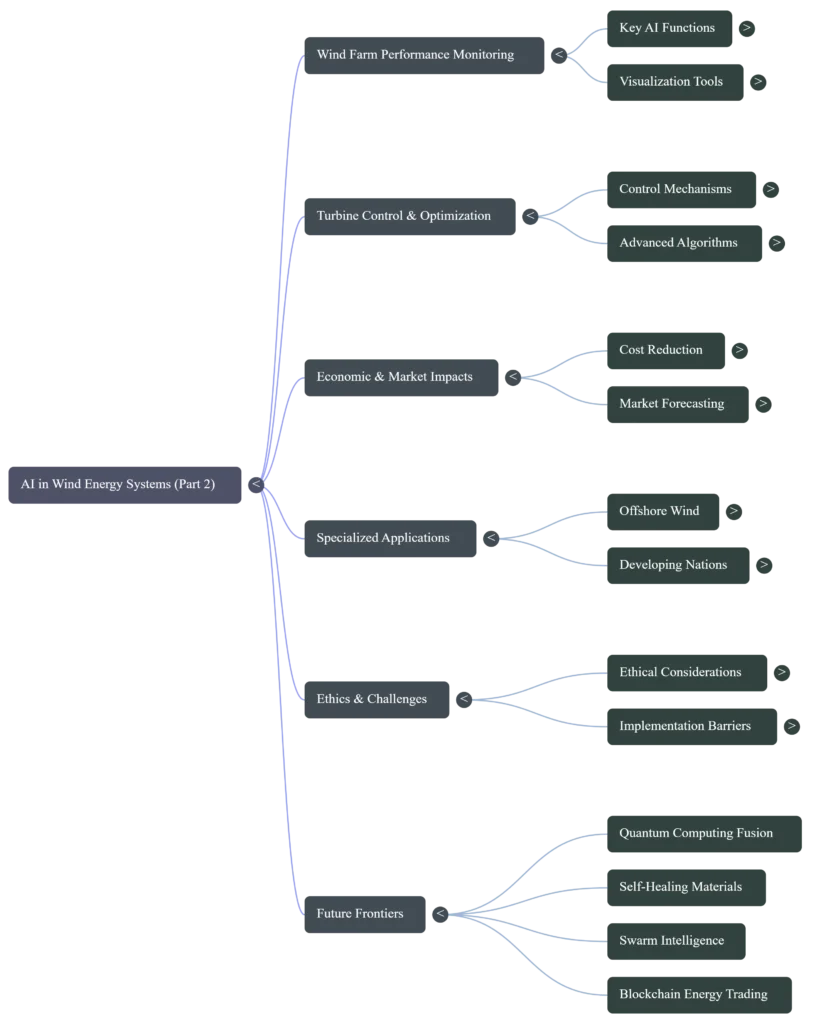
Chapter 11: AI in Wind Farm Performance Monitoring
11.1 Importance of Performance Monitoring in Wind Farms
11.2 AI for Real-time Performance Analysis
11.3 Predicting and Preventing Downtime with AI
11.4 Energy Yield Forecasting Using AI
11.5 AI Models for Load and Turbine Performance
11.6 Anomaly Detection in Wind Farm Operations
11.7 Visualization Tools for Performance Monitoring
Chapter 12: AI for Wind Energy Policy and Decision Support
12.1 Role of AI in Policy Making for Wind Energy
12.2 Decision Support Systems (DSS) for Wind Energy Planning
12.3 AI in Regulatory Compliance and Standards
12.4 Impact of AI on Wind Energy Market Dynamics
12.5 Optimizing Policy with AI Insights
12.6 AI for Risk Management in Wind Energy
12.7 Environmental and Economic Considerations
12.8 Future of AI in Wind Energy Policy Making
Chapter 13: AI in Wind Energy for Developing Countries
13.1 Wind Energy Potential in Developing Regions
13.2 Cost-effective Wind Power Solutions Using AI
13.3 AI for Small-scale Wind Turbine Design
13.4 Community-based Wind Energy Projects
13.5 Energy Access and AI Solutions for Rural Areas
13.6 Challenges of Implementing AI in Developing Countries
13.7 Collaborative Models for Wind Energy Growth
13.8 Future Opportunities in Wind Energy for Emerging Markets
Chapter 14: AI in Wind Energy for Offshore Applications
14.1 Offshore Wind Energy: Opportunities and Challenges
14.2 AI in Offshore Wind Farm Site Selection
14.3 Optimizing Offshore Turbine Operation with AI
14.4 AI in Underwater Energy Storage and Distribution
14.5 AI-Driven Maintenance for Offshore Wind Farms
14.6 Remote Monitoring for Offshore Wind Farms
Chapter 15: AI for Wind Turbine Control Systems
15.1 Control Systems in Wind Turbines
15.2 AI for Adaptive Turbine Control
15.3 Advanced Control Algorithms in Turbines
15.4 Energy Efficiency Through AI-Based Control
15.5 AI in Pitch Control and Yaw Mechanisms
15.6 Real-Time Control Systems Using AI
15.7 Case Studies of AI Control Systems in Wind Turbines
15.8 Future Developments in AI for Turbine Control
Chapter 16: AI-Driven Wind Energy Market Forecasting
16.1 Energy Market Dynamics and Wind Energy
16.2 AI for Demand and Supply Forecasting
16.3 Predicting Wind Power Generation Trends
16.4 Energy Price Prediction Using AI
16.5 AI for Carbon Trading and Emission Reduction
16.6 AI in Policy and Regulation Forecasting
16.7 AI-Based Risk Management in Wind Energy Markets
16.8 Future of AI in Wind Energy Market Analysis
Chapter 17: Economic Benefits of AI in Wind Energy
17.1 Cost Reduction Through AI Applications
17.2 AI for Optimizing Wind Energy Production Costs
17.3 AI in Energy Storage and Cost Efficiency
17.4 Investment and Return on Investment (ROI) for AI Solutions
17.5 Reducing Operational Costs with AI
17.6 Financial Models for Wind Energy with AI
17.7 Case Studies of Economic Benefits of AI
17.8 Future Economic Impacts of AI in Wind Energy
Chapter 18: Ethical and Environmental Impacts of AI in Wind Energy
18.1 AI Ethics in Renewable Energy Systems
18.2 Minimizing Environmental Footprint with AI
18.3 Social and Ethical Considerations in Wind Energy Projects
18.4 Environmental Regulations and AI Compliance
18.5 AI for Sustainable Resource Management
18.6 Impact of AI on Wildlife and Ecosystems
18.7 Balancing AI Benefits with Ethical Concerns
18.8 Future Ethical Challenges in AI for Wind Energy
Chapter 19: Challenges in AI Adoption for Wind Energy
19.1 Technical Challenges in AI Integration
19.2 Data Availability and Quality Issues
19.3 Computational and Infrastructure Barriers
19.4 Regulatory Hurdles in AI Implementation
19.5 High Costs and Investment Needs
19.6 Stakeholder Resistance to AI Solutions
19.7 Overcoming AI Adoption Challenges
Chapter 20: Future of AI in Wind Energy Systems
20.1 Emerging AI Technologies for Wind Energy
20.2 The Role of AI in the Future of Renewable Energy
20.3 AI and Wind Energy Integration with Other Renewables
20.4 Quantum Computing and AI for Wind Energy
20.5 AI-Driven Decentralized Energy Systems
20.6 Innovations on the Horizon: AI in Turbine Technology
20.7 Scaling AI for Global Wind Energy Projects
20.8 Vision for a Sustainable Future with AI-Enhanced Wind Energy
Chapter 21: Case Studies in AI Applications for Wind Energy
21.1 Real-world AI Applications in Wind Farms
21.2 AI in Predictive Maintenance: Industry Examples
21.3 Successful AI Integration for Offshore Wind Farms
21.4 AI for Wind Energy in Developing Nations
21.5 Scaling AI Innovations in Global Wind Energy Markets
21.6 Future Prospects Based on Case Study Insights
Chapter 22: Conclusion and Vision for the Future
22.1 Key Takeaways from AI in Wind Energy
22.2 The Path Forward for AI Integration in Wind Power
22.3 Cross-industry Applications of AI in Energy
22.4 Collaboration Opportunities for AI and Wind Energy
22.5 Global Adoption of AI in Wind Energy Systems
22.6 Recommendations for Policymakers and Industry Leaders
22.7 The Role of Education and Research in Advancing AI
22.8 The Future Vision of Clean Power Solutions with AI