₹ 1499.00
$150.00
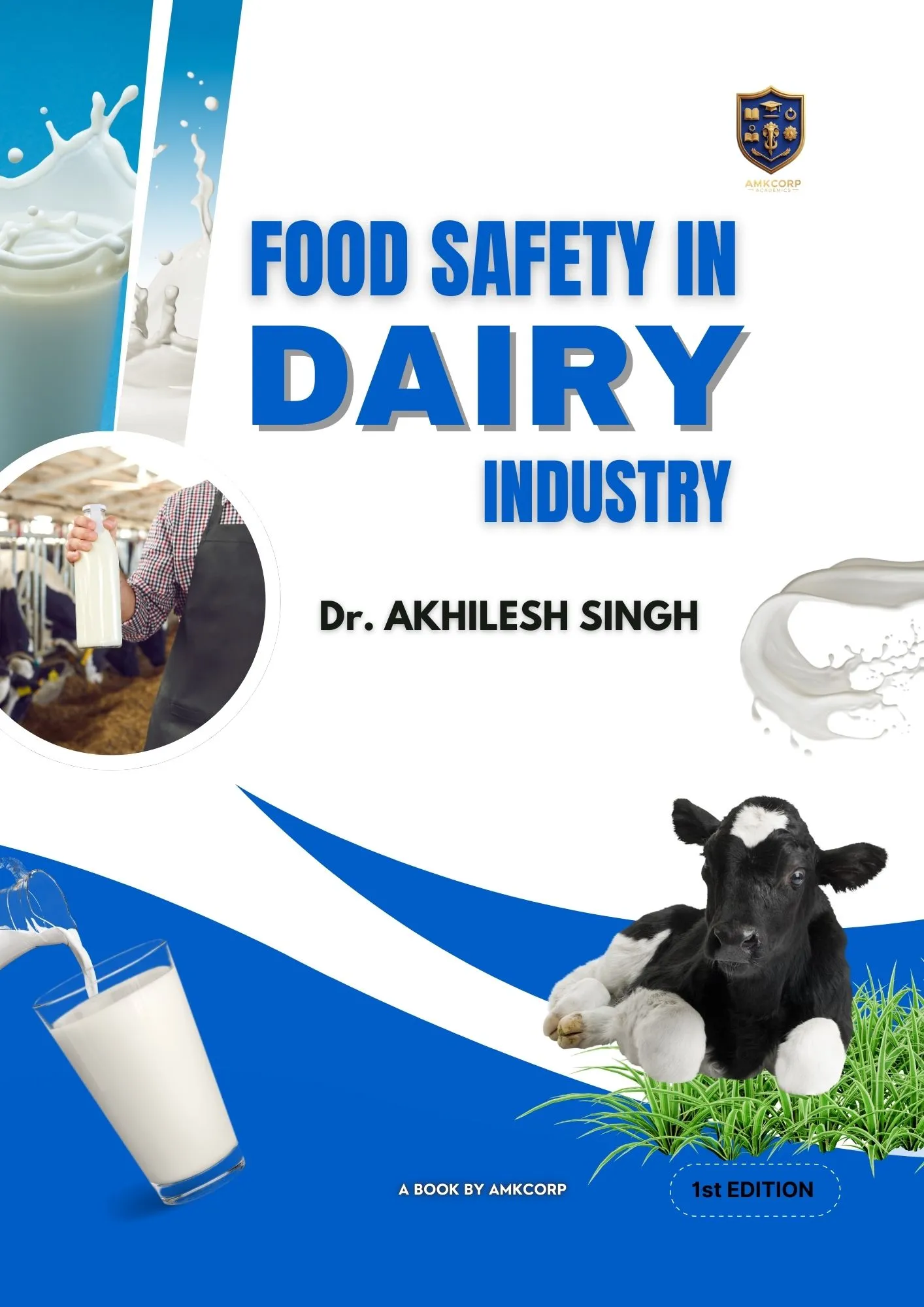
FOOD SAFETY IN DAIRY INDUSTRY
AUTHOR(S) -
Dr. AKHILESH SINGH

DOI – 10.61909/AMKEDTB022654
Genre/Subject – Food Science, Dairy Industry, Foiod Safety
Book code – AMKEDTB022654 pgs: 202
ISBN(P) – 978-93-6556-187-6
ISBN(E) – 978-93-6556-946-9
Published – 28/02/2026
Edition – 1
BUY PRINT

BUY EBOOK
INTRODUCTION VIDEO

AUTHORS

Dr. AKHILESH SINGH
Dr. Akhilesh Singh is a seasoned food industry professional with over 18 years of international experience in dairy and beverage manufacturing across the Middle East and Africa. He currently serves as Head of Quality and R&D Innovation at Dairy Gold Ltd., Zambia, where he leads initiatives in food safety, quality assurance, new product development, and operational excellence.
Dr. Akhilesh holds an MBA in Operations from Assam Down Town University, India, a Master’s degree in Microbiology, and a Bachelor’s degree in Biological Sciences from CSJM University, Kanpur. His strong academic background, combined with extensive industry exposure, has enabled him to develop deep expertise in food safety management systems, plant operations, supply chain quality management, and process optimization.
He is an IRCA/CQI Lead Auditor for FSSC 22000, a Certified Six Sigma Executive Master Black Belt, and a trained professional in ISO 22000, HACCP, TACCP, VACCP, and Lean Manufacturing practices such as Kaizen and 5S. Throughout his career, he has played a pivotal role in implementing global food safety standards, establishing advanced quality control laboratories, and developing innovative dairy and beverage products.
At Dairy Gold Ltd., Dr. Akhilesh has led major operational and technological advancements, including the installation of a 150,000 liters per day raw milk processing facility and aseptic filling lines, while also contributing to the development of a Greenfield aseptic dairy plant targeting a production capacity of 250,000 liters per day. His initiatives have significantly improved manufacturing efficiency, reduced waste, and strengthened supply chain quality systems.
Earlier in his career, he held key roles in leading food and beverage organizations in Saudi Arabia and India, where he successfully managed quality assurance systems, achieved ISO 22000 certification, and led product innovation projects in fruit juices, nectars, flavored milk, and other beverages.
Dr. Akhilesh is also recognized for his leadership in building high-performing teams and promoting a strong food safety culture. He has mentored and trained large cross-functional teams, helping organizations scale operations while maintaining the highest quality standards.
Through this book, he aims to share his practical insights and industry experience to support professionals, students, and organizations striving for excellence in food safety, quality management, and dairy processing operations.
ABOUT BOOK / ABSTRACT
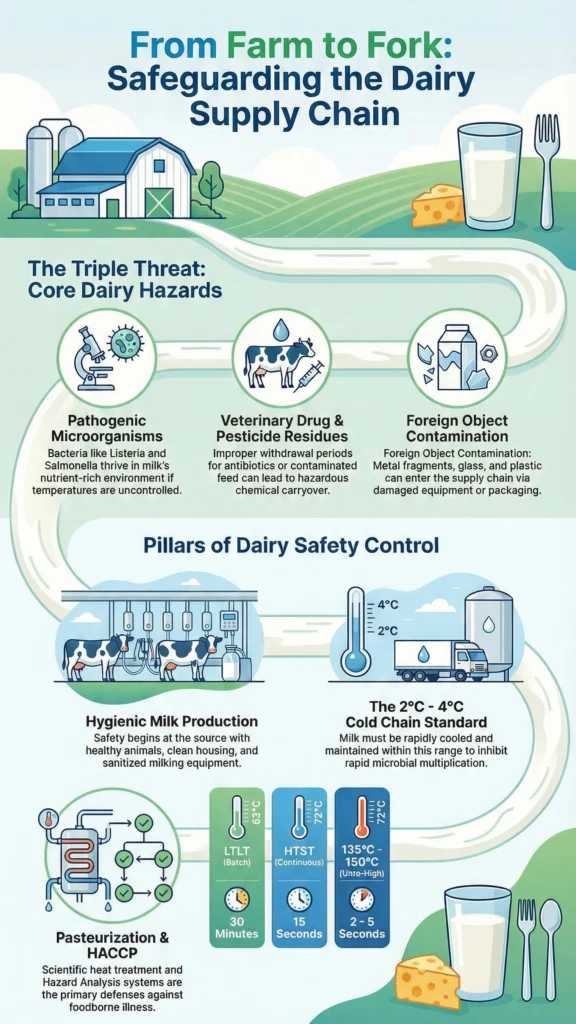
Food Safety in Dairy Industry is a comprehensive and practical guide that explores the scientific, technical, and regulatory aspects of ensuring safety across the entire dairy supply chain. Milk and dairy products are among the most consumed food items worldwide, forming a critical part of daily nutrition for people of all ages. However, due to their rich nutrient composition, dairy products are also highly susceptible to microbial growth, chemical contamination, and physical hazards. This book addresses these challenges by presenting a structured understanding of food safety principles specifically tailored to the dairy sector.
Beginning with the foundational concepts of food safety, the book explains its significance in protecting public health and maintaining consumer confidence. It discusses how improper handling, contamination, or inadequate processing can lead to foodborne illnesses and economic losses. Readers are introduced to the composition of milk and the various safety concerns associated with it, including biological, chemical, and physical hazards. The scientific explanation of these risks is presented in a clear and accessible manner, making the content suitable for students, researchers, dairy professionals, and quality control personnel.
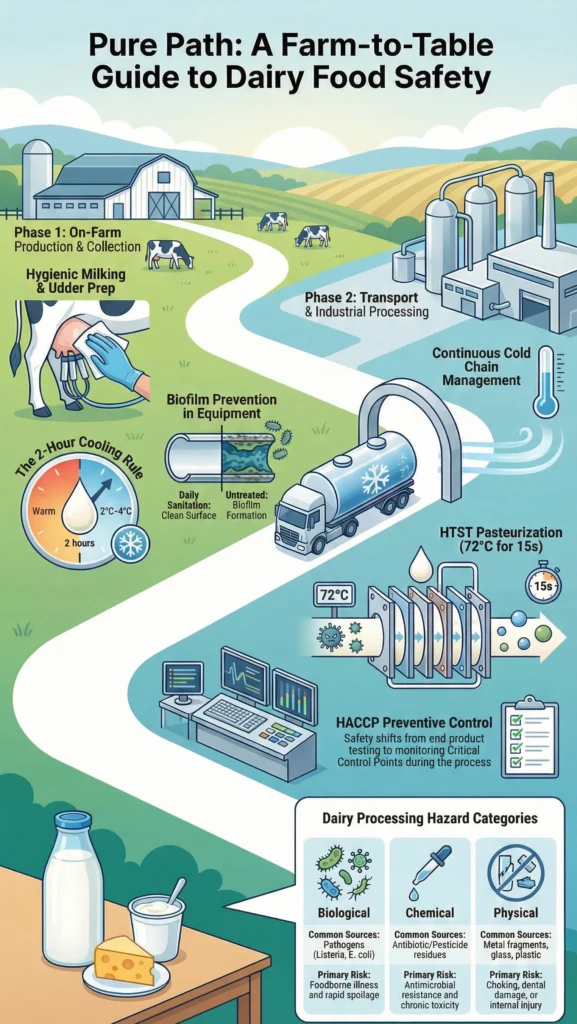
The book provides detailed insight into microbiological hazards in dairy products, explaining the sources, growth conditions, and control measures for pathogenic and spoilage microorganisms. It further highlights the importance of hygienic practices at the farm level, emphasizing animal health management, sanitation of milking equipment, and environmental hygiene. The journey of milk from farm to consumer is carefully examined, covering collection, transportation, cold chain management, processing, packaging, and storage.
A strong focus is placed on preventive approaches such as Good Manufacturing Practices (GMP), Good Hygiene Practices (GHP), and Hazard Analysis and Critical Control Points (HACCP). The book explains how these systems function together to create an effective food safety management framework. Chemical hazards such as pesticide residues, antibiotic traces, and cleaning chemicals are discussed alongside monitoring and control strategies. Physical hazards and detection techniques are also elaborated to ensure comprehensive coverage of safety risks.
Quality control and laboratory testing methods are presented to help readers understand how dairy products are evaluated for safety and compliance. The book also explores packaging and labeling safety, highlighting regulatory requirements and contamination risks. Finally, it discusses national and international regulatory standards and examines emerging technologies shaping the future of dairy food safety.
Overall, Food Safety in Dairy Industry serves as a valuable academic and professional resource that bridges theory and practice. It encourages a culture of responsibility, scientific awareness, and continuous improvement in dairy safety management, ensuring safe and high-quality dairy products for consumers worldwide.
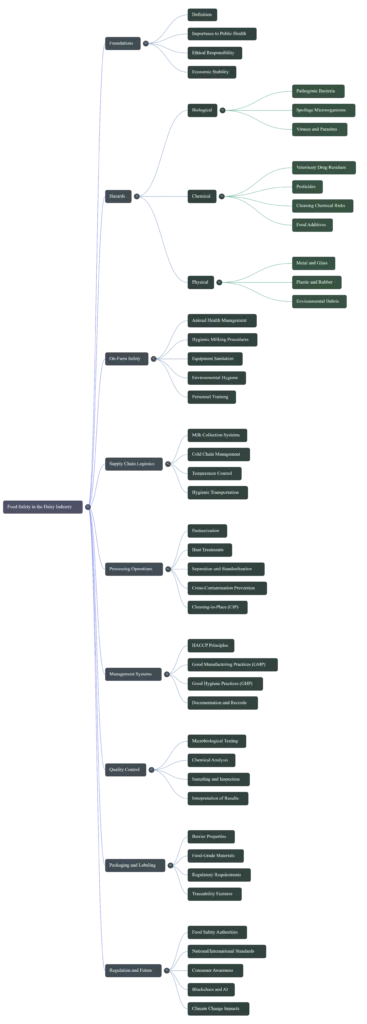
BOOK MAP
CHAPTERS
Chapter 1: Introduction to Food Safety in the Dairy Industry
Introduces the concept of food safety within the dairy sector, highlighting its public health importance and the challenges faced in maintaining safe dairy production systems.
Chapter 2: Milk Composition and Safety Concerns
Explains the chemical and biological composition of milk and identifies potential safety concerns arising from contamination or improper handling.
Chapter 3: Microbiological Hazards in Dairy Products
Focuses on microbiological hazards, including pathogenic and spoilage organisms, and discusses methods to control microbial risks in dairy products.
Chapter 4: Milk Production and On-Farm Safety Practices
Emphasizes hygienic milk production at the farm level, covering animal health, sanitation practices, and training of dairy personnel.
Chapter 5: Milk Collection, Transportation, and Storage
Examines milk collection, transportation, and storage systems, stressing the importance of temperature control and contamination prevention.
Chapter 6: Dairy Processing and Food Safety
Discusses dairy processing operations, including pasteurization, sanitation procedures, and strategies to prevent cross-contamination.
Chapter 7: Chemical Hazards in the Dairy Industry
analyzes chemical hazards such as pesticide residues and antibiotics, along with monitoring and control mechanisms.
Chapter 8: Physical Hazards and Preventive Measures
Addresses physical hazards in dairy products and outlines preventive measures and equipment maintenance strategies.
Chapter 9: Food Safety Management Systems
Introduces food safety management systems like HACCP, GMP, and GHP, explaining their role in systematic risk control.
Chapter 10: Quality Control and Testing in Dairy Products
Describes quality control procedures and laboratory testing methods used to ensure dairy product safety and compliance.
Chapter 11: Dairy Product Packaging and Labeling Safety
Focuses on packaging and labeling safety, highlighting regulatory requirements and contamination risks during storage and distribution.
Chapter 12: Regulatory Standards and Future Trends in Dairy Food Safety
Reviews regulatory standards and explores future trends, emerging technologies, and global challenges in dairy food safety.