₹ 999.00
$99.00
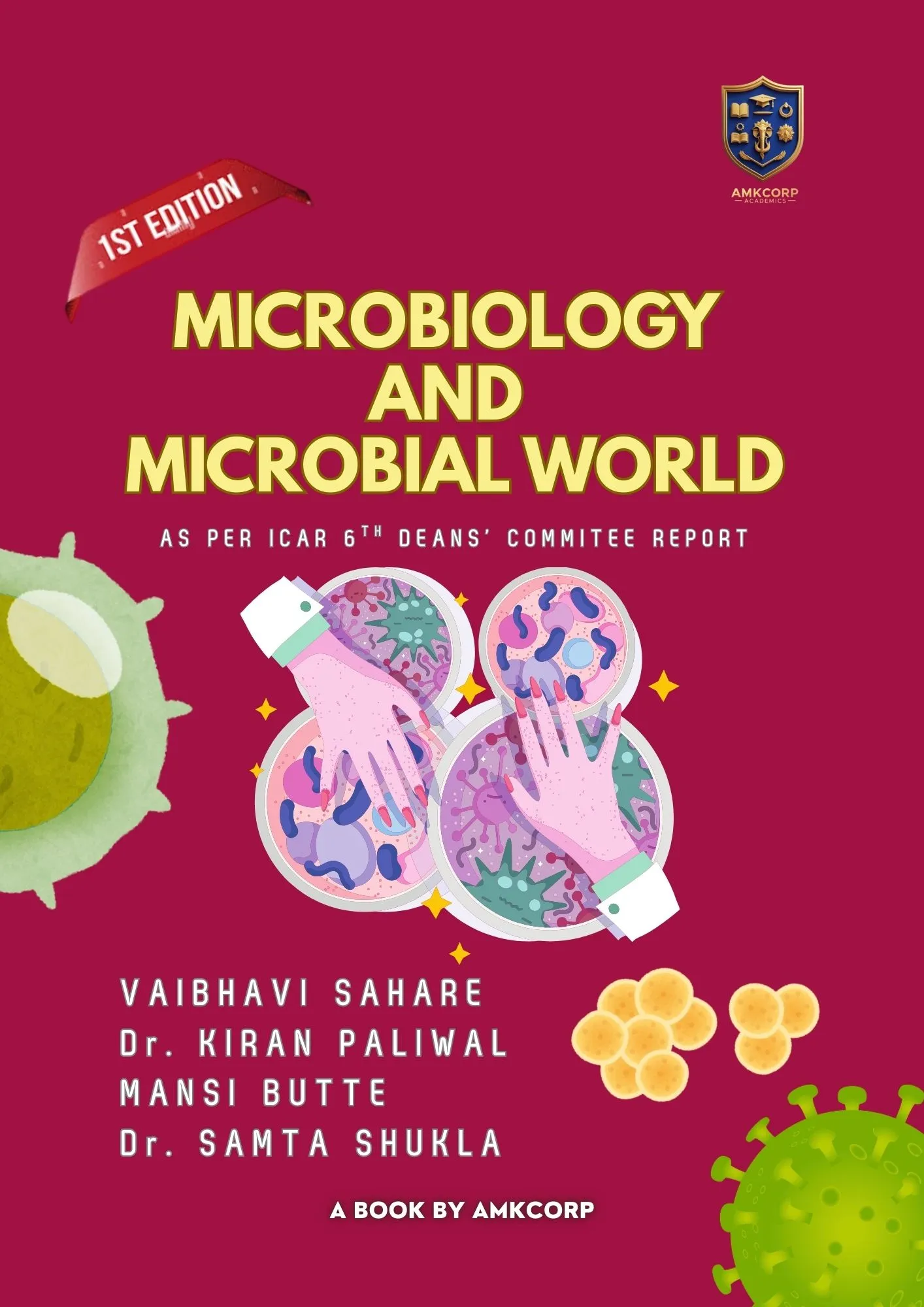
MICROBIOLOGY AND MICROBIAL WORLD
AUTHOR(S) -
VAIBHAVI SAHARE, Dr. KIRAN PALIWAL,
MANSI BUTTE, Dr. SAMTA SHUKLA

DOI – 10.61909/AMKEDTB032656
Genre/Subject – Microbiology
Book code – AMKEDTB032656 pgs: 268
ISBN(P) – 978-93-6556-937-7
ISBN(E) – 978-93-6556-884-4
Published – 06/03/2026
Edition – 1
BUY PRINT

BUY EBOOK
INTRODUCTION VIDEO

AUTHORS

VAIBHAVI SAHARE
Vaibhavi Sahare is a dedicated academician in the field of Microbiology with three years of teaching experience at Sri Shankaracharya Mahavidyalaya, Junwani, Bhilai. She is passionate about teaching and actively engages students in developing strong conceptual understanding in microbiological sciences.
She completed her Graduation from Bhilai Mahila Mahavidyalaya, Sector 9, Bhilai, and earned her Master of Science (M.Sc.) in Microbiology from Government V.Y.T. PG Autonomous College, Durg.
Her academic interest lies in the field of research, particularly in studying the antimicrobial activity of ridge gourd (Luffa acutangula). She is keenly interested in exploring plant-based bioactive compounds and their potential applications in controlling microbial infections.
She continues to contribute to academia through teaching and research-oriented activities, with a strong commitment toward scientific development and innovation.

Dr. KIRAN PALIWAL
Dr. Kiran Paliwal is a dynamic academician and microbiologist with over 19 years of experience in higher education, research, and institutional development. She holds a Ph.D. in Microbiology from Barkatullah University, Bhopal, and has made significant contributions in teaching, research, and consultancy. Her expertise lies in General Microbiology, Molecular Biology, Pharmaceutical Microbiology, and Environmental Biotechnology.
She combines rigorous scientific knowledge with strong leadership, mentoring, and administrative capabilities, enabling her to bridge the gap between academia, research, and industry needs through professional training and consultancy engagements.

MANSI BUTTE
Mansi Butte is an Assistant Professor in the Department of Microbiology at Shri Shankaracharya Mahavidylaya Junwani, Bhilai, Chhattisgarh with two years of teaching experience in the field of Microbiology. She completed her Bachelor of Science (B.Sc.) from Bhilai Mahila Mahavidyalaya, Bhilai, Chhattisgarh and earned her Master of Science (M.Sc.) in Microbiology from Shankaracharya Mahavidylaya, Junwani, Bhilai, Chhattisgarh.
Her academic work focuseson microbiology education and laboratory training. Her research interestson probiotic isolation and characterization, aswell asthe isolation and phytochemical characterization of Plant-derived bioactive compounds, and the evaluation of their antibacterial properties, with an emphasison natural antimicrobial applications. Currently she isactively engaged in academic research aiming to contribute meaningful findingsto the scientific community.

Dr. SAMTA SHUKLA
Dr. Samta Shukla is a distinguished microbiologist with over 17 years of academic and research experience in the field of Applied and Medical Microbiology. She holds a Ph.D. in Medical Microbiology from S.S. Medical College, Rewa, and completed her M.Sc. in Microbiology from Dr. H.S. Gaur University, Sagar (M.P.). She also possesses a Diploma in Medical Laboratory Technology (DMLT) and has qualified the ICAR-NET examination.
Dr. Shukla is currently serving as Faculty at the Centre for Biotechnology and Microbiology Studies, APS University, Rewa. Throughout her academic career, she has actively contributed to teaching, research, and student mentorship, guiding numerous postgraduate dissertations and doctoral scholars.
Her scholarly contributions include 15 research papers published in reputed peer-reviewed and refereed journals, two book chapters, and one patent to her credit. She is the author of the book Fundamentals of Microbiology: Concepts and Applications and co-author of Herbal Medicine: A Promising Tool Against Pathogens. Her research interests focus on innovative diagnostic and therapeutic strategies in medical microbiology, with special emphasis on emerging microbial challenges and plant-based antimicrobial approaches.
Dr. Shukla remains committed to advancing scientific knowledge and nurturing future researchers in the field of microbiology.
ABOUT BOOK / ABSTRACT
This book is a comprehensive academic resource designed to provide students with a clear understanding of the microbial world and its vast applications in agriculture, industry, environment, and health sciences. This book systematically introduces the fundamental principles of microbiology while bridging classical knowledge with modern scientific advancements. It is carefully structured to help learners grasp both theoretical foundations and applied aspects of microbial science.
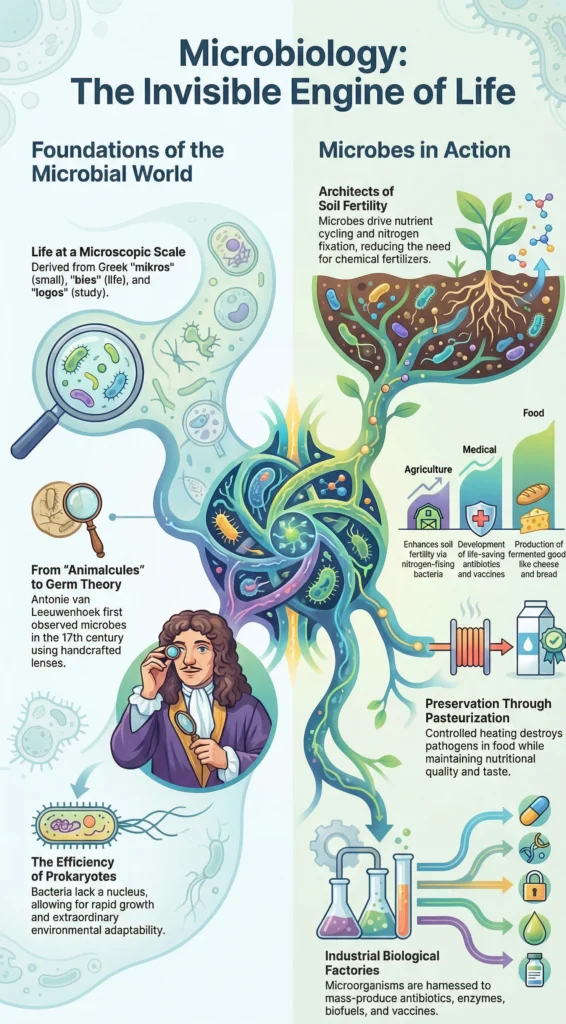
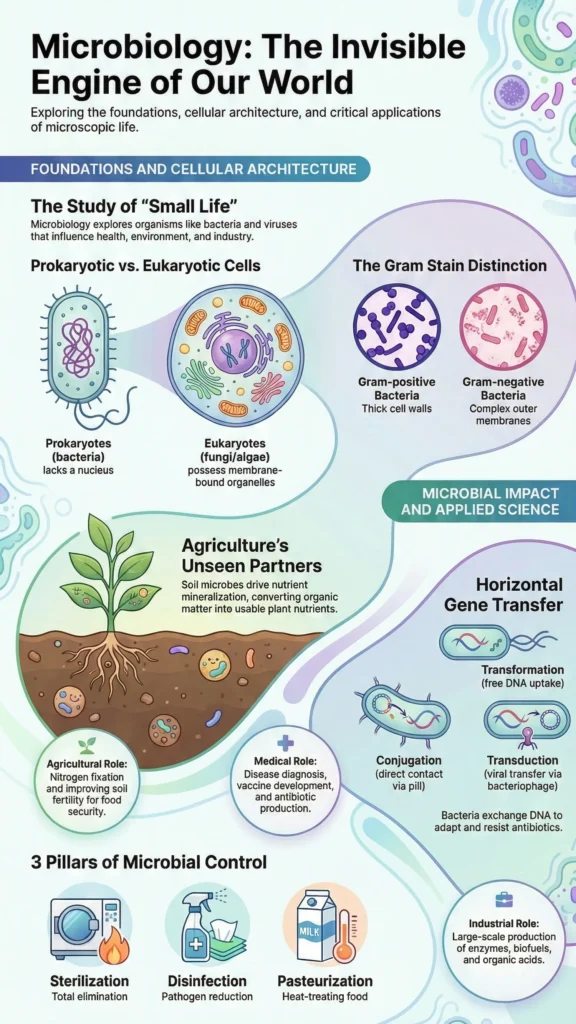
The book begins with an introduction to microbiology, explaining the nature, scope, and importance of microorganisms in daily life and agriculture. It traces the historical development of microbiology, highlighting major discoveries that shaped modern science, including the germ theory of disease and early fermentation studies. Readers are introduced to the diversity of the microbial world, including prokaryotic and eukaryotic microorganisms, along with essential laboratory practices such as sterilization, disinfection, and pasteurization.
Further sections explore bacterial structure, growth patterns, and genetic mechanisms. Students gain insight into bacterial cell organization, metabolic diversity, and gene transfer systems such as transformation, conjugation, and transduction. The fundamentals of genetic engineering are introduced in a simplified manner to build foundational knowledge for advanced studies.
The book also presents specialized fields of microbiology including soil, air, food, water, and industrial microbiology. Each field is explained with practical relevance, particularly emphasizing agricultural and environmental applications. Topics such as nutrient mineralization, microbial spoilage of food, water purification, biogas production, and biodegradable plastics demonstrate how microorganisms contribute to sustainable development.
A significant portion of the book focuses on biocontrol agents, biopesticides, and plant growth-promoting rhizobacteria. These chapters emphasize sustainable agriculture practices and the role of beneficial microbes in plant disease management. Concepts of rhizosphere microbiology, carbon flow, and endophytes are explained to help students understand plant–microbe interactions in soil ecosystems.
The final unit discusses bioremediation and phytoremediation, highlighting how microorganisms and plants help restore polluted environments. This section connects microbiology with environmental conservation and sustainable resource management.
Written in a clear and student-friendly style, this textbook is ideal for undergraduate and postgraduate students in microbiology, agriculture, environmental sciences, and life sciences. It serves as both a foundational text and a reference guide for competitive examinations and research preparation. By combining classical microbiology with modern sustainable approaches, the book prepares learners to apply microbial knowledge in solving real-world challenges.
BOOK MAP

CHAPTERS
1. Introduction to Microbiology
Explains the definition, scope, and applied areas of microbiology. Highlights the importance of microorganisms in agriculture and human welfare.
2. History of Microbiology
Describes major discoveries including spontaneous generation theory, germ theory of disease, immunization, fermentation, and origin of life.
3. Microbial World
Introduces prokaryotic and eukaryotic microbes. Covers sterilization, disinfection, and pasteurization techniques used in laboratories and industries.
4. Bacterial Structure and Growth
Discusses bacterial cell structure, growth processes, Gram classification, and metabolic types such as chemoautotrophy and photo autotrophy.
5. Bacterial Genetics
Explains gene transfer mechanisms including transformation, conjugation, and transduction. Introduces plasmids and basics of genetic engineering.
6. Soil Microbiology
Covers nutrient mineralization and microbial transformation processes essential for soil fertility and plant nutrition.
7. Air Microbiology
Describes airborne microorganisms including phyllosphere and phylloplane microflora and their ecological significance.
8. Food Microbiology
Discusses microbial spoilage, food preservation methods, and food poisoning caused by pathogens.
9. Water Microbiology
Explains water types, microbial contamination, coliform testing, and purification methods.
10. Industrial Microbiology
Focuses on microbial products, biodegradation, biogas production, and biodegradable plastics.
11. Biological Control
Explores biocontrol concepts, types, modes of action, microbial biopesticides, and their role in sustainable agriculture.
12. Rhizosphere Microbiology
Examines rhizodeposits, their biochemical nature, and their influence on soil microbial communities.
13. Rhizosphere Carbon Flow
Discusses microbial residents of the rhizosphere and their ecological roles in soil ecosystems.
14. Plant Growth-Promoting Rhizobacteria (PGPR)
Explains mechanisms of plant growth promotion and their role in improving soil health and sustainability.
15. Endophytes
Describes types of endophytes and their beneficial roles in plant growth and soil sustainability.
16. Bioremediation & Phytoremediation
Highlights microbial and plant-based techniques for remediation of polluted soils and environmental restoration.