₹ 999.00
$99.00
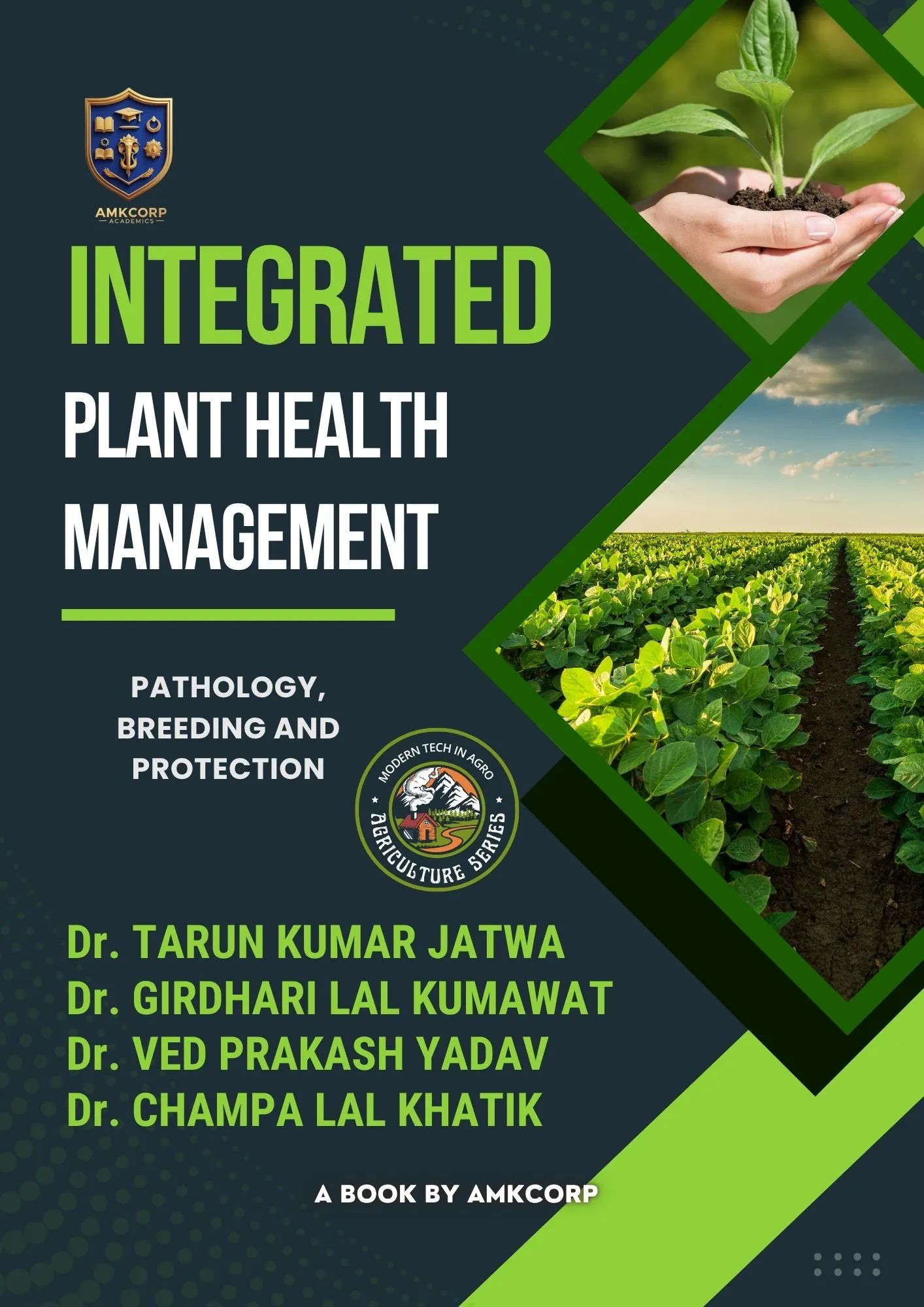
INTEGRATED PLANT HEALTH MANAGEMENT
PATHOLOGY, BREEDING AND PROTECTION
AUTHOR(S) -
Dr. TARUN KUMAR JATWA, Dr. GIRDHARI LAL KUMAWAT, Dr. VED PRAKASH YADAV, Dr. CHAMPA LAL KHATIK

DOI – 10.61909/AMKEDTB032661
Genre/Subject – Plant Pathology, Plant Breeding
Book code – AMKEDTB032658 pgs: 240
ISBN(P) – 978-93-6556-614-7
ISBN(E) – 978-93-6556-500-3
Published – 28/03/2026
Edition – 1
BUY PRINT

BUY EBOOK
INTRODUCTION VIDEO

AUTHORS

Dr. TARUN KUMAR JATWA
Dr. Tarun Kumar Jatwa working as Assistant Professor (Plant Pathology) At Sri Karan Narendra Agriculture University, Jobner, Jaipur (Rajasthan). He Did His B.Sc. from UHS, Bagalkote (Karnataka), M. Sc. In Agriculture Plant Pathology From VNMKV, Parbhani, Maharashtra (University Department Topper) and Ph.D. in Agriculture Plant Pathology with DST Inspire award from MPUAT, Udaipur (Rajasthan). He has 8 year experience of Research, Teaching and Extension. He has extensively experience and conducted experiments of AICRP on Seed Pathology, Mushroom Technology, AICRP on Chickpea, AICRP, MULLaRP and AICRP in Arid Legumes. He has published more than 15 research papers above 6 to 12 NASS rated journals and many articles. He developed new technologies and recommended at nation and state level for farmers.

Dr. GIRDHARI LAL KUMAWAT
Dr. Girdhari Lal Kumawat is an Assistant Professor cum Jr. Plant Pathologist at ICAR-AICRP on Spices, SKN Agriculture University, Jobner, Rajasthan. Ph.D. in Plant Pathology, did his B. Sc.(Agriculture) in 2004 from SKN Agriculture University, Jobner, Rajasthan and M. Sc. (Plant Pathology) in 2006 from CSA University & Technology, Kanpur. He had qualified four times for ICAR-NET from ASRB, Pusa, New Delhi. He has published more than 100 research papers, abstracts, review articles, popular articles, book chapters and technical bulletin etc. in reputed national and international journals (NAAS, Scopus, WOS and SCI). He is a Life member of several Scientific Societies. He has presented his research work at several National and International conferences/seminars/workshops in India. He has received a different awards during conferences/seminars/workshops. He has been honoured with the Young Scientist Award, Best poster award, Vinay Kumar Verma Memorial Gold Medal,Sr. Research Fellow (SRF), Jr. Research Fellow (JRF). He has contributed significantly to Plant Protection. He has more than 8 year Teaching and research experience. Now he is teaching and researching activities at SKN Agriculture University, Jobner, Rajasthan. He is teaching undergraduate and postgraduate students and researching in seed spices i.e cumin, coriander, fenugreek, fennel, ajwain and minor seed spices and developed 15 technologies and 5 varieties.

Dr. VED PRAKASH YADAV
Dr. Ved Prakash Yadav is a Seed Business and Plant Breeding professional with over 20 years of experience spanning agricultural research, product development, and market-oriented seed systems in India. He is currently serving as Assistant Professor (Plant Breeding & Genetics) at Sri Karan Narendra Agriculture University (SKNAU), Jobner, Rajasthan, and has also worked extensively in the private and public research sectors.
His professional expertise includes crop improvement, hybrid and varietal evaluation, phenotypic stability assessment, germplasm management, and seed business strategy. Dr. Yadav has worked across Rajasthan, Gujarat, Madhya Pradesh, and Bihar, coordinating with universities, ICAR institutes, KVKs, and state governments. He has contributed to the development and evaluation of mustard, pearl millet, maize, cotton, and tree-borne oilseed crops, and has been associated with organizations such as Bayer Bioscience, Monsanto India, and NRCAF Jhansi.
Combining scientific rigor with market insight, Dr. Yadav is dedicated to bridging research, seed business, and sustainable agricultural development.
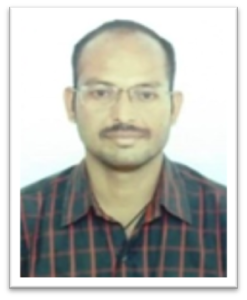
Dr. CHAMPA LAL KHATIK
Dr. Champa Lal Khatik is an Agricultural Scientist and Academician Serving as an Assistant Professor in Genetics and Plant Breeding (GPB) at the Agricultural Research Station (ARS), Fatehpur, under Sri Karan Narendra Agriculture University, Jobner (Rajasthan).He specializes in crop improvement through modern breeding techniques and genetic research. His work focuses on developing high-yielding, disease-resistant and climate-resilient crop varieties to support sustainable agriculture. Along with research, he is actively involved in teaching and guiding students in agricultural sciences. Dr. Khatik also contributes to farmer welfare by spreading awareness about improved seeds, modern farming practices and government agricultural schemes. Through his combined efforts in research, education and extension activities, he plays an important role in enhancing agricultural productivity and rural development.
ABOUT BOOK / ABSTRACT
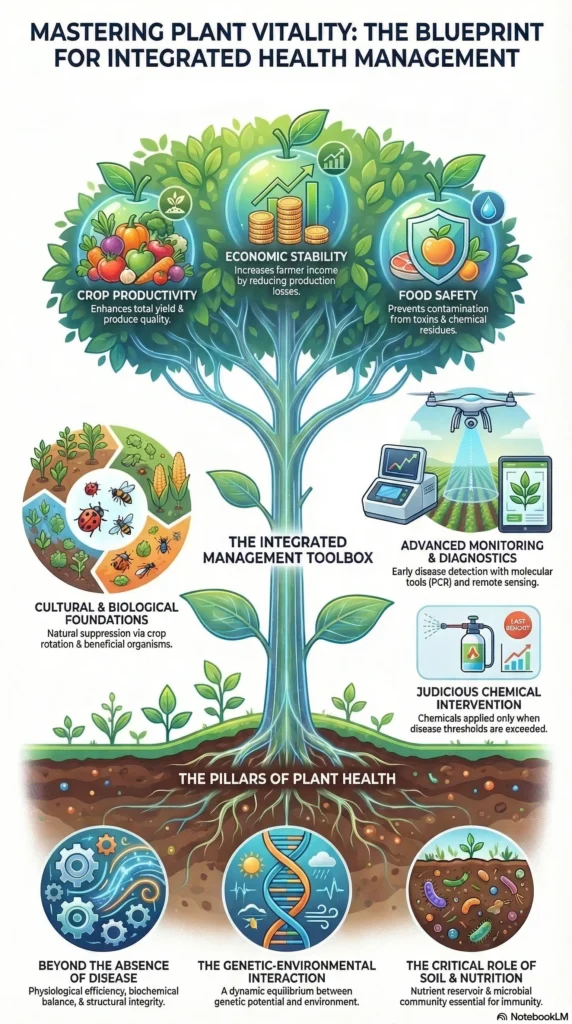
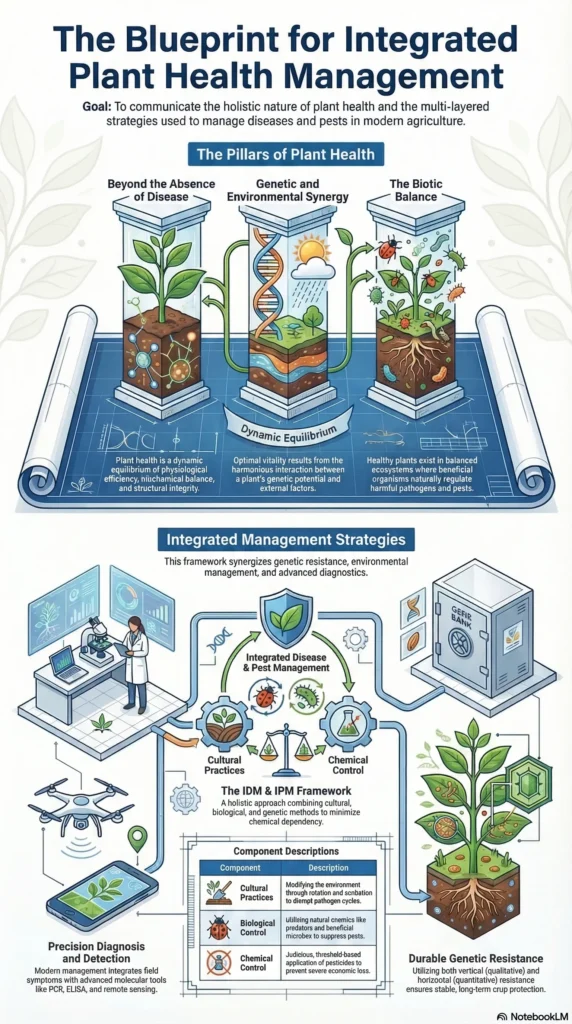
Integrated Plant Health Management: Pathology, Breeding and Protection is a comprehensive and forward-looking resource designed to address the growing challenges in modern agriculture. The book presents a holistic approach to maintaining plant health by integrating principles from plant pathology, plant breeding, pest management, and advanced biotechnological interventions. It emphasizes the importance of sustainable and eco-friendly practices while ensuring high crop productivity and food security in a rapidly changing global environment.
This book begins by establishing a strong conceptual foundation of plant health and its critical role in agriculture. It explores how plant diseases, pests, and environmental stresses impact crop yield and quality, and why integrated approaches are essential for long-term agricultural sustainability. By combining traditional knowledge with modern scientific advancements, the book offers readers a balanced understanding of both conventional and cutting-edge plant protection strategies.
A key strength of this work lies in its detailed discussion of plant diseases, including their causes, life cycles, and interactions with host plants. It also highlights the role of genetics and breeding in developing disease-resistant crop varieties, which is a cornerstone of sustainable agriculture. The inclusion of diagnostic tools, molecular techniques, and digital technologies reflects the evolving nature of plant health management in the era of precision agriculture.
The book further explores integrated disease management and pest control strategies, focusing on the use of biological agents, cultural practices, and minimal chemical interventions. It places strong emphasis on environmentally responsible farming practices, such as organic agriculture and integrated nutrient management, which contribute to soil health and ecological balance.
In addition, the role of biotechnology, including genetic engineering, CRISPR, and nanotechnology, is discussed in detail to showcase their potential in enhancing crop resilience and protection. The final sections of the book address future trends, global challenges, and policy frameworks, offering insights into how agriculture can adapt to climate change and technological advancements.
Overall, this book serves as an essential guide for students, researchers, academicians, and professionals in agriculture and allied sciences. It provides both theoretical knowledge and practical insights, making it a valuable reference for understanding and implementing integrated plant health management systems in the modern agricultural landscape.
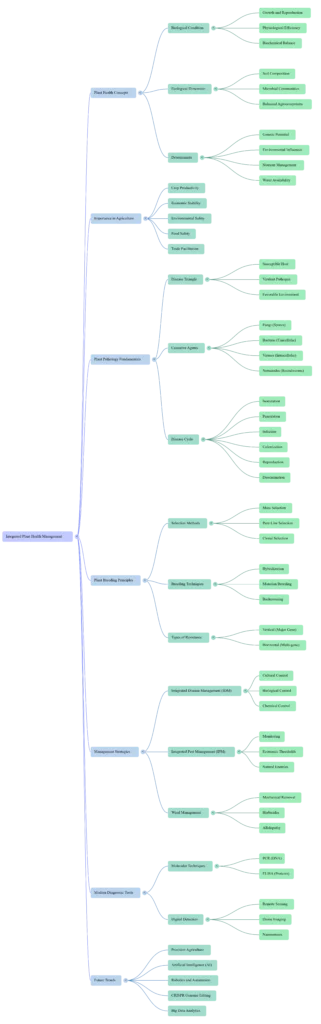
BOOK MAP
CHAPTERS
Chapter 1: Introduction to Plant Health Management
This chapter introduces the concept of plant health and explains its importance in agriculture. It outlines the scope, objectives, and key components involved in maintaining healthy crops.
Chapter 2: Fundamentals of Plant Pathology
This chapter provides a basic understanding of plant diseases, their types, and causative agents. It also explains disease cycles and the interaction between host plants and pathogens.
Chapter 3: Principles of Plant Breeding
This chapter focuses on the objectives and methods of plant breeding. It discusses genetic variation, selection techniques, and the role of biotechnology in crop improvement.
Chapter 4: Plant Disease Diagnosis and Detection
This chapter explains how plant diseases are identified using symptoms, laboratory techniques, and molecular tools. It also highlights modern digital detection methods.
Chapter 5: Integrated Disease Management (IDM)
This chapter describes the concept of IDM and various strategies such as cultural, biological, and chemical control methods. It emphasizes integrated approaches for effective disease management.
Chapter 6: Breeding for Disease Resistance
This chapter discusses different types of disease resistance and sources of resistance genes. It also explains advanced techniques like marker-assisted selection and genetic engineering.
Chapter 7: Insect Pest and Weed Management
This chapter covers major insect pests and weed problems in crops. It explains integrated pest management strategies and methods for controlling pests and weeds.
Chapter 8: Role of Biotechnology in Plant Protection
This chapter explores modern biotechnological tools such as genetic engineering, transgenic crops, and genome editing. It also discusses biofertilizers and nanotechnology applications.
Chapter 9: Sustainable Plant Protection Practices
This chapter focuses on eco-friendly farming approaches, including organic farming and integrated nutrient management. It also discusses the impact of climate change on plant health.
Chapter 10: Future Trends and Global Perspectives
This chapter highlights emerging technologies like precision farming and digital agriculture. It also discusses global challenges, policies, and future research directions in plant protection.