₹ 999.00
$99.00
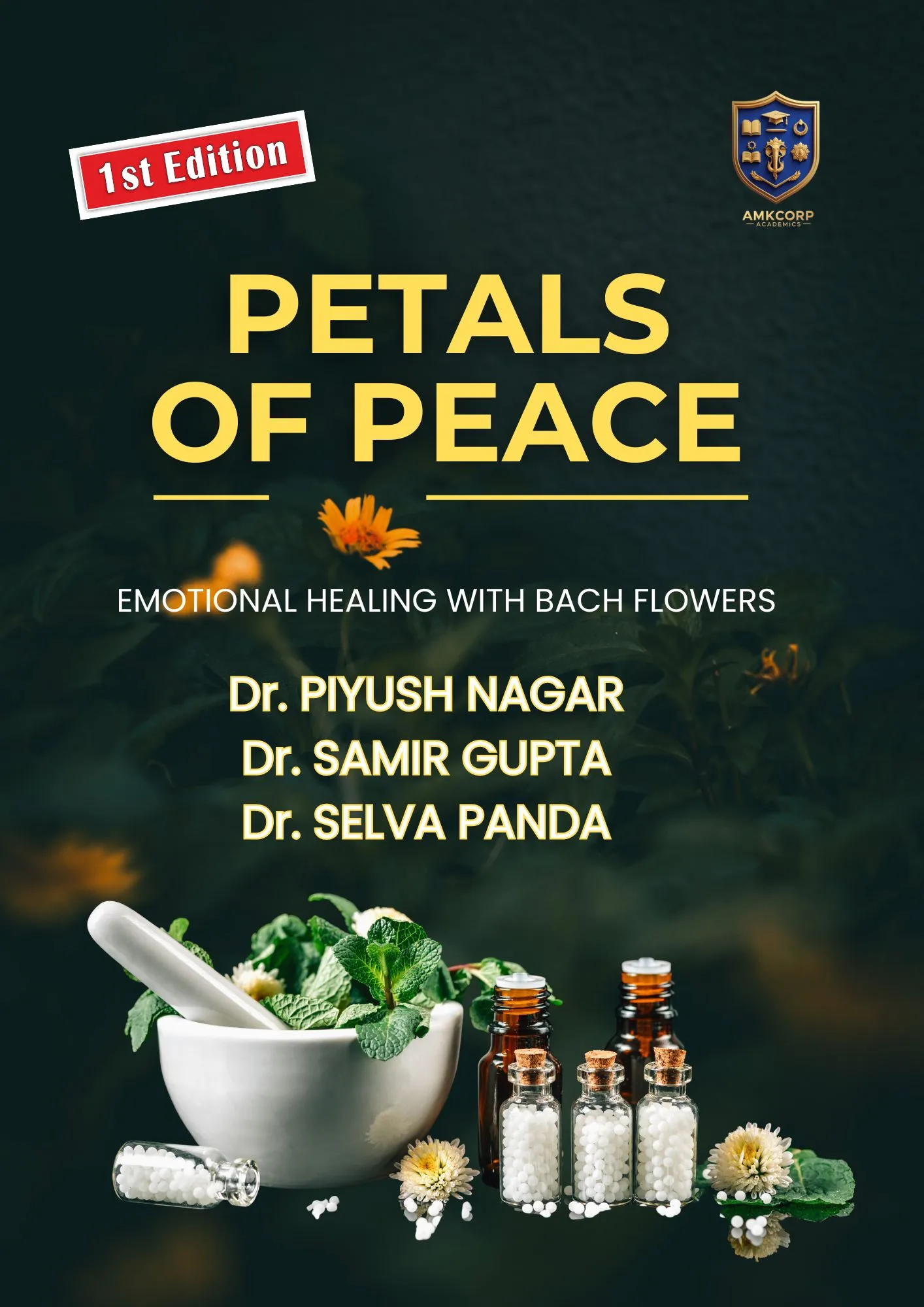
PETALS OF PEACE
EMOTIONAL HEALING WITH BACH FLOWERS
AUTHOR(S) -
Dr. PIYUSH NAGAR
Dr. SAMIR GUPTA
Dr. SELVA PANDA

DOI – 10.61909/AMKEDTB042663
Genre/Subject – Plant Medicine
Book code – AMKEDTB042663 pgs: 211
ISBN(P) – 978-93-6556-111-1
ISBN(E) – 978-93-6556-574-4
Published – 03/04/2026
Edition – 1
BUY PRINT

BUY EBOOK
INTRODUCTION VIDEO

AUTHORS
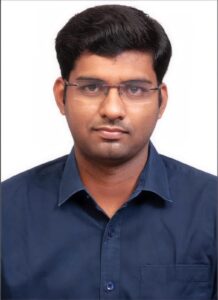
Dr. PIYUSH NAGAR
Dr. Piyush Nagar, BHMS, MD (Hom.), is a distinguished academician and clinician, currently serving as an Associate Professor in the Postgraduate Department of Homoeopathic Materia Medica at Jawaharlal Nehru Homoeopathic Medical College, Parul University, Vadodara, Gujarat, India.
With over six years of experience in Undergraduate and Postgraduate Homoeopathic education, he is widely recognized for his commitment to academic excellence and clinical scholarship. He has made significant contributions to Homoeopathic Research, with Publications in Web of Science–indexed and other reputed Peer-reviewed journals.
He has completed his Postgraduate degree (M.D. Homoeopathy) in Homoeopathic Materia Medica from Jawaharlal Nehru Homoeopathic Medical College, Parul University, Vadodara, Gujarat. He earned his Bachelor of Homoeopathic Medicine and Surgery (B.H.M.S.) from Dr. MPK Homoeopathic Medical College and Research Centre, affiliated with Homoeopathy University, Jaipur, building a strong foundation in both theoretical knowledge and clinical practice.
He has actively represented his Institution at National and International academic platforms through Poster and Paper presentations, including AIPGHS 2024. As a dedicated mentor, he has successfully guided numerous postgraduate dissertations.
In addition to teaching and research, Dr. Nagar plays a vital role in academic governance and quality assurance. He is associated with various leading universities across Gujarat, in both Government and Private sectors, as a paper setter, examiner, and evaluator. His academic interests centre on the Homeopathic Materia Medica, with a strong focus on integrating classical homoeopathic principles with contemporary medical science, making his work highly relevant to modern homoeopathic education and clinical application.
Dr. SAMIR GUPTA
Dr. Samir Gupta, BHMS, MD (Hom.), is a distinguished academician and clinician, currently serving as an Associate Professor in the Postgraduate Department of Practice of Medicine at Jawaharlal Nehru Homoeopathic Medical College, Parul University, Vadodara, Gujarat, India.
With over six years of experience in Undergraduate and Postgraduate Homoeopathic education, he is widely recognized for his commitment to academic excellence and clinical scholarship. He has made significant contributions to Homoeopathic Research, with Publications in Web of Science–indexed and other reputed Peer-reviewed journals.
Dr. Gupta completed his Postgraduate degree (M.D. Homoeopathy) in Practice of Medicine from Jawaharlal Nehru Homoeopathic Medical College, Parul University, Vadodara, Gujarat. He earned his Bachelor of Homoeopathic Medicine and Surgery (B.H.M.S.) from Bharati Vidyapeeth Homoeopathic Medical College, Pune, building a strong foundation in both theoretical knowledge and clinical practice.
He has actively represented his Institution at National and International academic platforms through Poster and Paper presentations, including AIPGHS 2024, where he also served as a coordinator. As a dedicated mentor, he has successfully guided numerous postgraduate dissertations. Notably, a Postgraduate student under his Supervision was awarded the prestigious CCRH Best MD Quality Dissertation under the Scholarship Scheme, reflecting his emphasis on research excellence and evidence-based practice.
In addition to teaching and research, Dr. Gupta plays a vital role in academic governance and quality assurance. He is associated with various leading universities across Gujarat, in both Government and Private sectors, as a paper setter, examiner, and evaluator. His academic interests centre on the Practice of Medicine, with a strong focus on integrating classical homoeopathic principles with contemporary medical science, making his work highly relevant to modern homoeopathic education and clinical application.
Dr. SELVA PANDA
Dr. Selva Panda is a passionate academician and committed clinician currently serving as an Assistant Professor in the Department of Anatomy at Parul Institute of Homoeopathy and Research, Parul University, Vadodara, Gujarat. With more than 3.5 years of dedicated teaching experience, she has been actively shaping undergraduate homoeopathic education through a blend of clinical insight and academic excellence.
She completed her Post-Graduation (M.D. Homoeopathy) in Practice of Medicine from Jawaharlal Nehru Homoeopathic Medical College, Parul University, Vadodara, Gujarat.. She also earned her Bachelor of Homoeopathic Medicine and Surgery (B.H.M.S.) from Cuttack Homoeopathic Medical College and Hospital, Cuttack, Odisha, building a strong foundation in both theoretical knowledge and clinical practice.
Dr. Panda is deeply committed to academic innovation and quality education. She actively engages in research initiatives and continuously explores progressive teaching–learning methodologies to enhance student understanding and professional competence. Her involvement in curricular and co-curricular activities reflects a holistic approach toward student development and institutional growth.
ABOUT BOOK / ABSTRACT
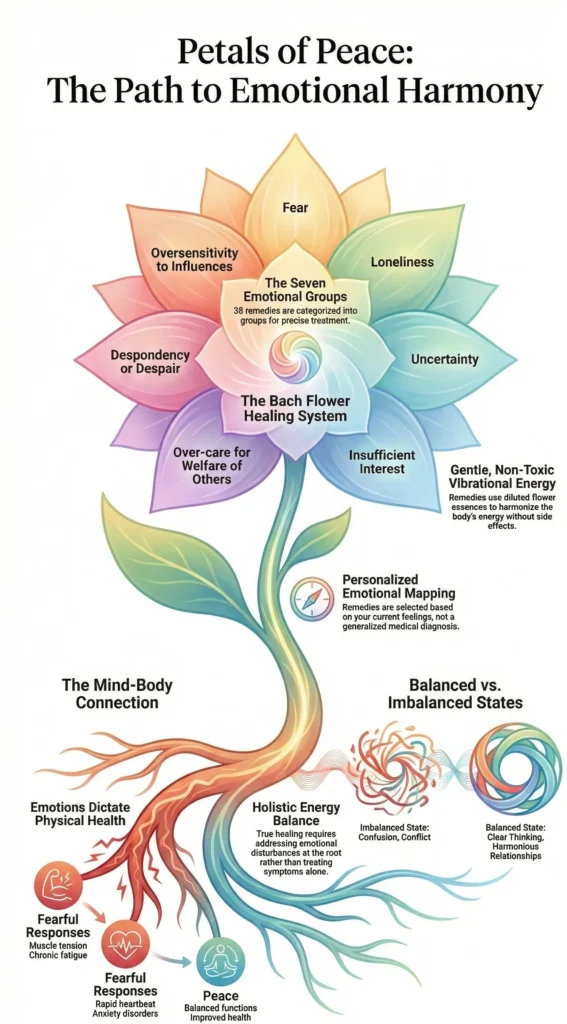
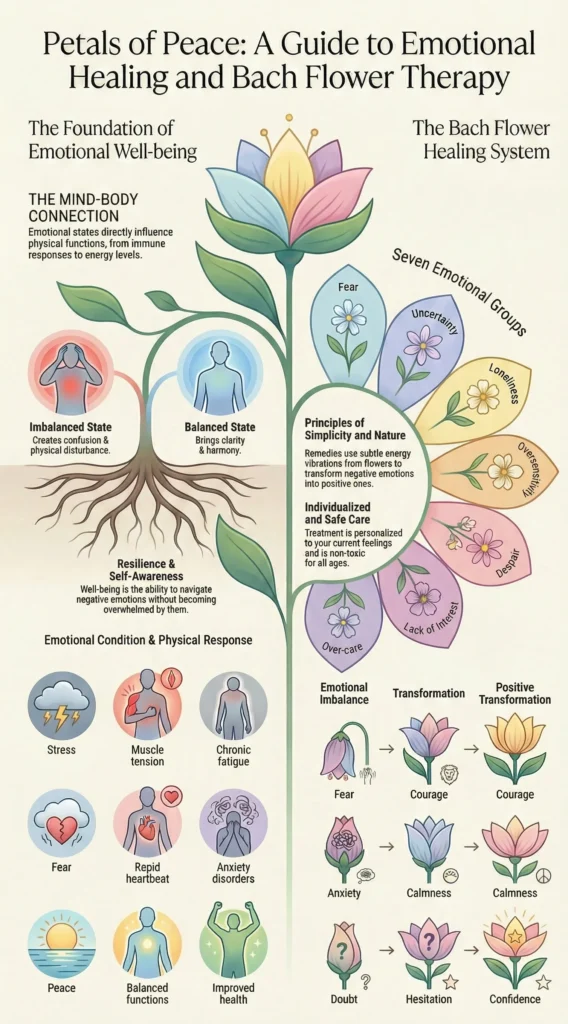
Petals of Peace: Emotional Healing with Bach Flowers is a thoughtfully crafted guide that explores the gentle yet powerful world of emotional healing through natural remedies. Rooted in the philosophy that emotional well-being is the foundation of overall health, this book introduces readers to the transformative potential of Bach flower therapy in restoring inner balance and harmony. In today’s fast-paced and often stressful world, emotional disturbances such as anxiety, fear, self-doubt, and loneliness have become increasingly common. This book serves as a compassionate companion for individuals seeking natural, safe, and holistic methods to address these challenges.
The book begins by establishing a deep understanding of emotional health and its connection with the body, emphasizing how unresolved emotions can influence physical well-being. It then takes readers on a journey through the origins and philosophy of Bach flower remedies, shedding light on the visionary work behind this natural healing system. With clarity and simplicity, it explains how these remedies work on subtle energy levels to bring emotional equilibrium without side effects or dependency.
A key strength of this book lies in its structured exploration of the 38 Bach flower remedies, categorized into emotional groups that address specific states of mind. Readers are guided to identify their own emotional patterns and select remedies tailored to their unique experiences. The book does not merely focus on theory but emphasizes practical application, offering step-by-step guidance on preparation, dosage, and daily usage.
Each chapter delves into real-life emotional challenges such as fear, uncertainty, loneliness, and trauma, providing both understanding and actionable solutions. Through relatable examples and case-based insights, readers gain confidence in applying these remedies in everyday life. The approach is inclusive, making it suitable for beginners as well as those already familiar with alternative healing practices.
What sets this book apart is its holistic perspective. It integrates Bach flower therapy with lifestyle practices such as mindfulness, diet, and self-awareness, encouraging readers to adopt a balanced and conscious way of living. The final chapters inspire a long-term vision of emotional wellness, highlighting the importance of consistency, self-care, and connection with nature.
Petals of Peace is more than just a guide—it is an invitation to rediscover inner calm, emotional resilience, and a deeper connection with oneself. Whether you are seeking relief from emotional distress or aiming to enhance your overall well-being, this book offers a gentle, natural path toward lasting peace and harmony.
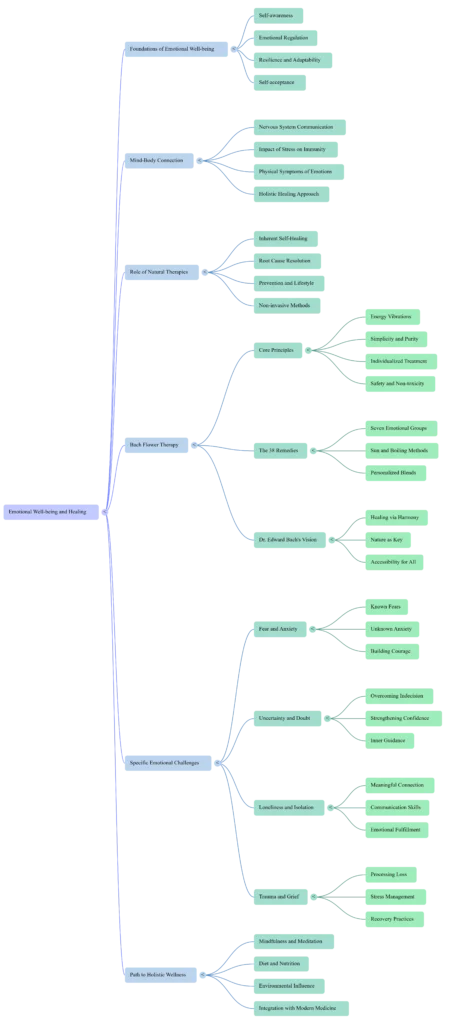
BOOK MAP
CHAPTERS
Chapter 1: Introduction to Emotional Healing
This chapter introduces the concept of emotional well-being and its importance in overall health. It explains the connection between mind and body while highlighting the growing relevance of natural healing approaches.
Chapter 2: Origins of Bach Flower Remedies
It explores the life and vision of Dr. Edward Bach and the development of the 38 flower remedies. The chapter emphasizes the philosophy of simplicity and nature in healing emotional imbalances.
Chapter 3: Principles of Bach Flower Therapy
This chapter explains how flower remedies work through energy vibrations to restore emotional balance. It highlights their safety, individualized approach, and compatibility with modern medicine.
Chapter 4: The 38 Bach Flower Remedies Overview
Readers are introduced to all 38 remedies, categorized into emotional groups. The chapter helps in understanding their characteristics and basic selection process.
Chapter 5: Healing Fear and Anxiety
Focused on emotional fears, this chapter explains different types of anxiety and suitable remedies. It also includes practical insights to build courage and emotional strength.
Chapter 6: Overcoming Uncertainty and Doubt
This chapter addresses indecision and lack of confidence. It provides remedies and techniques to enhance clarity, stability, and self-belief.
Chapter 7: Addressing Loneliness and Isolation
It explores the emotional roots of loneliness and offers remedies to improve connection and communication. The chapter encourages building meaningful relationships.
Chapter 8: Coping with Stress, Depression, and Trauma
This chapter provides guidance on managing stress, grief, and emotional trauma. It introduces remedies and mindfulness practices for recovery and healing.
Chapter 9: Practical Application of Bach Remedies
A hands-on chapter that explains preparation, dosage, and daily usage of remedies. It also covers personalized blends and usage across different age groups.
Chapter 10: Towards Holistic Emotional Wellness
The final chapter focuses on long-term emotional health through lifestyle changes. It integrates diet, meditation, and self-awareness for sustained well-being.