₹ 999.00
$99.00
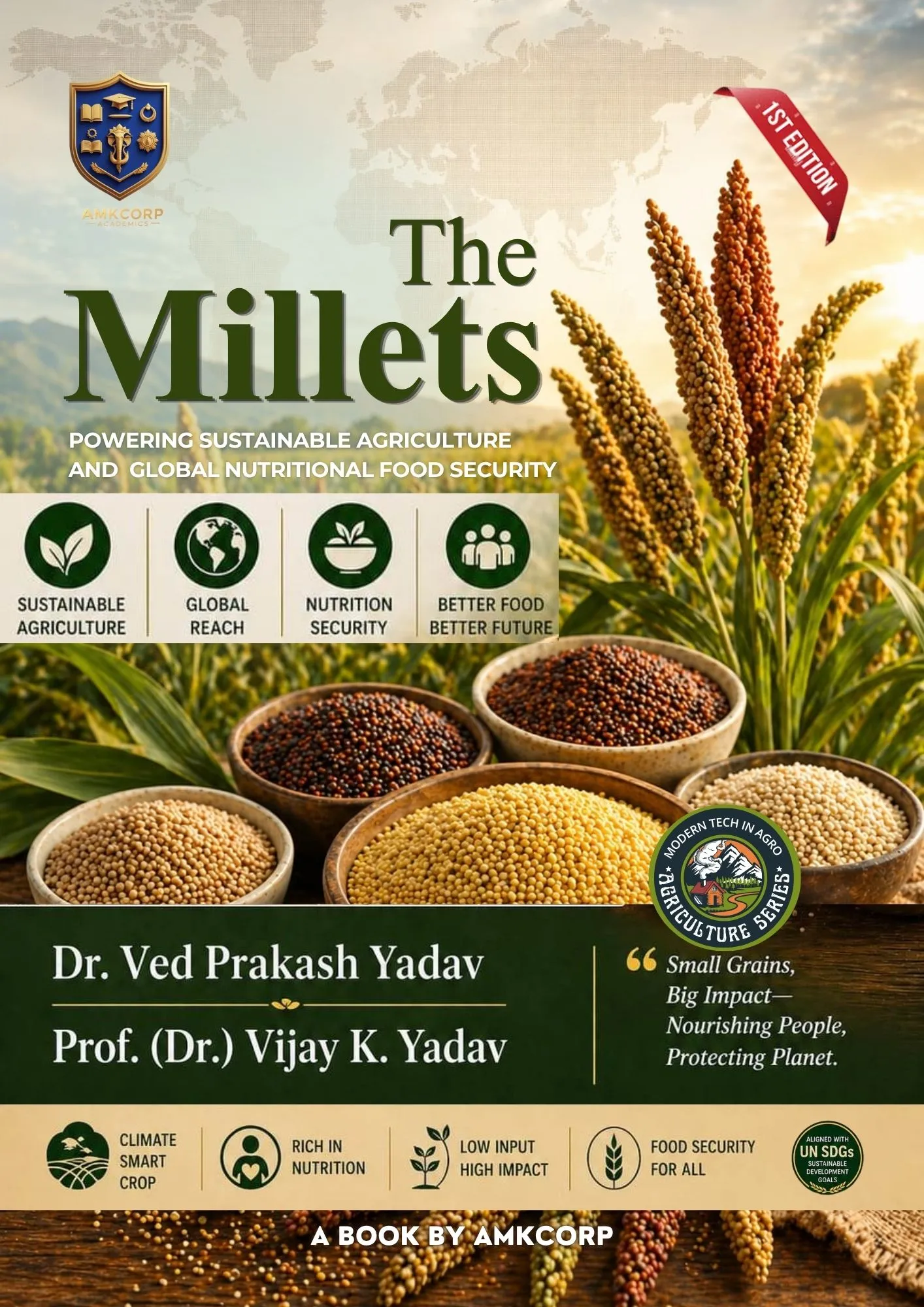
THE MILLETS
POWERING SUSTAINABLE AGRICULTURE AND GLOBAL NUTRITIONAL FOOD SECURITY
AUTHOR(S) -
Dr. VED PRAKASH YADAV, Prof.(Dr.) VIJAY K. YADAV

DOI-10.61909/AMKEDTB042668
Genre/Subject – Agriculture
Book code -AMKEDTB042668
pgs: 249
ISBN(P) -978-93-6556-671-0
ISBN(E) – 978-93-6556-288-0
Published – 21/04/2026
Edition – 1
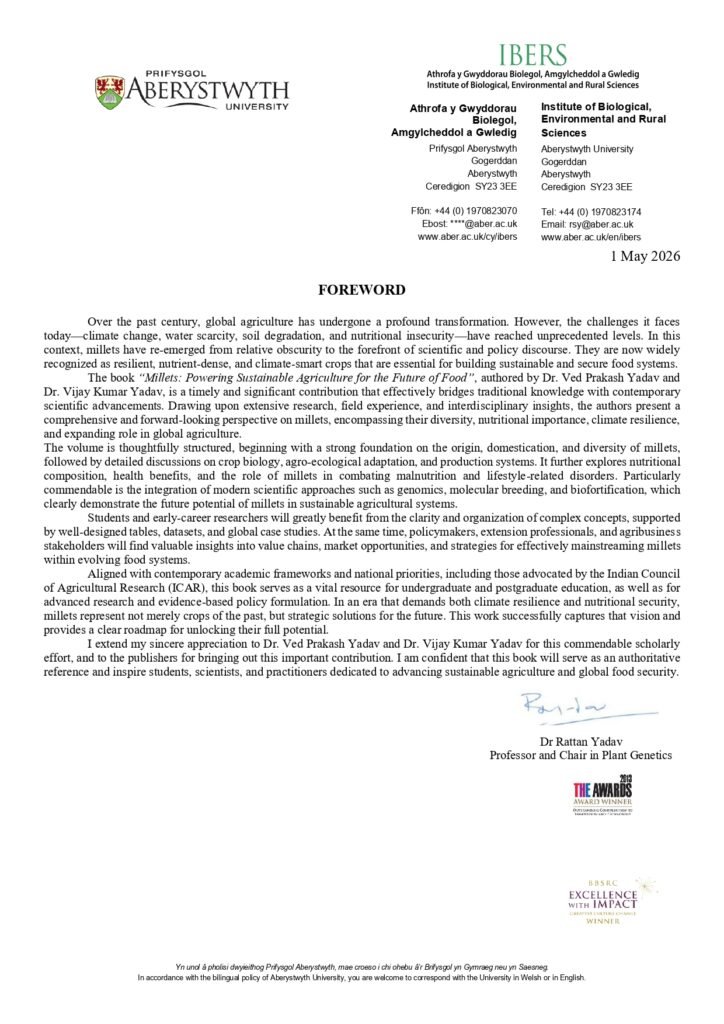
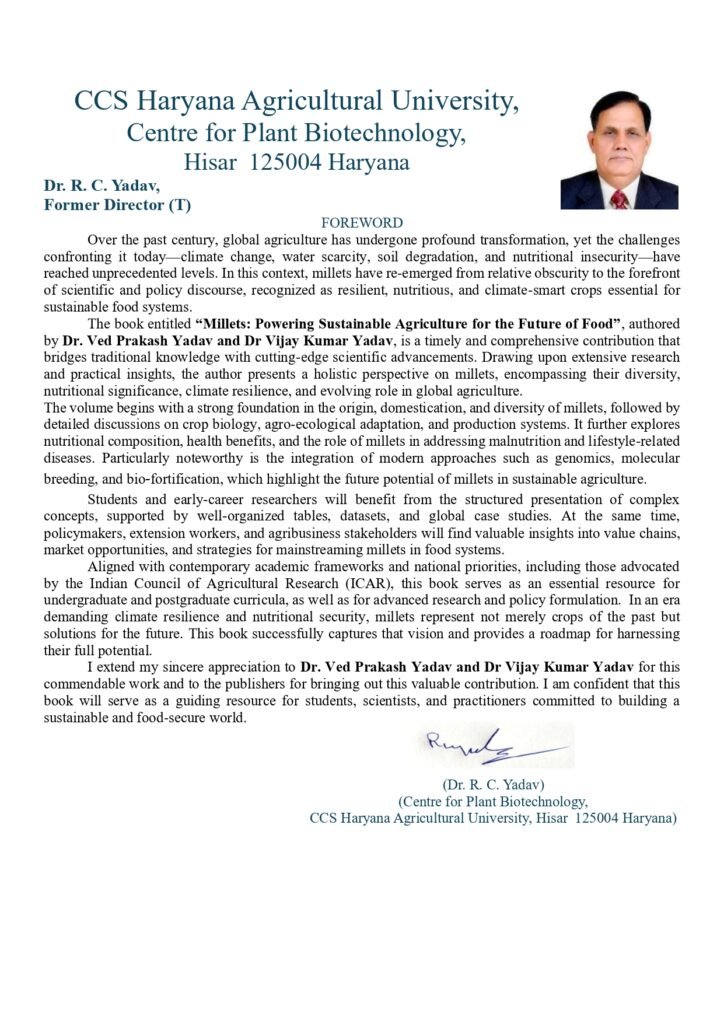
FOREWORD BY
Hon. Dr. RATTAN YADAV
Professor & Chair in Plant Genetics
Institute of Biological, Environmental and Rural Sciences
Aberystwyth University
Hon. Dr. R.C. YADAV
Former Director (T)
Centre for Plant Biotechnology
CCS Haryana Agricultural University, Hisar, Haryana – 125004
BUY PRINT

BUY EBOOK
INTRODUCTION VIDEO

AUTHORS
Dr. VED PRAKASH YADAV
Dr. Ved Prakash Yadav is a Seed Business and Plant Breeding professional with over 20 years of experience spanning agricultural research, product development, and market-oriented seed systems in India. He is currently serving as Assistant Professor (Plant Breeding & Genetics) at Sri Karan Narendra Agriculture University (SKNAU), Jobner, Rajasthan, and has also worked extensively in the private and public research sectors.
His professional expertise includes crop improvement, hybrid and varietal evaluation, phenotypic stability assessment, germplasm management, and seed business strategy. Dr. Yadav has worked across Rajasthan, Gujarat, Madhya Pradesh, and Bihar, coordinating with universities, ICAR institutes, KVKs, and state governments. He has contributed to the development and evaluation of mustard, pearl millet, maize, cotton, and tree-borne oilseed crops, and has been associated with organizations such as Bayer Bioscience, Monsanto India, and NRCAF Jhansi.
Combining scientific rigor with market insight, Dr. Yadav is dedicated to bridging research, seed business, and sustainable agricultural development.
Prof.(Dr.) VIJAY K. YADAV
Prof. (Dr.) Vijay Kumar Yadav obtained his B.Sc. (Ag & AH) (1988), M.Sc. Ag, Genetics & Plant Breeding (1990) and Ph.D.(1998) degree from C.S.A University of Agriculture and Technology, Kanpur-2 and, Serving this university since 1998 as Assistant Professor to Professor cum Sr. Wheat breeder from 2013 till date. He has more than 28 years’ experience of teaching, research and extension and, wide foreign exposure notably worked as International Rice Breeder in FAO of United Nations, DPR Korea; trained at International Rice Research Institute, Philippines Thailand. Dr Yadav had identified, released and registered more than one dozen of barley, wheat and rice crop varieties; handled 10 national and international research project including two centre of excellence on wheat and millets as Principal Investigator.
Dr. Yadav guided 29 students of PG and 06 of Ph.D. as major guide and, credited to publish 10 books notably Pulse crops- Production Technology; Agro-Techniques of Cereal Crops; GENERAL AGRICULTURE, two coffee table book, five proceedings Souvenir and Technical Recommendations; Eight technical bulletins; 15 book chapters, and published more than 200 research/ presented papers/ popular articles in various national and international reputed journals.
Dr Yadav recipient of Vishistha Vaigiyanic Puruskar, Harit Puruskar , Best Scientist Award, Distinguished Scientist Award, Best Innovator of the university Award Fellowship Awards, Korona Yoddha award by various organizations and Best AICRP on rice Centre award from ICAR .He credited to organize 42 national and international seminar, symposium, conference and congress as a various capacity remarkably 4th Agricultural Science Congress, International Conference on SSADCCC&AE, National WEBCON as Organizing Secretary.
He is served the university as Director-Research, Joint Director- Research, Professor & Head of Department of Agri -Business Management Director of Placement, Head of Department of University Engineering., President, University Games, Game Councillor for Hockey, Kabaddi and Kho-Kho and currently serving as Director Seed &Farm, Professor & Head, GPB, Director Placement, Director IQAC-International, Professor cum Sr. Wheat Breeder, Head of Section of Rabi Cereals, Nodal officer, seed and Referral Molecular lab and Coordinator PGD on Agri Journalism & Communication Science and five university cells.
ABOUT BOOK / ABSTRACT
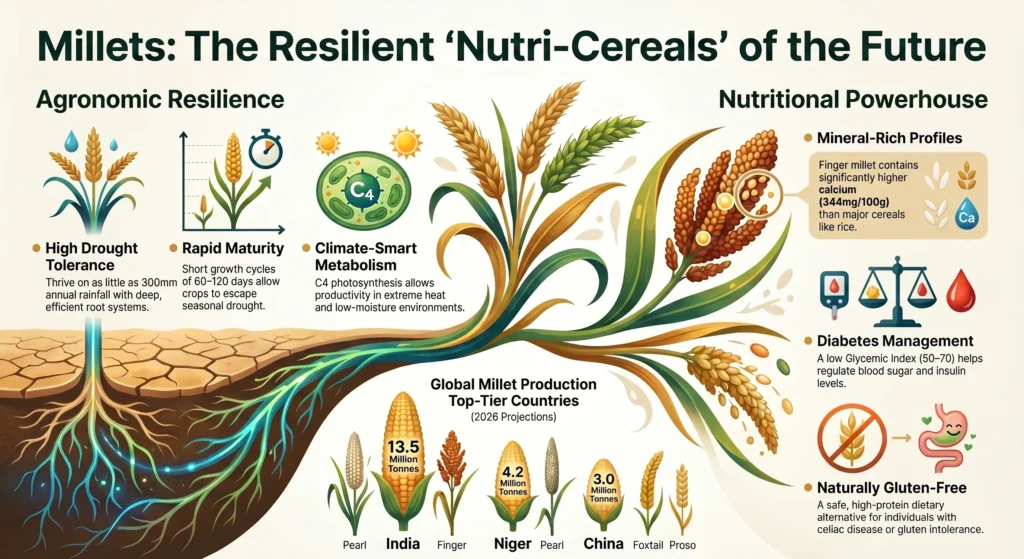
The Millets is a comprehensive and insightful exploration of one of the most ancient yet increasingly important groups of cereal crops in the modern world. As global agriculture faces unprecedented challenges due to climate change, water scarcity, soil degradation, and rising population pressure, millets have re-emerged as a powerful solution for ensuring sustainable food systems and nutritional security. This book presents a holistic understanding of millets by integrating scientific knowledge, historical perspectives, and modern agricultural advancements.
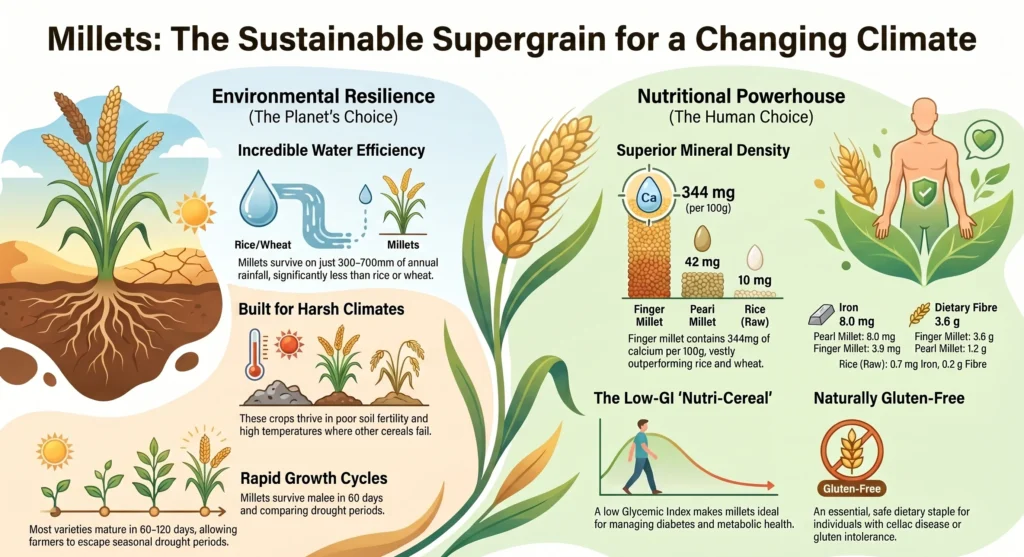
Millets, often referred to as “nutri-cereals,” are highly resilient crops that thrive in arid and semi-arid environments where major cereals like rice and wheat struggle to survive. Their ability to grow under low-input conditions, with minimal water and fertilizers, makes them an ideal choice for climate-resilient agriculture. This book highlights the ecological importance of millets and their potential to reduce the environmental footprint of farming while promoting biodiversity and soil health.
In addition to their agronomic advantages, millets are nutritionally superior grains rich in dietary fiber, protein, essential minerals such as iron, calcium, magnesium, and zinc, and a wide range of bioactive compounds. Their low glycaemic index and gluten-free nature make them highly suitable for addressing modern lifestyle diseases such as diabetes, obesity, and cardiovascular disorders. The book emphasizes the role of millets in combating malnutrition and improving global dietary diversity.
The content further explores the diversity, taxonomy, genetic resources, and centers of domestication of millet crops, providing readers with a strong scientific foundation. It traces the historical journey of millets from ancient civilizations to their decline during the Green Revolution and their current revival as “smart foods” for the future. The book also discusses the global scenario of millet production, consumption trends, and emerging market opportunities driven by increasing health awareness.
With contributions from experienced academicians and researchers, the book bridges the gap between traditional knowledge and modern science. It presents advancements in breeding, genomics, and biotechnology that are helping develop high-yielding, climate-resilient millet varieties. Additionally, it sheds light on value addition, processing technologies, and the expanding role of millets in food industries and entrepreneurship.
Designed for students, researchers, academicians, policymakers, and agricultural professionals, The Millets serves as a valuable resource for understanding the multifaceted importance of these crops. It not only highlights their role in sustainable agriculture but also envisions their contribution to achieving global food and nutritional security in the 21st century.
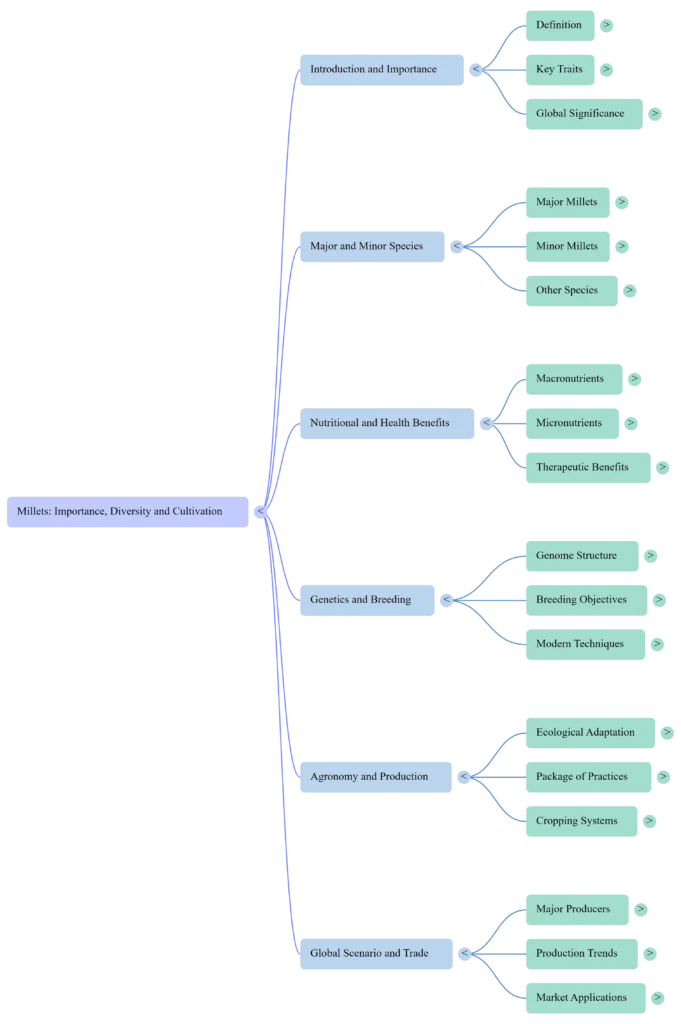
BOOK MAP
CHAPTERS
Chapter 1: Introduction to Millets – Importance and Global Scenario
This chapter introduces millets as ancient, climate-resilient crops and explains their growing importance in modern agriculture. It highlights their nutritional value, global production trends, and role in food and nutritional security.
Chapter 2: Diversity, Taxonomy and Centers of Domestication
This chapter explores the origin and domestication history of millets across different regions. It explains genetic diversity, classification, and the importance of centers of origin for crop improvement.
Chapter 3: Taxonomy, Botanical Classification and Morphology of Millets
This chapter focuses on scientific classification and plant structure of millets. It covers morphological traits such as roots, stems, leaves, and grains for better identification and understanding.
Chapter 4: Climate Resilience and Adaptation of Millets
This chapter explains how millets tolerate drought, heat, and poor soils. It highlights their role as climate-smart crops suitable for sustainable agriculture under changing environmental conditions.
Chapter 5: Nutritional Composition and Health Benefits of Millets
This chapter details the rich nutritional profile of millets including proteins, fiber, minerals, and antioxidants. It also discusses their role in preventing diseases like diabetes, obesity, and heart disorders.
Chapter 6: Production Technology of Millets
This chapter provides practical knowledge on millet cultivation including land preparation, sowing, irrigation, fertilization, and harvesting practices to achieve better yield.
Chapter 7: Soil Health and Sustainable Farming Systems
This chapter highlights the role of millets in improving soil fertility and maintaining ecological balance. It explains their integration into sustainable and organic farming systems.
Chapter 8: Pest and Disease Management in Millets
This chapter discusses major pests and diseases affecting millet crops. It provides eco-friendly and integrated management strategies to protect crops and ensure productivity.
Chapter 9: Post-Harvest Management and Processing
This chapter focuses on storage, handling, and processing of millets. It explains techniques to reduce losses and improve shelf life and product quality.
Chapter 10: Value Addition and Millet-Based Products
This chapter explores different millet-based food products like flour, snacks, bakery items, and beverages. It highlights opportunities for entrepreneurship and food industries.
Chapter 11: Economics and Marketing of Millets
This chapter explains the economic importance of millets, market trends, pricing, and supply chains. It also discusses government policies and support systems for millet promotion.
Chapter 12: Role of Millets in Food Security and SDGs
This chapter connects millets with global food security and Sustainable Development Goals (SDGs). It emphasizes their role in reducing hunger, improving health, and promoting sustainable agriculture.
Chapter 13: Future Prospects and Research Innovations in Millets
This chapter discusses modern research advancements like genomics, breeding, and biotechnology. It highlights future opportunities for improving productivity, nutrition, and global adoption of millets.