
₹ 999.00
$99.00
SOCIAL MEDIA AND SOCIETY
THE IMPACT OF TECHNOLOGY ON HUMAN INTERACTION
AUTHOR(S) -
Dr. RAJKUMARI AHIR, SAKET AGRAWAL

DOI-10.61909/AMKEDTB052670
Genre/Subject – Social Science
Book code -AMKEDTB052670
pgs: 242
ISBN(P) -978-93-6556-054-1
ISBN(E) -978-93-6556-123-4
Published – 04/05/2026
Edition – 1
BUY PRINT

BUY EBOOK
INTRODUCTION VIDEO

AUTHORS

Dr. RAJKUMARI AHIR
Dr. Rajkumari Ahir The author is a dedicated academic and researcher in the field of Sociology with a strong educational background, holding degrees of B.Sc., M.A., and MSW, along with qualifying SLET and NET. The author has also completed a Ph.D. from JRN Rajasthan Vidhyapeeth University Udaipur, with research focused on the sociological dimensions of human rights, particularly with special reference to the Right to Information.
Currently serving as an Assistant Professor in the Department of Sociology at MLSU since 2018, the author has actively contributed to teaching, research, and academic development. In addition to teaching responsibilities, the author has served as Course Coordinator for the MSW program since 2020 and has also holding the position of Warden at Gargi Girls’ Hostel, MLSU since 2021 till now. The author has further contributed administratively as an In-charge at the Census Data Station.
With a strong inclination towards research, the author has published 12 research papers in national and international journals. The key areas of interest include Sociology of Health, Tribal Health, Medical Facilities, and Mass Communication.
The author has also contributed to academic literature through the book titled “Manavadhikar and Suchana Ka Adhikar” and has guided and participated in various major and minor research projects.

SAKET AGRAWAL
This is Saket Agarwal, Assistant Professor, School of Law, JECRC University, Jaipur. I have a graduation with B.B.A LL.B (Business Law Hons.) and LL.M (Corporate and Commercial Law). I am currently pursuing Doctor of Philosophy program from Department of Law, University of Rajasthan, Jaipur. I have been associated as an associate editor and later as senior content editor with various journals in the past dealing with different areas of law. I have a keen interest in research involving interdisciplinary approach. I have publications in the form of book chapters, articles, blogs etc. Some of the areas of law, I have previously researched upon includes the environment law, constitutional law, criminal law, corporate law etc.
ABOUT BOOK / ABSTRACT
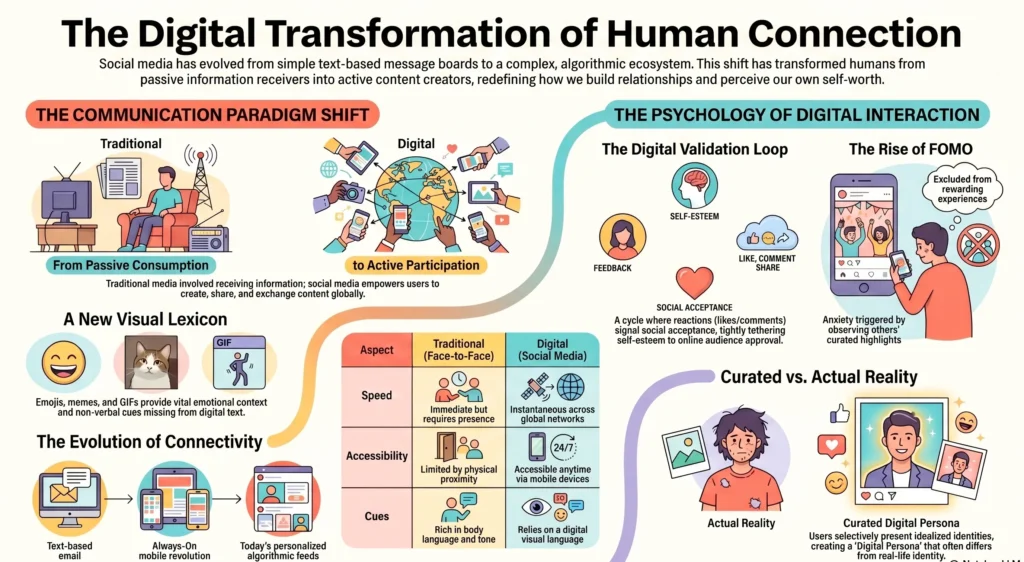
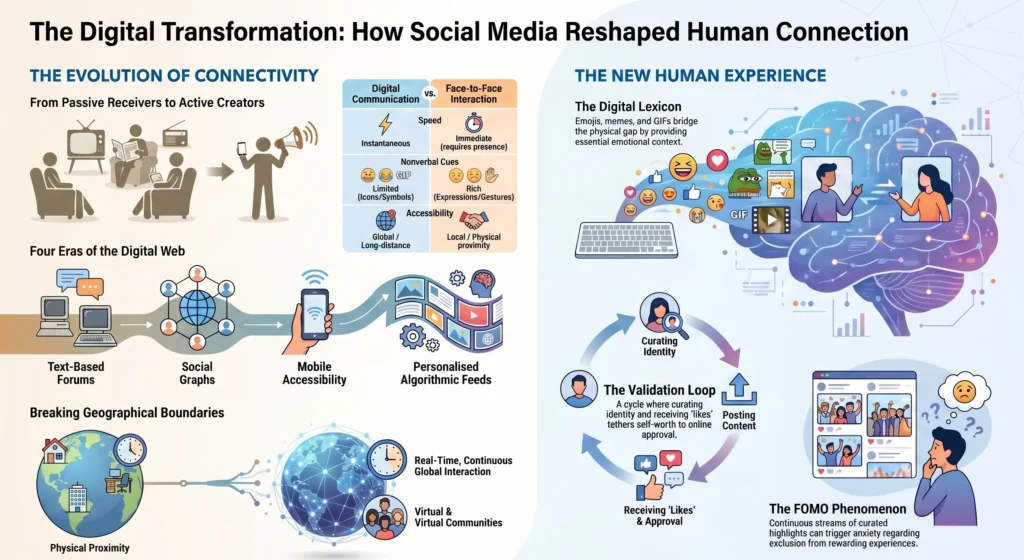
Social Media and Society: The Impact of Technology on Human Interaction explores how digital technologies—especially social media platforms—have reshaped the way people communicate, form relationships, and participate in society. Over the past two decades, the rise of social media has transformed everyday human interaction from primarily face-to-face communication to a complex network of online connections that transcend geographical and cultural boundaries. This book examines the role of technology in redefining communication patterns, influencing social behavior, and creating new opportunities and challenges for individuals and communities around the world.
The book begins by introducing the concept of social media and explaining how these platforms have evolved alongside technological advancements such as smartphones, high-speed internet, and mobile applications. It highlights the growing importance of digital communication in daily life, where people rely on social media for information sharing, relationship building, entertainment, and professional networking. As communication becomes increasingly digital, traditional forms of interaction are being reshaped, leading to new forms of expression, including visual language, emojis, and multimedia communication.
Beyond communication, social media has also influenced personal relationships, cultural identity, education, and professional development. The book discusses how online platforms allow people to maintain long-distance relationships, build virtual communities, and connect with individuals who share similar interests or goals. At the same time, it critically examines the psychological effects of social media use, including issues related to self-esteem, online validation, and the pressure to maintain a digital presence. Topics such as the fear of missing out (FOMO), social comparison, and excessive screen time highlight the complex emotional and mental health implications of constant connectivity.
Another important focus of the book is the cultural and societal impact of social media. Digital platforms have accelerated globalization by enabling the rapid exchange of ideas, trends, and cultural practices across different regions of the world. Influencers, viral content, and online communities now play a major role in shaping public opinion and social norms. In education and professional life, social media has created new opportunities for collaboration, networking, and knowledge sharing, while also presenting challenges related to distractions, digital boundaries, and responsible technology use.
The book also addresses important ethical issues such as privacy, data security, cyberbullying, and the regulation of digital platforms. As individuals share more personal information online, concerns about digital safety and responsible technology use become increasingly significant. Understanding these challenges is essential for building a more secure and ethical digital environment.
Finally, the book looks toward the future of social media and human interaction. Emerging technologies such as artificial intelligence, virtual reality, and advanced communication tools are likely to further transform the digital landscape. By examining both the benefits and risks of these developments, Social Media and Society provides readers with a balanced understanding of how technology is shaping modern human interaction and what steps can be taken to build healthier and more meaningful digital experiences.
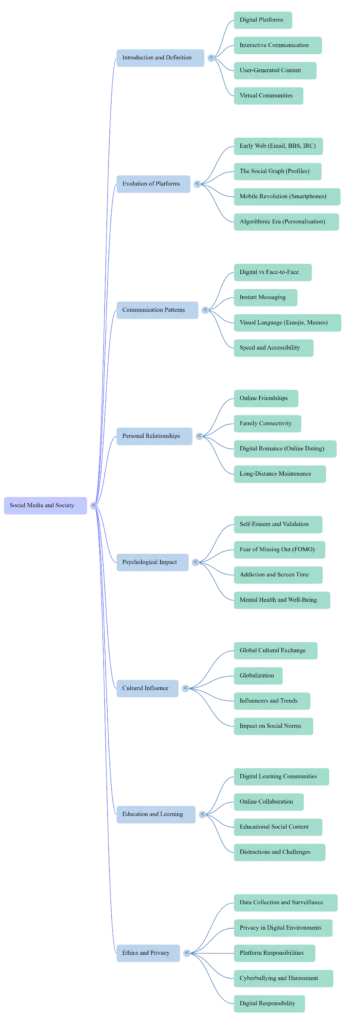
BOOK MAP
CHAPTERS
Chapter 1: Introduction to Social Media and Society
This chapter introduces the concept of social media and its growing role in modern society. It explains how digital platforms influence everyday communication and provides an overview of how technology has transformed human interaction in the digital age.
Chapter 2: History and Development of Social Media
This chapter traces the evolution of social media from early forms of online communication to modern global platforms. It explores how technological innovation, mobile devices, and online communities have shaped the development of digital networks.
Chapter 3: Technology and Changing Communication Patterns
This chapter examines how communication has shifted from traditional face-to-face interaction to digital messaging and online conversations. It also discusses the role of visual language, emojis, and multimedia in shaping modern communication styles.
Chapter 4: Social Media and Personal Relationships
This chapter explores how social media affects friendships, family connections, and romantic relationships. It analyzes both the positive and negative effects of digital communication on relationship quality and emotional connection.
Chapter 5: Psychological Effects of Social Media
This chapter focuses on the mental and emotional impact of social media use. Topics include self-esteem, online validation, social comparison, addiction, and the broader effects of digital environments on mental health.
Chapter 6: Social Media and Cultural Influence
This chapter discusses how digital platforms promote cultural exchange and global connectivity. It also examines how social media influences cultural identity, trends, traditions, and social norms.
Chapter 7: Social Media in Education and Learning
This chapter explores how technology and social media are transforming education. It highlights the benefits of digital learning communities while also addressing challenges such as distractions and information overload.
Chapter 8: Social Media and Professional Life
This chapter analyzes the role of social media in career development, networking, and business marketing. It also discusses the importance of maintaining professional boundaries and responsible online behavior.
Chapter 9: Privacy, Security, and Ethical Issues
This chapter examines major concerns related to digital privacy, data protection, cyberbullying, and ethical technology use. It also reviews policies and regulations designed to protect users in the digital environment.
Chapter 10: The Future of Social Media and Human Interaction
The final chapter looks at emerging technologies such as artificial intelligence and virtual reality. It discusses how these innovations may shape future communication and highlights the importance of maintaining balance between digital and real-life relationships.