₹ 999.00
$99.00
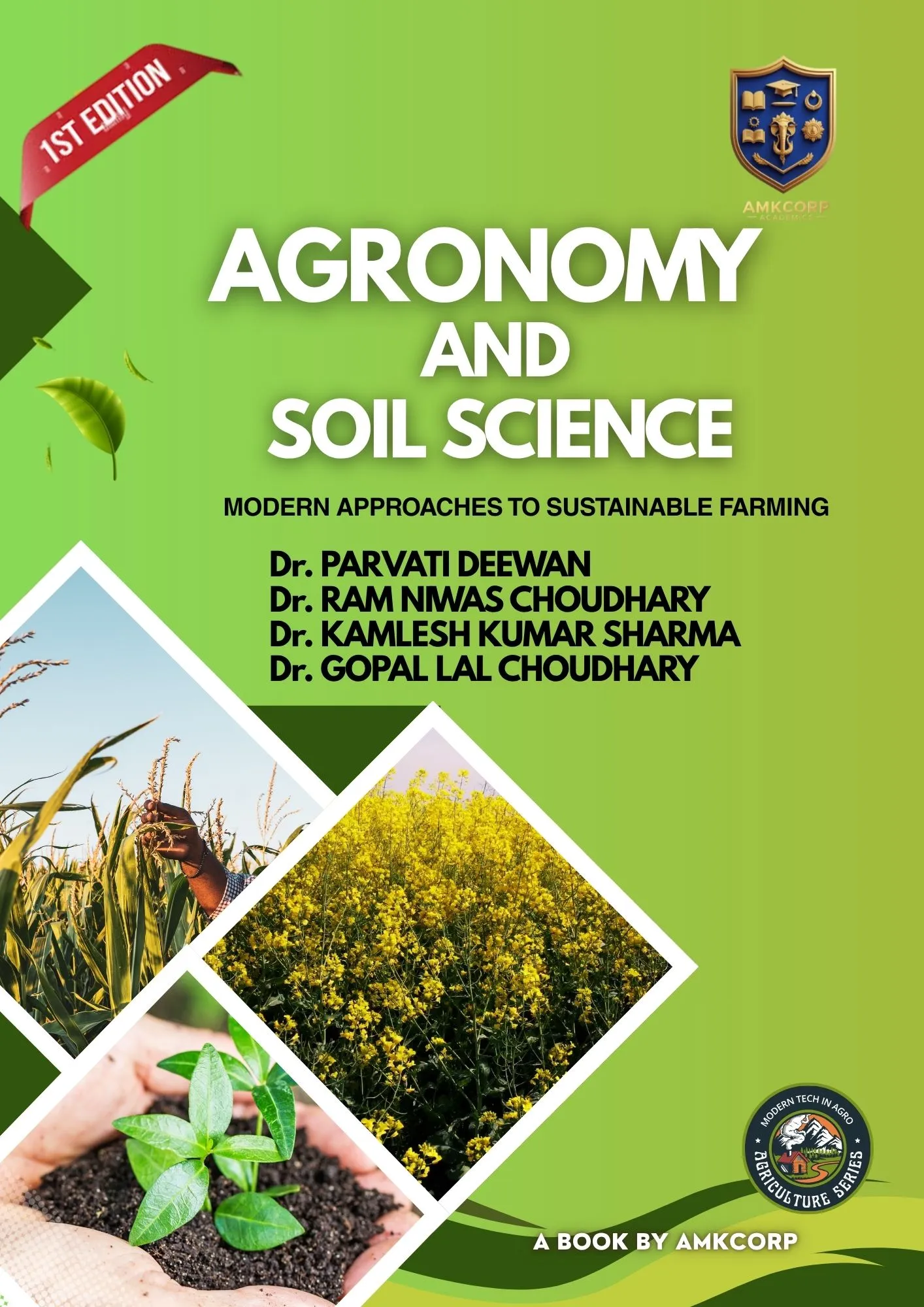
AGRONOMY AND SOIL SCIENCE
MODERN APPROACHES TO SUSTAINABLE FARMING
AUTHOR(S) -
Dr. PARVATI DEEWAN, Dr. RAM NIWAS CHOUDHARY,
Dr. KAMLESH KUMAR SHARMA, Dr. GOPAL LAL CHOUDHARY

DOI – 10.61909/AMKEDTB052671
Genre/Subject – Agriculture, Agronomy, Soil Science
Book code – AMKEDTB052671 pgs: 226
ISBN(P) -978-93-6556-858-5
ISBN(E) – 978-93-6556-604-8
Published – 04/05/2026
Edition – 1
BUY PRINT

BUY EBOOK
INTRODUCTION VIDEO

AUTHORS
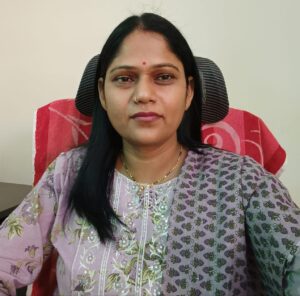
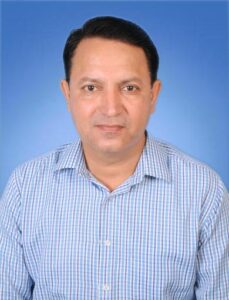
Dr. PARVATI DEEWAN
Dr. Parvati Deewan is an Assistant Professor in the Department of Agronomy at the College of Agriculture, Kotputli, under Sri Karan Narendra Agriculture University, Jobner, Rajasthan. She earned her Ph.D. in Agronomy from MPUAT, Udaipur, Rajasthan. She completed her M.Sc. (Ag.) in Agronomy from Anand Agricultural University (AAU), Anand, Gujarat, and her B.Sc. (Ag.) from Rajasthan Agricultural University, Bikaner, Rajasthan. She has qualified the ICAR-ASRB NET examination and has over 13.5 years of experience in research, teaching, and extension. She has extensive experience in conducting experiments under AICRP on Seed Spices, AICRP on Rapeseed-Mustard, and AINRP on Onion.
Dr. Deewan has received several awards at conferences, seminars, and workshops. She has been honored with the Young Scientist Award, Best Poster Award, Ph.D. Merit Award, Junior Research Fellowship (JRF), and Best Centre Performance Award in Rapeseed-Mustard. She has developed new technologies that have been recommended at both national and state levels for farmers. She has published more than 100 research papers, abstracts, popular articles, book chapters, and technical bulletins etc. in reputed national and international journals.
Dr. RAM NIWAS CHOUDHARY
Dr. Ram Niwas Choudhary is an accomplished agricultural scientist and Associate Professor of Agronomy at Sri Karan Narendra Agriculture University, Jobner (Jaipur, Rajasthan). He obtained his Ph.D. in Agronomy from Anand Agricultural University in 2020 and served there as an Assistant Professor from 2012 to 2023. With over a decade of academic and research experience, his areas of expertise include wheat and barley production, chickpea cultivation, rainfed agriculture, climate change adaptation, drought management, and arid legume systems.
Dr. Choudhary has published numerous research papers in reputed national and international journals, focusing on nutrient management, weed control, and sustainable crop production. He has been actively involved in farmer-oriented extension activities and agricultural development programs. His contributions have been recognized through several prestigious awards, including the Young Agronomist Award (2024), Dr. M.S. Swaminathan Award (2024), and Young Scientist Award (2018). He is also a life member of professional societies such as the Indian Society of Agronomy.
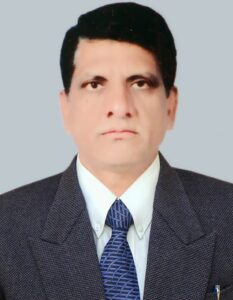
Dr. KAMLESH KUMAR SHARMA
Dr. Kamlesh Kumar Sharma, Ph.D (Soil Science & Agril. Chemistry) is presently working as Professor at College of Agriculture, Lalsot, District Dausa. He did his B. Sc. (Ag.) in the year 1990, M. Sc. (Ag.) Soil Science in the year 1993 and Ph.D in the year 2006. He got merit scholarship and awarded gold medal for his M.Sc. (Ag.) degree. He has 17 years experience of UG & PG teaching in the Department of Soil Science & Agril. Chemistry at College of Agriculture-Bikaner, SKN College of Agriculture-Jobner and now at College of Agriculture- Lalsot. He has 4 years experience of research work. He guided 5 post Graduate students of Soil Science, He published 24 research articles, Abstracts in the reputed journals besides preparing nine Practical Manuals of different courses for UG classes.
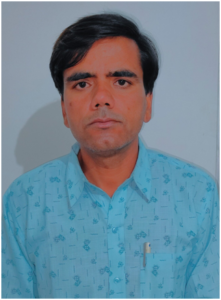
Dr. GOPAL LAL CHOUDHARY
Dr. G. L. Choudhary is currently working as Associate Professor and and Zonal Director Research, Agricultural Research Station, Navgaon, Alwar, Rajasthan He has completed his B.Sc. (Ag.) Hons. and M.Sc. (Ag.) in Agronomy from S.K.N. College of Agriculture, Jobner (Swami Keshwanand Rajasthan Agricultural University, Bikaner) and Ph.D. from Division of Agronomy, ICAR-Indian Agricultural Research Institute, New Delhi. He has been awarded Gold Medal by Swami Keshwanand Rajasthan Agricultural University, Bikaner for securing first rank during M.Sc. (Ag.) programme. He has also received DST Inspire fellowship form Department of Science and Technology, Ministry of Science and Technology, Government of India.
Dr. G.L. Choudhary has a vast experience in the field of agriculture science with specialization in Dryland Agriculture, Nutrient Management and Water Management. He has served as Assistant Professor-cum-Junior Scientists (Agronomy), PG Faculty at Bihar Agricultural University, Sabour, Bhagalpur and has involved in teaching, research, extension and training activities of the university. He has handled several research projects including in-house projects, AICRP Project, State Government Project and International Projects as Principal Investigator and Co-Principal Investigator. He has published more than 40 research papers in the journals of international and national repute. He also published one book, wrote 7 book chapters, published more than 70 popular articles for the farming community and delivered more than 25 radio talk for the farmers on various aspects of agriculture at All India Radio.
He has received “Best Popular Hindi Article Award” by ICAR-India Agricultural Research Institute, New Delhi during 2013 and awarded “Best Teacher Award” by Bihar Agricultural University, Sabour during 2023. He has done a tremendous work in the field of quality seed production at Bhola Paswan Shastri Agricultural College, Purnea, Bihar and Agriculture Research Station, Navgaon, Alwar, Rajasthan. He has attended more than 30 national and international conferences/seminars/workshops/symposia. He has involved in the development of several technologies of various crops for the farming community.
ABOUT BOOK / ABSTRACT
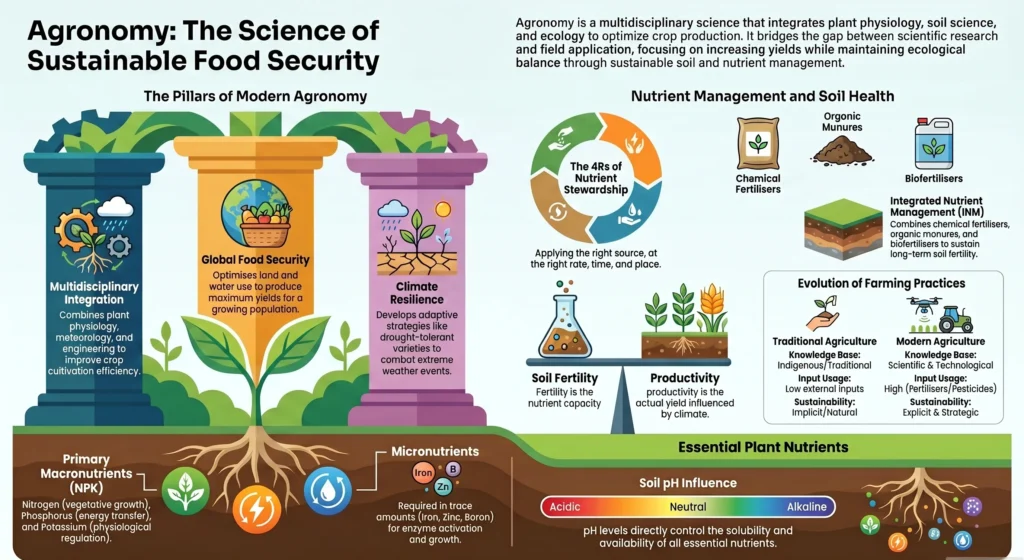
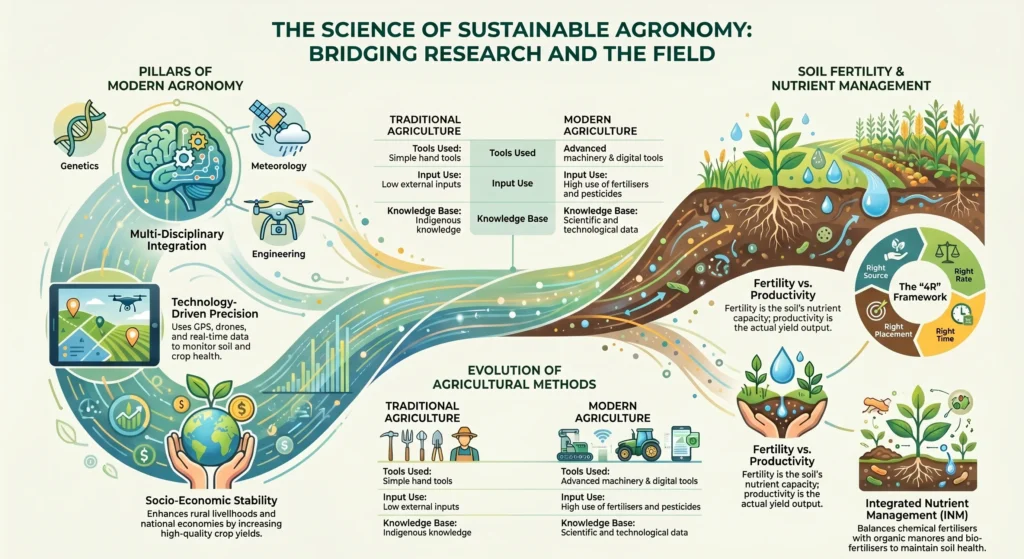
Agronomy and Soil Science: Modern Approaches to Sustainable Farming is a comprehensive and forward-looking resource designed to provide in-depth knowledge of modern agricultural practices with a strong emphasis on sustainability. The book bridges the gap between traditional agronomic principles and emerging scientific advancements, making it highly useful for students, researchers, academicians, and agricultural professionals.
Agriculture today is facing multiple challenges including climate change, soil degradation, declining productivity, and increasing demand for food. This book addresses these challenges by integrating fundamental concepts of agronomy and soil science with innovative approaches such as precision farming, organic agriculture, and climate-resilient crop management. It provides a holistic understanding of how soil, climate, and crop management practices interact to influence agricultural productivity and environmental sustainability.
The initial chapters introduce the core principles of agronomy and highlight its critical role in ensuring global food security. The book then explores soil fertility, nutrient management, and soil health, offering scientific insights into maintaining productive and balanced soils. Special attention is given to soil chemistry and the role of organic matter in sustaining soil ecosystems.
A major highlight of the book is its focus on climate change and its impact on agriculture. It discusses both adaptation and mitigation strategies that farmers and policymakers can adopt to sustain agricultural productivity under changing environmental conditions. The inclusion of stress management in crops provides valuable knowledge on handling abiotic and biotic stresses, which are becoming increasingly common due to climate variability.
The book also emphasizes the importance of agrometeorology in crop planning, helping readers understand how weather and climate influence farming decisions. Conservation agriculture and sustainable farming practices are discussed in detail, promoting efficient resource use and environmental protection.
Further, the book covers organic farming and integrated farming systems, which are gaining popularity for their eco-friendly and economically viable approaches. Modern technologies such as precision agriculture, GIS, GPS, and digital farming tools are also explained, showcasing how innovation is transforming agriculture.
The final chapter focuses on crop production systems, providing practical knowledge on the cultivation of cereals, pulses, oilseeds, and forage crops. Overall, this book serves as a valuable guide for understanding and implementing sustainable agricultural practices in the modern era.
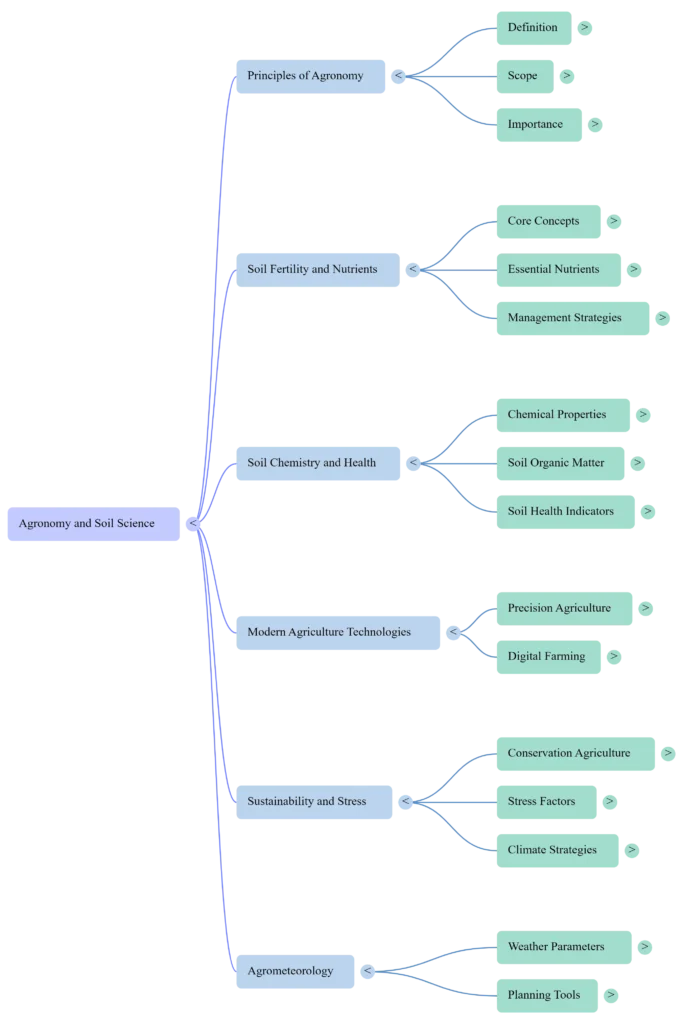
BOOK MAP
CHAPTERS
Chapter 1: Principles of Agronomy and Modern Agriculture
This chapter introduces the fundamentals of agronomy, its scope, and its importance in modern agriculture. It also explains the evolution of agricultural practices and future challenges.
Chapter 2: Soil Fertility and Nutrient Management
Focuses on soil fertility concepts, essential nutrients, and strategies to manage nutrients effectively using integrated approaches.
Chapter 3: Soil Chemistry and Soil Health
Explains soil chemical properties, nutrient interactions, and the importance of soil organic matter and health indicators.
Chapter 4: Climate Change and Agricultural Sustainability
Discusses the impact of climate change on agriculture and explores adaptation and mitigation strategies for sustainable farming.
Chapter 5: Stress Management in Crops
Covers different types of stresses affecting crops and provides practical solutions to improve stress tolerance.
Chapter 6: Agrometeorology and Crop Planning
Highlights the role of weather and climate in agriculture and explains how forecasting helps in better crop planning.
Chapter 7: Conservation and Sustainable Agriculture
Focuses on conservation techniques and sustainable farming practices to protect natural resources.
Chapter 8: Organic Farming and Integrated Farming Systems
Describes principles of organic farming and the benefits of integrated farming systems for resource optimization.
Chapter 9: Precision Farming and Modern Technologies
Introduces advanced technologies like GIS, GPS, and automation in agriculture for improved efficiency and productivity.
Chapter 10: Crop Production Systems
Provides detailed information on the production of cereals, pulses, oilseeds, and forage crops along with cropping systems.