₹ 999.00
$99.00
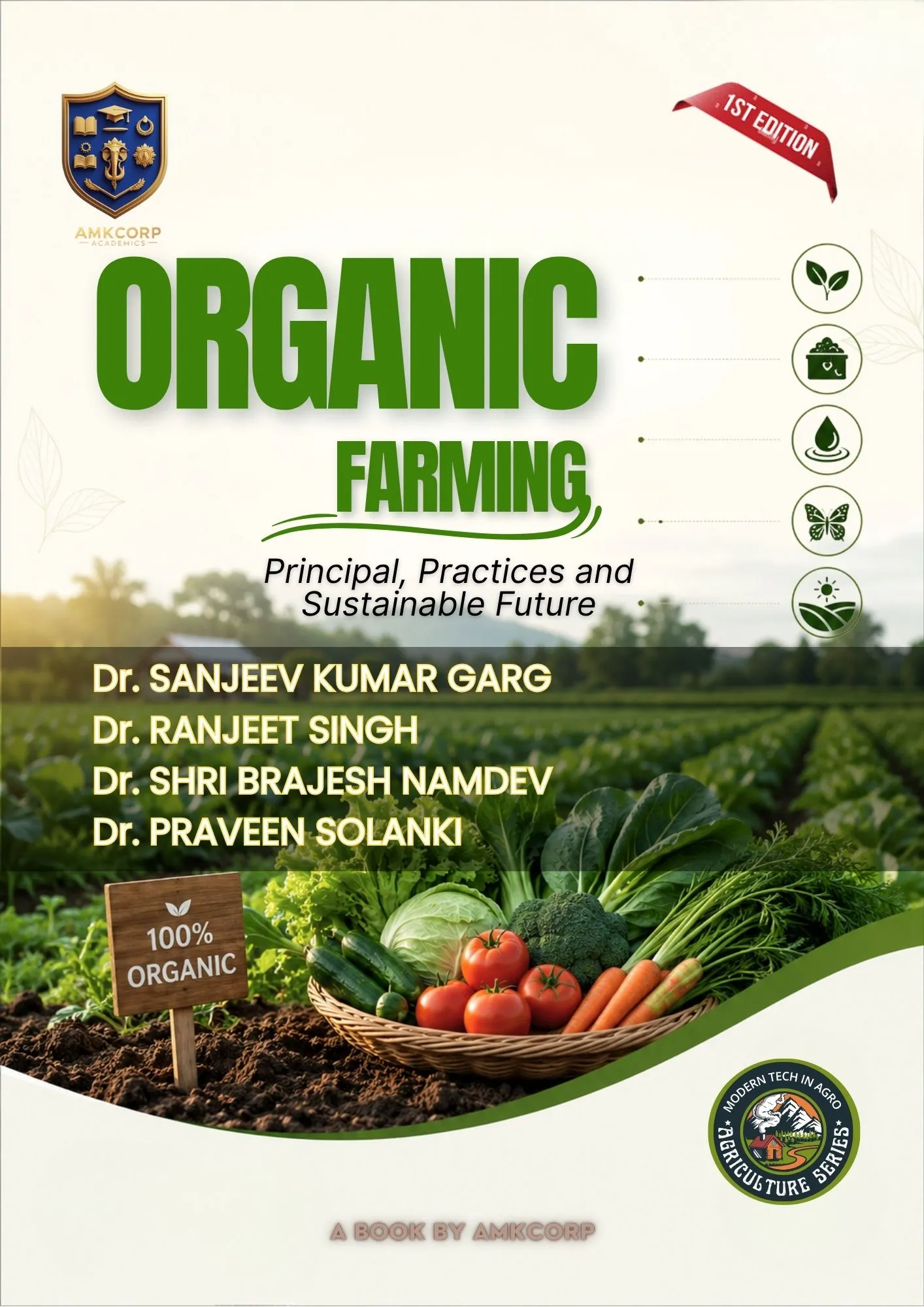
ORGANIC FARMING
PRINCIPAL, PRACTICES AND SUSTAINABLE FUTURE
AUTHOR(S) -
Dr. SANJEEV KUMAR GARG
Dr. RANJEET SINGH
Dr. BRAJESH NAMDEV
Dr. PRAVEEN SOLANKI

DOI – 10.61909/AMKEDTB072681
Genre/Subject – Agriculture, Organic Farming
Book code – AMKEDTB072681
pgs: 233
ISBN(P) -978-93-6556-019-0
ISBN(E) – 978-93-6556-018-3
Published – 06/07/2026
Edition – 1
BUY PRINT

BUY EBOOK
INTRODUCTION VIDEO
AUTHORS
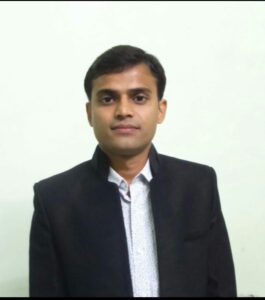
Dr. SANJEEV KUMAR GARG
Dr. Sanjeev Kumar Garg is a Scientist, agriculture Extension in the Krishi Vigyan Kendra – Bhusahb Bhuskute Smarti Lok NyasGovindnagarNrmadapuram Dr. Garg received his Bachelor of Agriculture (2007) and Master of Agricultural Extension Education (2009) degrees from college of agriculture, Jawaharlal Nehru Agricultural University, Jabalpur, and his Ph.D. in Agricultural Extension (2014) from Mahatma Gandhi Chitrakoot Gramodaya University, Chitrakoot, Satna, Madhya Pradesh.
He has been serving as a Senior Research Fellow in the National Agriculture Innovation Project KVK Jhabuafrom 2010 to 2012 and Senior Research Fellow National Innovation Project on Climate Resilient Agriculture (NICRA) at the ICAR-Central Institute of Agricultural Engineering, Bhopal, Madhya Pradesh, from 2012 to 2017. Later he joined Krishi Vigyan Kendr GovindnagarNarmadaporam as scientist in 2018. He is served the i/c Senior Scientist Head Krishi Vigyan Kendra from 2020 to 2026. He major field of interest orogenic farming, Natural farming and strengthening research-extension-training. Specify work focuses on the dissemination of improved agricultural technologies, farmer linkages, capacity building of farmers and stakeholders, and promoting sustainable agriculture practices to enhance agricultural productivity and farmers’ livelihoods.
Dr Garg had mostly workout, developing of package practice of organic and natural farming and develops by one mobile app, organic farming, handled 6 intuitional project and CSR funded project including center of excellence organic farming
Dr Garg was recipient of Young Scientist Award, honored of best thesis award of Ph.D. and NAAS DhanukaKVK Zonal Award for institute. proceedings Souvenir and Technical Recommendations; one technical bulletins; 1 book, 5 booklet,eight book chapters, and published more than 20 research/ presented papers/ popular articles in various national and international reputed journals.
Dr. RANJEET SINGH
Dr. Ranjeet Singh is presently working at Krishi Vigyan Kendra (KVK), Govindnagar, Narmadapuram, Madhya Pradesh, under the ICAR system. He completed his M.Sc. (Ag.) and Ph.D. (Ag.) in Horticulture with specialization in Vegetable Science in 2021.
He began his professional career as a Researcher (Horticulturist) at ICAR–Agricultural Technology Application Research Institute (ATARI), Jabalpur, Madhya Pradesh. His academic and research interests include vegetable production technologies, sustainable horticultural practices, precision horticulture, and integrated crop management.
At present, he is actively engaged in research, technology assessment, refinement, and extension activities through the Krishi Vigyan Kendra (KVK) system of ICAR. His work focuses on the dissemination of improved agricultural technologies, strengthening research–extension–farmer linkages, capacity building of farmers and stakeholders, and promoting sustainable horticultural practices to enhance agricultural productivity and farmers’ livelihoods.

Dr. BRAJESH NAMDEV
Brajesh Kumar Namdev is presently working as I/c Senior Scientist & Head in Krishi Vigyan Kendra Govindnagar, Narmadapuram, Madhya Pradesh.He graduates from Collage of Agriculture,Jawaharlal Nehru Krishi Vishwavidyalaya (JNKVV)Jabalpur M.P. Thereafter he did M.Sc. (Ag.) Entomology from JNKVV Jabalpur. Ph.D. from Dr. B R. Ambedkar University of Social Science Mhow, Indore MP. During his 8 years tenure in field of research and extension he specialized in integrated crop pest management Rice, Sugarcane and oilseeds, Bioagents’ production and application. He has number of research and extension publication in his credit. He is now continuing his work on bio agents’ production and its application, popularization of different agriculture technologies among farmers community.

Dr. PRAVEEN SOLANKI
Dr. Praveen Solanki is an agricultural and environmental scientist dedicated to advancing soil health, sustainable agriculture, and environmental conservation through research, innovation, and farmer-centric extension. He serves as Programme Assistant (Soil Science) at Krishi Vigyan Kendra, Govindnagar, Narmadapuram (Madhya Pradesh), where he leads initiatives in soil testing, nutrient management, organic farming and microbial technologies. He holds a Ph.D. in Environmental Science from GBPUA&T, Pantnagar, an M.Sc. in Environmental Science & Technology from ANGRAU, Hyderabad and a B.Sc. (Hons.) in Agriculture from RVSKVV, Gwalior. He has qualified both the UGC-NET and ICAR-NET examinations. With over nine years of professional experience, Dr. Solanki has published research papers, review articles, book chapters, and popular scientific articles, while delivering expert talks on Doordarshan and All India Radio. His work has earned him several recognitions, including the Young Scientist Award and the Ecologist of the Year Award. Driven by the belief that healthy soil is the foundation of food security and environmental sustainability, Dr. Solanki continues to connect scientific research with practical solutions that benefit farmers, strengthen natural resources and promote a more sustainable future.
ABOUT BOOK / ABSTRACT
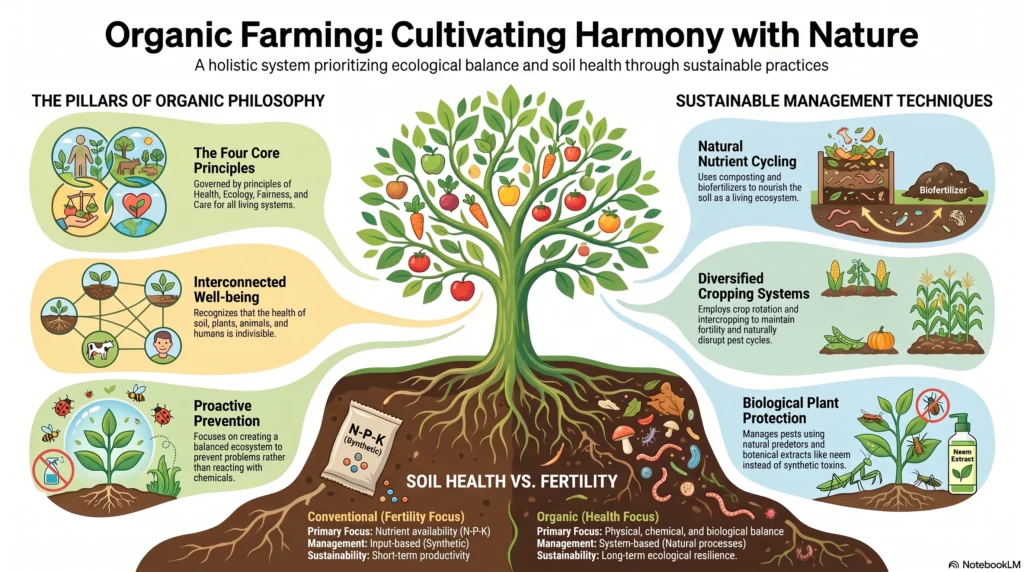
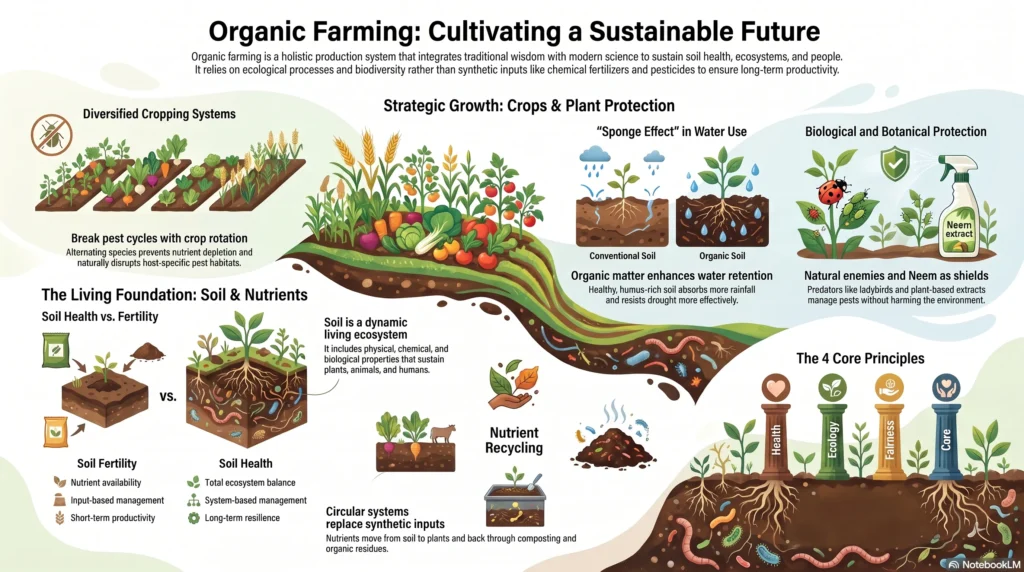
Organic Farming: Principles, Practices and Sustainable Future is a comprehensive and insightful textbook that explores the scientific foundations, practical approaches, and future prospects of organic agriculture in the modern world. The book is designed to provide students, researchers, academicians, agricultural professionals, extension workers, and competitive examination aspirants with a detailed understanding of organic farming systems and their role in sustainable agricultural development. By combining ecological principles with modern agricultural knowledge, the book highlights how organic farming contributes to environmental protection, soil health improvement, biodiversity conservation, and the production of safe and nutritious food.
The book begins with an introduction to the concept, history, evolution, and principles of organic farming, explaining its significance in achieving sustainable agriculture and ecological balance. It discusses both the global and Indian perspectives of organic agriculture, helping readers understand the growing importance of organic farming in response to concerns related to soil degradation, excessive chemical use, climate change, and food safety. Through systematic and reader-friendly explanations, the book establishes a strong conceptual foundation for understanding organic farming systems and their practical applications.
A major focus of the book is soil health and nutrient management, which are considered the backbone of successful organic farming. Detailed discussions on soil fertility, organic matter management, composting techniques, biofertilizers, humus formation, and nutrient cycling provide readers with valuable insights into maintaining long-term soil productivity without relying on synthetic fertilizers. Various composting methods such as vermicomposting and NADEP composting are explained scientifically and practically, emphasizing the importance of recycling organic waste for sustainable nutrient management.
The book further explores crop production techniques and agronomic practices suitable for organic farming systems. Important topics such as crop rotation, intercropping, mixed cropping, weed management, water management, and seed selection are discussed in detail to demonstrate how ecological farming practices improve crop productivity while maintaining environmental sustainability. Special attention has been given to organic plant protection strategies, including biological control methods, botanical pesticides, biopesticides, pest surveillance, and integrated pest and disease management approaches that minimize dependence on chemical pesticides.
Another significant aspect of the book is its coverage of organic horticulture, crop diversification, agroforestry, and livestock integration in farming systems. Readers are introduced to organic fruit and vegetable cultivation, organic spice production, protected cultivation systems, organic dairy farming, poultry management, manure recycling, and integrated farming approaches that enhance farm sustainability and profitability. The integration of crops and livestock is highlighted as an effective strategy for resource recycling and balanced farm management.
The book also provides detailed information on certification procedures, organic standards, labeling regulations, marketing systems, export opportunities, and government support schemes related to organic farming. Topics related to consumer demand, value addition, supply chain management, extension services, ICT tools, and adoption strategies help readers understand the socio-economic dimensions of organic agriculture. In addition, the final chapters explore climate change, sustainable development goals (SDGs), urban organic farming, technological innovations, and future challenges that will shape the future of organic agriculture globally.
Written in clear, systematic, and accessible language, this book successfully integrates theoretical concepts with practical applications and real-world relevance. Its structured chapter-wise presentation makes it highly suitable for academic study, research, agricultural training, and policy-oriented learning. Overall, the book serves as a valuable resource for promoting environmentally sustainable farming systems and encouraging the adoption of organic agriculture for a healthier and more sustainable future.
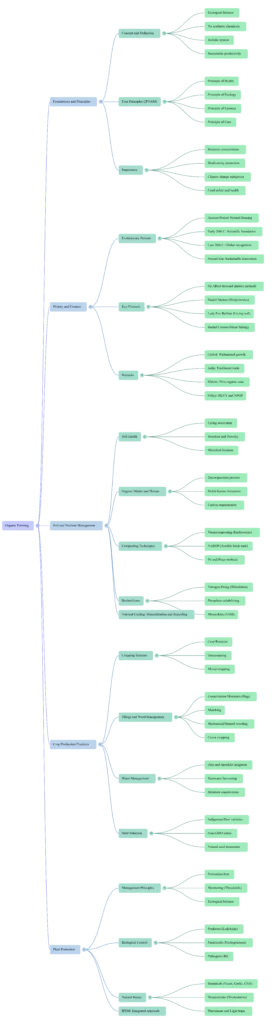
BOOK MAP
CHAPTERS
Chapter 1: Introduction to Organic Farming
This chapter introduces the concept, history, principles, and significance of organic farming. It explains the global and Indian scenario of organic agriculture and its role in sustainable farming systems.
Chapter 2: Soil Health and Nutrient Management
The chapter discusses soil fertility, organic matter management, composting techniques, biofertilizers, and nutrient cycling. It emphasizes sustainable soil management practices for maintaining long-term agricultural productivity.
Chapter 3: Crop Production and Agronomic Practices
This chapter explains crop rotation, intercropping, weed management, water management, and seed selection techniques in organic farming. It highlights ecological approaches to sustainable crop production.
Chapter 4: Organic Plant Protection
The chapter focuses on biological control methods, botanical pesticides, biopesticides, and integrated pest and disease management strategies. It explains eco-friendly approaches for protecting crops from pests and diseases.
Chapter 5: Organic Horticulture and Crop Diversification
This chapter covers organic fruit and vegetable production, spice cultivation, protected cultivation systems, and agroforestry practices. It highlights the importance of diversification in improving farm sustainability and income.
Chapter 6: Livestock Integration in Organic Farming
The chapter discusses the role of livestock, organic dairy farming, poultry management, manure recycling, and integrated farming systems in organic agriculture. It explains how livestock integration supports nutrient recycling and farm sustainability.
Chapter 7: Certification and Standards in Organic Farming
This chapter explains the certification process, national and international standards, labeling regulations, and participatory guarantee systems. It also discusses challenges related to organic certification and marketing.
Chapter 8: Economics and Marketing of Organic Products
The chapter focuses on the economics of organic farming, market demand, consumer behavior, export opportunities, value addition, and government support schemes. It provides insights into the commercial aspects of organic agriculture.
Chapter 9: Extension and Adoption of Organic Farming
This chapter discusses extension services, farmer awareness programs, ICT tools, successful case studies, and adoption strategies for promoting organic farming. It highlights the importance of education and training in sustainable agriculture.
Chapter 10: Future Prospects and Innovations in Organic Farming
The final chapter explores climate change, technological innovations, SDGs, urban organic farming, and future challenges in organic agriculture. It provides a broader perspective on the future scope and sustainability of organic farming systems.