₹ 999.00
$99.00
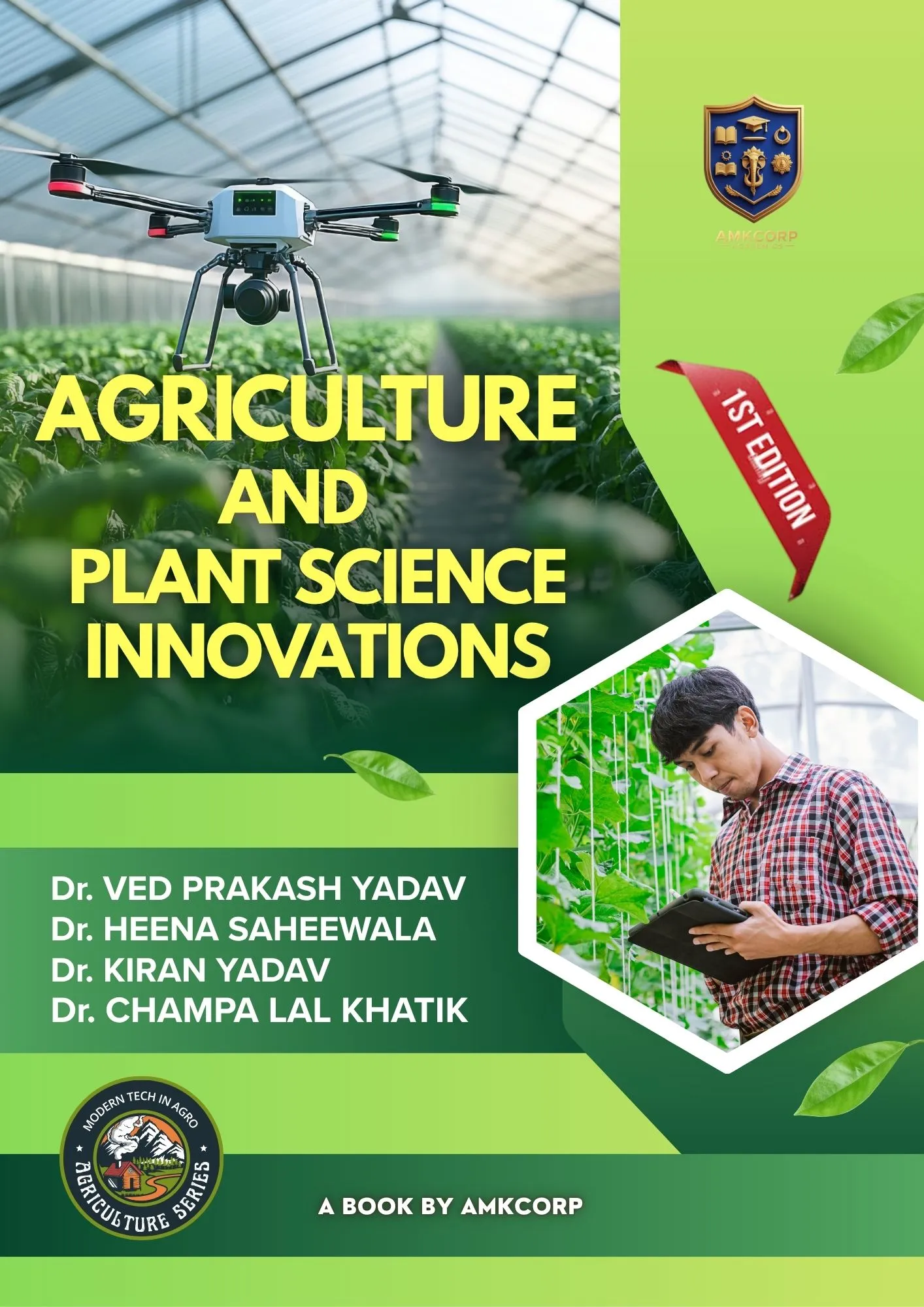
AGRICULTURE AND PLANT SCIENCE INNOVATIONS
AUTHOR(S) -
Dr. VED PRAKASH YADAV
Dr. HEENA SAHEEWALA
Dr. KIRAN YADAV
Dr. CHAMPA LAL KHATIK

DOI – 10.61909/AMKEDTB042662
Genre/Subject – Agriculture, Plant Science
Book code – AMKEDTB042662 pgs: 250
ISBN(P) -978-93-6556-702-1
ISBN(E) – 978-93-6556-538-6
Published – 03/04/2026
Edition – 1
BUY PRINT

BUY EBOOK
INTRODUCTION VIDEO

AUTHORS

Dr. VED PRAKASH YADAV
Dr. Ved Prakash Yadav is a Seed Business and Plant Breeding professional with over 20 years of experience spanning agricultural research, product development, and market-oriented seed systems in India. He is currently serving as Assistant Professor (Plant Breeding & Genetics) at Sri Karan Narendra Agriculture University (SKNAU), Jobner, Rajasthan, and has also worked extensively in the private and public research sectors.
His professional expertise includes crop improvement, hybrid and varietal evaluation, phenotypic stability assessment, germplasm management, and seed business strategy. Dr. Yadav has worked across Rajasthan, Gujarat, Madhya Pradesh, and Bihar, coordinating with universities, ICAR institutes, KVKs, and state governments. He has contributed to the development and evaluation of mustard, pearl millet, maize, cotton, and tree-borne oilseed crops, and has been associated with organizations such as Bayer Bioscience, Monsanto India, and NRCAF Jhansi.
Combining scientific rigor with market insight, Dr. Yadav is dedicated to bridging research, seed business, and sustainable agricultural development.

Dr. HEENA SAHEEWALA
Dr. Heena Saheewala is a distinguished academic and researcher in the field of plant biotechnology, currently serving as Assistant Professor at SKN College of Agriculture, Sri Karan Narendra Agriculture University (SKNAU), Rajasthan, India. She demonstrated exceptional academic merit by securing First Rank in both her Master’s and Doctoral programmes, earning her Ph.D. from Maharana Pratap University of Agriculture and Technology (MPUAT), Udaipur. Her scholarly work is positioned at the convergence of molecular biology, plant biotechnology, and rhizosphere science, with a strategic focus on plant–microbe interactions and biofertilizer-based interventions for sustainable agricultural systems. Her research contributions emphasize molecular-level insights into crop germplasm and the functional potential of nutrient-solubilizing rhizobacteria, aimed at improving nutrient-use efficiency and agricultural productivity.
She has an established record of scientific publications in reputed peer-reviewed journals and has contributed to academic books, technical manuals, and extension literature with leading international publishers. Her contributions reflect a strong commitment to bridging fundamental research with field-level applications.
A recipient of prestigious honors, including the Young Scientist Award and the Best Ph.D. Thesis Award, she actively contributes to academic development, capacity building, and innovation-driven agricultural advancement. Through her teaching, research, and outreach, she continues to contribute in addressing critical challenges in sustainable agriculture.

Dr. KIRAN YADAV
Dr. Kiran Yadav is working as an Assistant Professor at College of Agriculture, Lalsot-Dausa, Rajasthan. She has completed her B.Sc. (Hons.) Ag.and M.Sc. (Ag.) in Soil Science from S.K.N. Agriculture University, Jobner and Ph.D. (Soil Science & Ag. Chemistry) from Junagadh Agricultural University, Junagadh-Gujarat. She has been awarded Gold Medal for securing first rank during M.Sc. (Ag.) programme. She has qualified ASRB- NET for 3 times and also received ICAR- SRF fellowship during her Ph.D. programme. Dr. Yadav has been published several research papers and articles in reputed national and international journals.
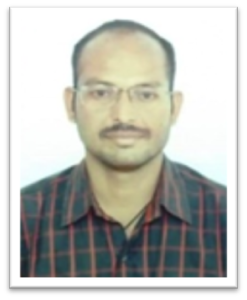
Dr. CHAMPA LAL KHATIK
Dr. Champa Lal Khatik is an Agricultural Scientist and Academician Serving as an Assistant Professor in Genetics and Plant Breeding (GPB) at the Agricultural Research Station (ARS), Fatehpur, under Sri Karan Narendra Agriculture University, Jobner (Rajasthan).He specializes in crop improvement through modern breeding techniques and genetic research. His work focuses on developing high-yielding, disease-resistant and climate-resilient crop varieties to support sustainable agriculture. Along with research, he is actively involved in teaching and guiding students in agricultural sciences. Dr. Khatik also contributes to farmer welfare by spreading awareness about improved seeds, modern farming practices and government agricultural schemes. Through his combined efforts in research, education and extension activities, he plays an important role in enhancing agricultural productivity and rural development.a
ABOUT BOOK / ABSTRACT
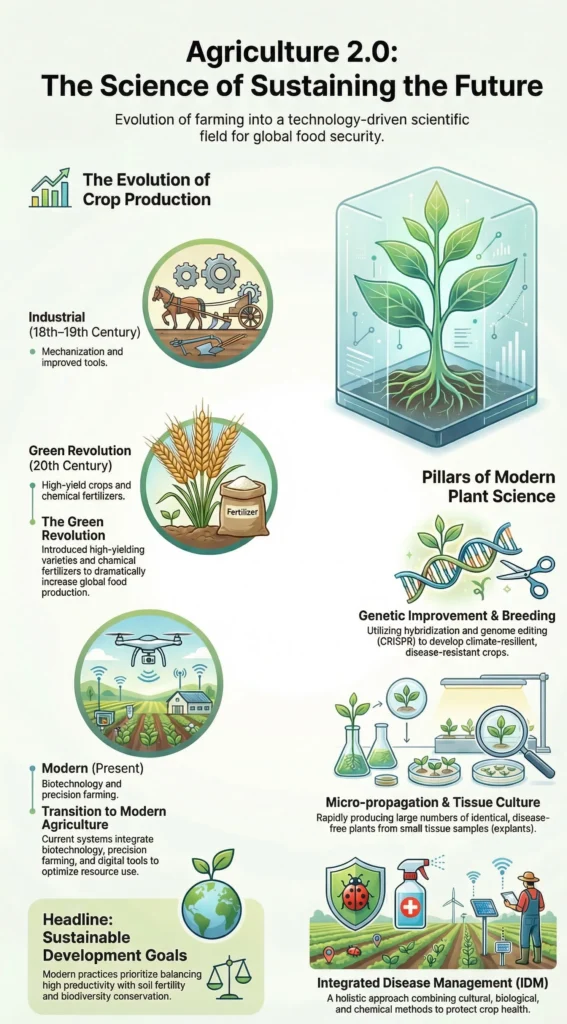
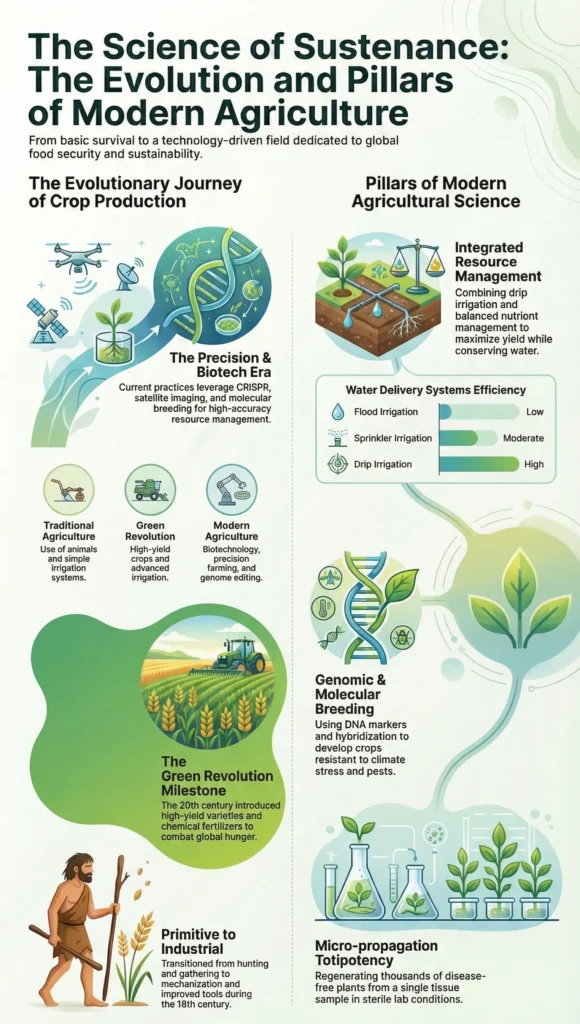
Agriculture and Plant Science Innovations is a comprehensive and forward-looking resource that bridges traditional agricultural knowledge with modern scientific advancements. This book is designed to provide readers with a deep understanding of the fundamental principles of agriculture while exploring cutting-edge innovations that are transforming the global agricultural landscape. It serves as an essential guide for students, researchers, educators, and professionals who aim to understand both the science and practice of sustainable crop production.
The book begins by establishing a strong foundation in agricultural sciences, explaining the historical development and the significance of agriculture in human civilization. It then gradually expands into core scientific areas such as plant physiology, biochemistry, and genetics, offering insights into how plants grow, develop, and respond to environmental conditions. These foundational concepts are critical for understanding the complex interactions between plants, soil, climate, and human interventions.
A major strength of this book lies in its integration of modern technologies with traditional practices. Topics such as molecular breeding, genetic engineering, CRISPR technology, and nanotechnology are discussed in a practical and accessible manner. These innovations highlight how science is contributing to improved crop productivity, disease resistance, and environmental sustainability. Additionally, the book emphasizes the importance of intellectual property rights and geographical indications, which play a crucial role in protecting agricultural innovations and traditional knowledge.
Sustainability is a central theme throughout the book. Readers are introduced to eco-friendly farming methods, including organic farming, precision agriculture, and soil conservation techniques. The impact of climate change on agriculture is addressed with a focus on adaptive strategies and resilience-building approaches. This makes the book highly relevant in the context of current global challenges related to food security and environmental protection.
The later chapters focus on practical aspects such as plant disease management, micro-propagation techniques, post-harvest handling, and agribusiness management. These sections provide valuable knowledge for improving agricultural productivity and profitability. By combining scientific theory with real-world applications, the book ensures that readers not only gain knowledge but also develop practical skills.
Overall, Agriculture and Plant Science Innovations is a well-structured and informative text that reflects the dynamic nature of modern agriculture. It encourages readers to think critically about the future of farming and inspires them to adopt innovative and sustainable approaches. This book stands as a vital resource for anyone interested in advancing agricultural practices and contributing to global food security.
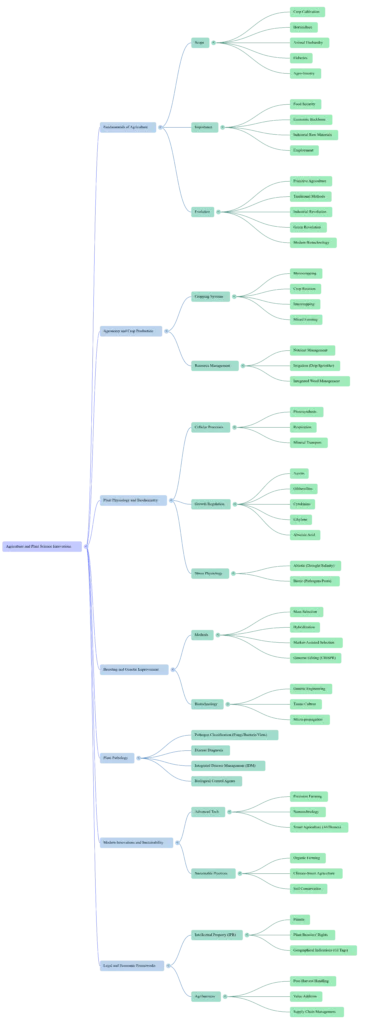
BOOK MAP
CHAPTERS
Chapter 1: Fundamentals of Agriculture and Plant Sciences
This chapter introduces the basic concepts of agriculture, including its importance, history, and evolution. It also explains how climate and soil influence crop growth and highlights emerging trends in plant sciences.
Chapter 2: Agronomy and Crop Production Technologies
Focuses on the principles of crop production, including cropping systems, nutrient management, irrigation, and weed control. It provides practical approaches to improving yield and efficiency.
Chapter 3: Plant Physiology and Biochemistry
Explains how plants function at the cellular and biochemical levels. Topics such as photosynthesis, respiration, and plant growth regulators are covered to understand plant development.
Chapter 4: Plant Breeding and Genetic Improvement
Discusses methods used to develop improved crop varieties, including traditional breeding and modern molecular techniques. It highlights the role of biotechnology in crop enhancement.
Chapter 5: Intellectual Property Rights (IPR) and GI Tags
Introduces legal frameworks that protect agricultural innovations and traditional products. It explains plant variety protection and the importance of geographical indications.
Chapter 6: Micro-propagation: Principles, Techniques, and Applications
Covers plant tissue culture techniques used for rapid multiplication of plants. It also discusses commercial applications and future challenges in this field.
Chapter 7: Plant Pathology and Disease Management
Focuses on plant diseases, their causes, and methods of identification. It emphasizes integrated disease management and biological control strategies.
Chapter 8: Agricultural Biotechnology and Modern Innovations
Explores advanced technologies like genetic engineering, CRISPR, biofertilizers, and nanotechnology. It shows how innovation is reshaping modern agriculture.
Chapter 9: Sustainable Agriculture and Environmental Management
Highlights eco-friendly farming practices such as organic farming and soil conservation. It also addresses climate change and precision agriculture techniques.
Chapter 10: Post-Harvest Technology and Agribusiness Management
Discusses storage, processing, and value addition of agricultural products. It also introduces agribusiness concepts and future opportunities in the agriculture sector.