₹ 999.00
$99.00
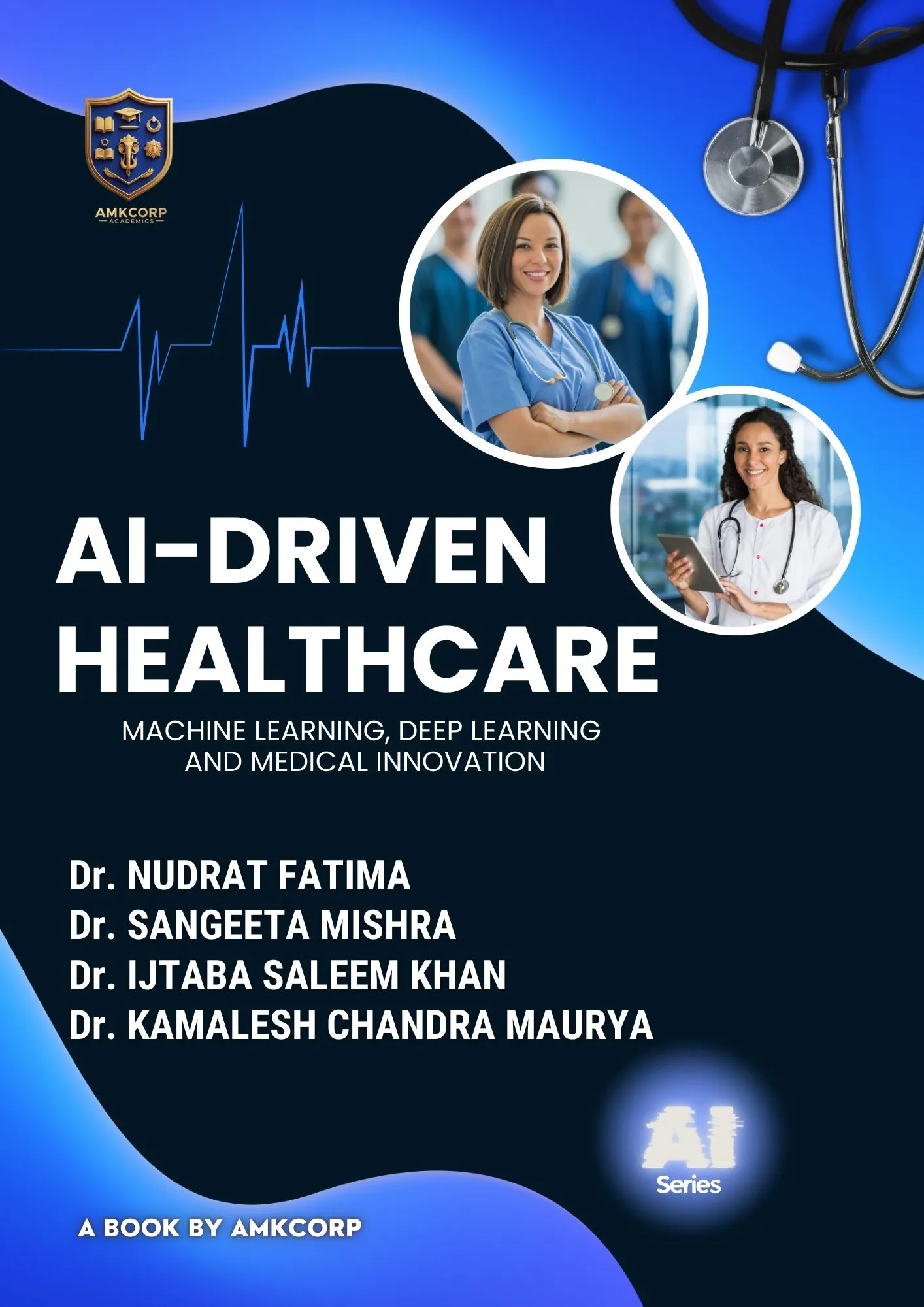
AI-DRIVEN HEALTHCARE
Machine Learning, Deep Learning and Medical Innovation
AUTHOR(S) -
Dr. NUDRAT FATIMA, Dr. SANGEETA MISHRA, Dr. IJTABA SALEEM KHAN,
Dr. KAMALESH CHANDRA MAURYA

DOI – 10.61909/AMKEDTB032659
Genre/Subject – AI, Healthcare
Book code – AMKEDTB032658 pgs: 216
ISBN(P) – 978-93-6556-815-8
ISBN(E) – 978-93-6556-525-6
Published – 14/03/2026
Edition – 1
BUY PRINT

BUY EBOOK
INTRODUCTION VIDEO

AUTHORS

Dr. NUDRAT FATIMA
Dr. Nudrat Fatima is working as an Assistant Professor in the Department of Computer Science and Engineering, Integral University. She holds a Ph.Ddegree in Computer Science & Engineering from Integral University, Lucknow, U.P. She has guided M.tech students and UG Students. She has published extensively in reputed journals and conferences. She also has patents published and granted on AI Assisted Device for Healthcare Diagnostics and Decision Support.She has published papers in Scopus Indexed Journals.She has 13+ years of teaching experience in higher education. Her research interests lie inHealthcare Diagnostics using Data Science, Artificial Intelligence, Deep Learning, Machine Learning and Big Data. She played a key role as a criteria In-charge in NBA Accreditation of the Department.

Dr. SANGEETA MISHRA
Dr. Sangeeta Mishra is currently working as an Assistant Professor at Babu Banarasi Das Institute of Technology and Management (BBDITM), Lucknow. She has a vast academic experience of 18+ years at UG and PG level. Skilled in Programming Languages, Cloud Computing, Artificial Intelligence etc.Strong administrative professional and excellent academics with Doctorate in Software Security (Integral University), Masters in ANFIS (NITTTR) and Bachelor in CSE (AKTU).
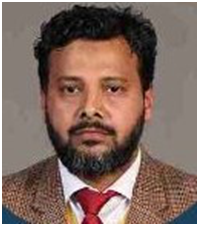
Dr. IJTABA SALEEM KHAN
Dr. Ijtaba Saleem Khan is an Assistant Professor in the Department of Computer Science and Engineering at Shri Ramswaroop Memorial University, Barabanki, U.P., India. He holds a Ph.D. in Computer Science and Engineering and has over 13 years of academic and research experience, having previously served for more than a decade as an Assistant Professor at Integral University, Lucknow. His teaching portfolio includes Automata Theory, Algorithms, Machine Learning, Data Mining, Computer Networks, and Computer Architecture.
With over 13 years of academic and research experience, Dr. Khan has published extensively in reputed journals and conferences. He also holds patents in Germany and India on Intelligent Forest Monitoring Systems. He has supervised numerous undergraduate and postgraduate projects and is currently guiding doctoral research scholars. His research interests span Machine Learning, Deep Learning, Artificial Intelligence, and Data Mining, with a focus on Predictive Modeling, Pattern Recognition, and Intelligent Decision-Support Systems.

Dr. KAMALESH CHANDRA MAURYA
Dr. Kamalesh Chandra Maurya is an Assistant Professor in the Department of Computer Science and Engineering at Shri Ramswaroop Memorial University, Barabanki, India. He received his Ph. D. in Computer Science from AKTU, Lucknow in 2025, M.Tech. in Computer Science & Engineering from Samrat Ashok Technological Institute (SATI), Vidisha affiliated to RGPV, Bhopal in 2010 and completed his B.Tech. in Computer Science and Engineering from GLA Institute of Technology & Management Mathura affiliated to UPTU, Lucknow in 2004. He has qualified GATE in 2006 as well as UGC NET in 2016. He has more than 16 years of teaching experience. His area of interests includes Data Structure, Computer Network, Theory of Automata, Computer Architecture, DBMS, Python Programming etc. He has guided many M.Tech. and B. Tech. Students. He has published many research articles in reputed journals and conferences. He has organized/attended several workshops and faculty development programs.
ABOUT BOOK / ABSTRACT
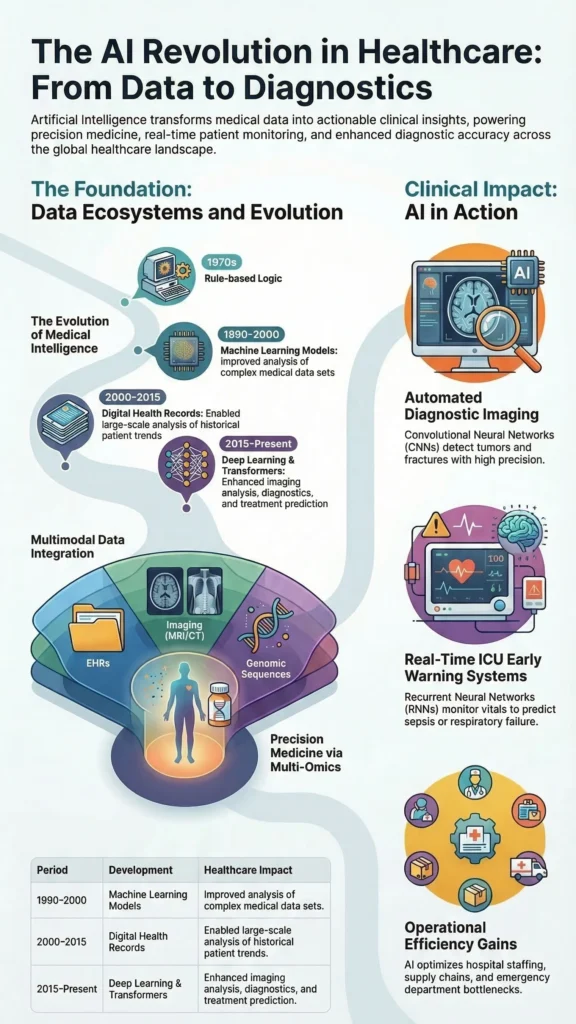
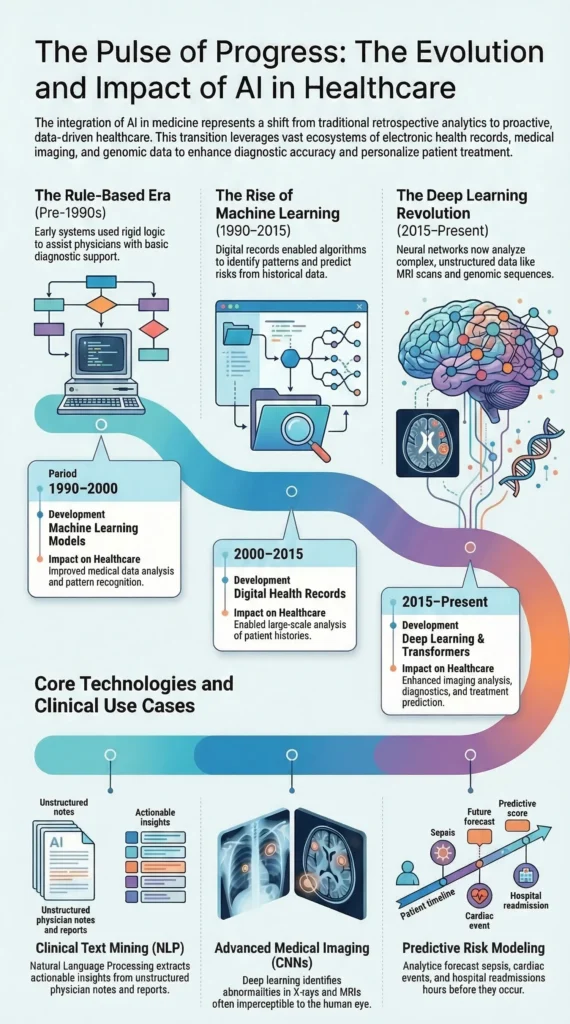
AI-Driven Healthcare: Machine Learning, Deep Learning, and Medical Innovation explores the transformative impact of artificial intelligence on modern medicine, offering a comprehensive overview of how cutting-edge technologies are reshaping clinical practice, diagnostics, and patient care. The book delves into the historical evolution of AI in healthcare, illustrating how traditional analytics have progressed to sophisticated AI-driven systems capable of learning from complex data and enhancing medical decision-making. Readers are guided through the healthcare data ecosystem, including electronic health records, medical imaging, genomic and multi-omics datasets, and real-time data from wearable devices. The text introduces foundational concepts of machine learning and deep learning, with practical applications in clinical prediction, patient stratification, imaging diagnostics, and personalized treatment planning. Specialized chapters examine natural language processing for clinical text, predictive analytics for disease risk modeling, and cognitive healthcare applications such as brain-computer interfaces and neurological disorder detection. The book also highlights advanced and emerging research topics, including federated learning, digital twins, integration of AI with IoT, explainable AI, and the potential for artificial general intelligence in medicine. With a blend of theory, practical insights, and case studies, this work equips healthcare professionals, data scientists, researchers, and students with the knowledge needed to harness AI technologies effectively, address challenges in deployment, and drive innovation in the evolving landscape of healthcare. Whether exploring diagnostic imaging, predictive modeling, or cognitive healthcare solutions, the book emphasizes both the opportunities and ethical considerations associated with integrating AI into patient-centered care, making it an essential guide for anyone interested in the intersection of technology and medicine.
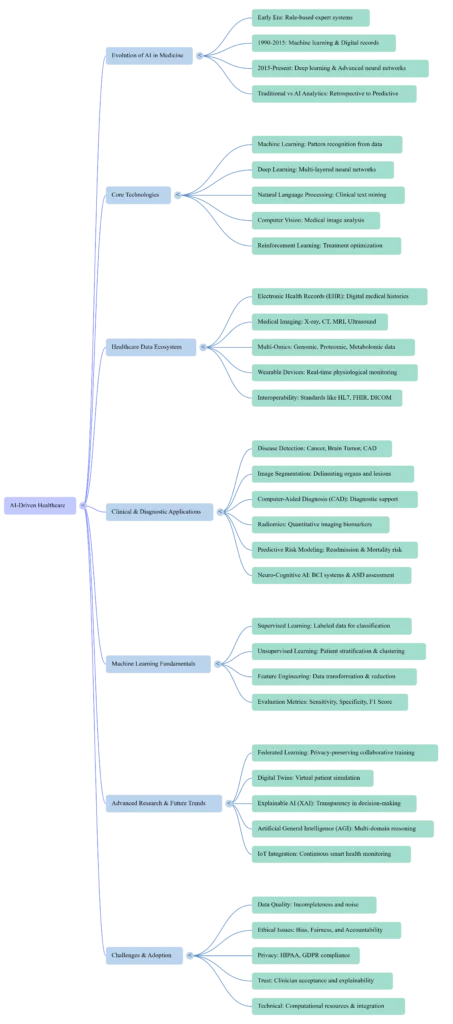
BOOK MAP
CHAPTERS
Chapter 1: Introduction to AI in Healthcare
This chapter provides a historical perspective on the evolution of artificial intelligence in medicine, tracing the transition from traditional data analytics to modern AI-driven healthcare solutions. It explores key technologies powering AI, such as machine learning, deep learning, and natural language processing, while highlighting clinical and operational use cases. Readers also gain insight into the challenges of adoption and the opportunities AI presents for improving patient outcomes and hospital efficiency.
Chapter 2: Healthcare Data Ecosystem
The chapter focuses on the diverse sources of healthcare data, including electronic health records, clinical databases, medical imaging, genomics, and data from wearable devices. It discusses methods for data integration, interoperability, and the importance of standardized formats to enable AI-driven insights. This foundation is critical for building robust predictive and diagnostic models.
Chapter 3: Machine Learning Fundamentals for Healthcare
This chapter introduces machine learning principles tailored for medical applications. It covers supervised learning for clinical prediction, unsupervised learning for patient stratification, and reinforcement learning for treatment planning. Techniques for feature engineering, dimensionality reduction, and clinical model evaluation metrics are also discussed to help optimize healthcare algorithms.
Chapter 4: Deep Learning in Medical Applications
Here, readers explore deep learning architectures such as artificial neural networks, convolutional neural networks for imaging, recurrent neural networks for time-series data, and transformers for attention-based applications. The chapter also explains transfer learning and pretrained models for accelerating medical AI deployments.
Chapter 5: AI in Medical Imaging and Diagnostics
This chapter focuses on AI applications in medical imaging, including image classification, segmentation, computer-aided diagnosis systems, and radiomics. Explainable AI techniques are emphasized to ensure transparency in diagnostic decisions and enhance clinician trust.
Chapter 6: Natural Language Processing in Healthcare
The chapter discusses extracting meaningful insights from clinical text using NLP techniques. Topics include clinical text mining, named entity recognition in EHR notes, decision support systems, large language models, and challenges in deploying NLP solutions safely and effectively in clinical settings.
Chapter 7: Predictive Analytics and Risk Modeling
Readers learn about AI models for early disease detection, ICU monitoring, readmission prediction, survival analysis, and personalized risk scoring. The chapter highlights how predictive analytics can improve patient care by enabling proactive interventions and resource optimization.
Chapter 8: Clinical Data Analytics and Predictive Modeling
This chapter emphasizes practical applications of machine learning in disease prediction, clinical decision support systems, risk stratification, and early diagnosis of conditions such as brain tumors, coronary artery disease, and autism spectrum disorder. Case studies illustrate real-world impact and methodological approaches.
Chapter 9: Neural and Cognitive Healthcare Applications
The focus is on AI in neural and cognitive health, covering brain-computer interface systems, EEG/ECG/EMG signal interpretation, detection of neurological disorders like epilepsy, depression, and Alzheimer’s, and personalized treatment recommendation systems. Future trends and challenges in cognitive healthcare are also discussed.
Chapter 10: Advanced Topics and Emerging Research Trends in Healthcare AI
This chapter explores cutting-edge research topics such as federated learning, privacy-preserving AI, IoT-enabled continuous monitoring, digital twins, explainable AI, and the potential for artificial general intelligence in medicine. It emphasizes both the opportunities and limitations of next-generation healthcare technologies.