₹ 999.00
$99.00
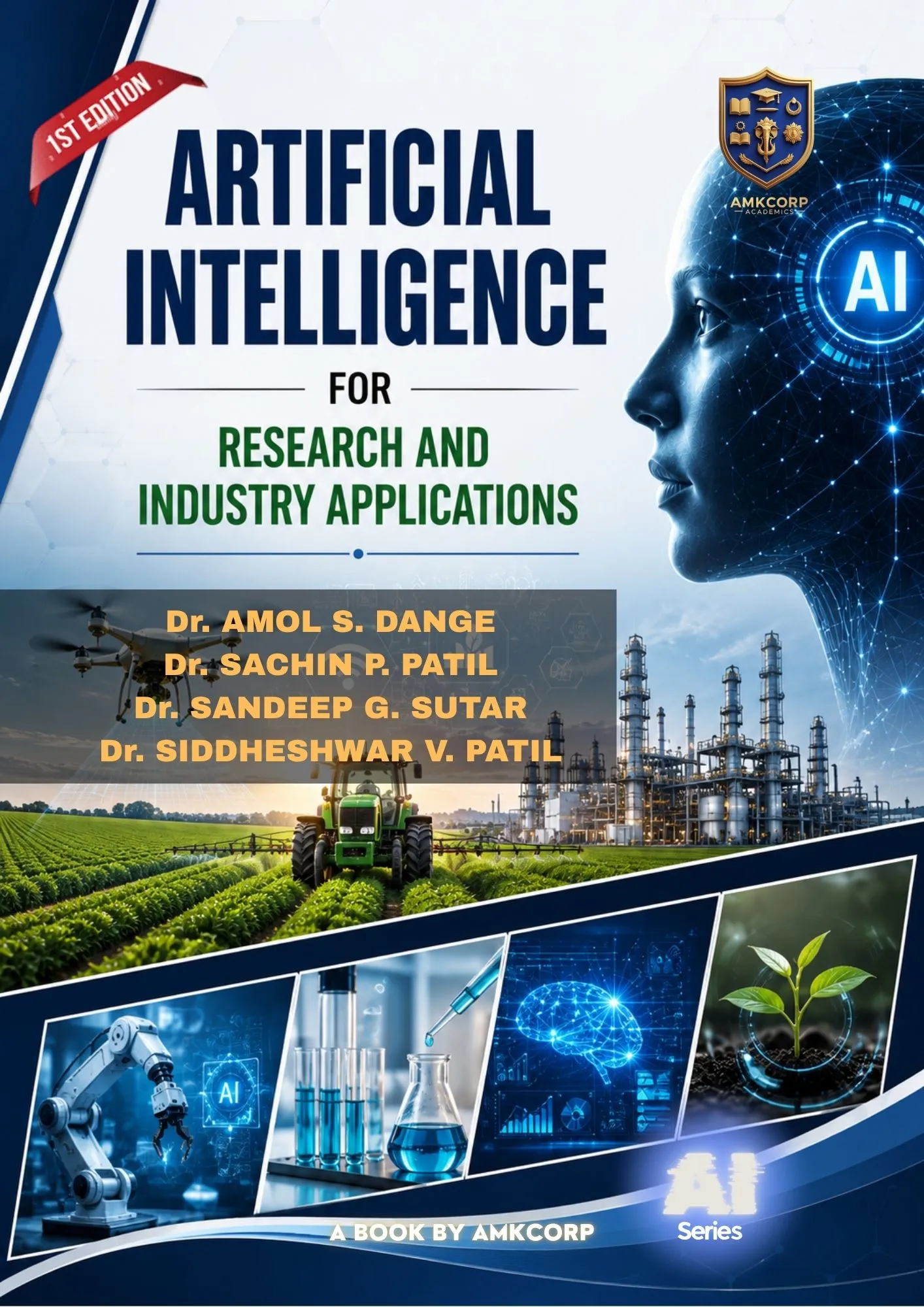
ARTIFICIAL INTELLIGENCE FOR RESEARCH AND INDUSTRY APPLICATIONS
AUTHOR(S) -
Dr. AMOL S. DANGE
Dr. SACHIN P. PATIL
Dr. SANDEEP G. SUTAR
Dr. SIDDHESHWAR V. PATIL

DOI – 10.61909/AMKEDTB082686
Genre/Subject -AI, R&D, Industrial Applications
Book code -AMKEDTB082686
pgs: 237
ISBN(P) -978-93-6556-028-2
ISBN(E) – 978-93-6556-027-5
Published -07/08/2026
Edition – 1
BUY PRINT

BUY EBOOK
INTRODUCTION VIDEO
AUTHORS

Dr. AMOL S. DANGE
Dr. Amol Subhash Dange serves as Dean – Research, Innovation and Startups at Annasaheb Dange College of Engineering and Technology (ADCET), Ashta, Sangli, Maharashtra.
He is an accomplished academician, researcher, and technology professional with 19 years of experience spanning industry, academia, research, and innovation in Computer Science and Engineering.
He holds a Ph.D. in Computer and Information Sciences, with a specialization in Artificial Intelligence, from Visvesvaraya Technological University (VTU), Belagavi.
In his leadership role, he is committed to strengthening the ADCET ’s research, innovation, and startup ecosystem by fostering industry–academia collaboration and promoting impactful, technology-driven solutions.
His research competence is evident through 27 research publications in international and national platforms. He Published and Granted Indian Design Patent on Financial Data Managing Device in Bank. Also he Received Research Grant from Shivaji University under Research Initiation Scheme.
He excel in curriculum development for both undergraduate and postgraduate levels, ensuring a comprehensive and relevant educational experience. His proficiency extends to accreditation processes such as NBA, NAAC, ISO and NIRF reflecting a devotion to maintaining quality education in the field of engineering.
Dr. Amol Dange delivered 13+ expert talks across various esteemed institutions, sharing insights and knowledge. He is proud member of professional bodies such as the Computer Society of India (CSI), Indian Society for Technical Education(ISTE) and Institution of Engineers (India) (IEI).
Dr. Amol Dange received Best Team Member of Outstanding National Project of The Year in 2008 by CMC Ltd. (A TATA Enterprises) Mumbai. Also received the Best Teacher Award in 2015 by Sant Dnyaneshwar Shikshan Sanstha, Islampur.

Dr. SACHIN P. PATIL
Dr. Sachin Popat Patil is a Professor and Dean (E-Governance) at Annasaheb Dange College of Engineering & Technology, Ashta, with over 20 years of academic experience. He holds a Ph.D. from VTU, Belagavi, and specializes in Cloud Computing, Distributed Systems, Computer Networks, and Software Engineering. He has published several research papers in national and international journals and conferences, delivered expert lectures, and played a key role in implementing digital governance and academic automation initiatives. He is an ISTE Life Member and an AWS Solution Architect certified professional.

Dr. SANDEEP G. SUTAR
Dr. Sandeep G. Sutar is a Professor and Associate Dean (Academics) at Annasaheb Dange College of Engineering and Technology, Ashta, Maharashtra, India. With over 20 years of experience in higher education, he has made significant contributions to teaching, research, academic administration, innovation, and industry collaboration in the field of Computer Science and Engineering. He completed his Ph.D. in Computer Science and Engineering from Visvesvaraya Technological University (VTU), Belagavi, with research focused on secure and energy-efficient cloud computing, and is also a Postdoctoral Fellow in Computer Science and Engineering.
His research interests include Cloud Computing, Artificial Intelligence, Machine Learning, Internet of Things (IoT), Big Data Analytics, Cyber Security, Privacy-Preserving Systems, and Distributed Computing. Dr. Sutar has authored more than 35 research publications in reputed international journals and conferences, including numerous Scopus-indexed and Springer publications. He has also contributed book chapters to internationally published volumes and holds patents in secure data transmission and data compression technologies.
Dr. Sutar has successfully guided more than 40 undergraduate projects and over 10 postgraduate dissertations in emerging technologies. He actively serves as a reviewer for leading Springer, IEEE, Scopus-indexed, and Web of Science journals and conferences and has chaired technical sessions at several international conferences. His professional contributions have been recognized through prestigious awards, including the INSC Research Excellence Award and the Best Teacher Award.
Apart from his academic and research achievements, Dr. Sutar has played a key role in curriculum development, institutional quality assurance, innovation ecosystems, consultancy projects, and industry-academia collaborations. He has organized and delivered numerous Faculty Development Programs (FDPs), workshops, expert lectures, and skill development initiatives across India. As an Innovation Ambassador under the Ministry of Education’s Innovation Cell, he continues to promote research, entrepreneurship, and technology-driven education.
Dr. Sutar is committed to advancing knowledge through quality research, outcome-based education, and innovative technological solutions, making him a respected academician, researcher, mentor, and author in the field of Computer Science and Engineering.

Dr. SIDDHESHWAR V. PATIL
Dr. Siddheshwar Vilas Patil is an Associate Professor and Head of the Department of Computer Science and Engineering (Artificial Intelligence and Machine Learning) at D. Y. Patil College of Engineering and Technology (DYPCET), Kolhapur. He also serves as the Director of the DYPCET ARJUN Innovation Incubation and Entrepreneurship Foundation.
He holds a Ph.D. in Computer Science and Engineering from Walchand College of Engineering, Sangli, completed under the prestigious Quality Improvement Programme (QIP) Scheme of the Government of India. With over 20 years of experience in teaching, research, innovation, and academic leadership, he has made significant contributions to Artificial Intelligence, Machine Learning, Parallel Computing, Software Engineering, and Startup Incubation.
Dr. Patil has presented more than 40 research papers at national and international conferences and has authored over 20 research publications in reputed journals indexed in SCI, Scopus, and Web of Science. He has also contributed to innovation through several design and utility patents and the development of software products, reflecting his strong focus on applied research and technology-driven solutions.
He actively serves as a reviewer for reputed international publishers, including IEEE, Springer, and Elsevier. He has delivered more than 30 expert lectures and has mentored numerous undergraduate and postgraduate research and project teams.
A passionate educator, researcher, and innovator, Dr. Patil has played an active role in accreditation and quality-assurance initiatives, entrepreneurship development, faculty training, curriculum development, and industry–academia collaboration. He serves as a member of Academic Councils, Boards of Studies, and doctoral committees at various reputed institutions.
Through his continued contributions to education, research, innovation, and entrepreneurship, Dr. Patil remains committed to nurturing the next generation of technologists, researchers, innovators, and young entrepreneurs.
ABOUT BOOK / ABSTRACT
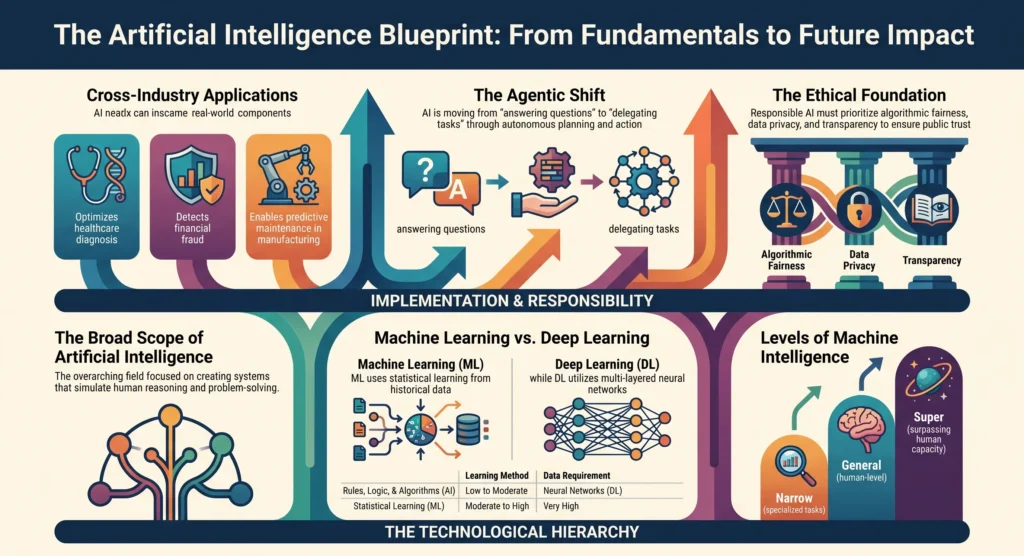
Artificial Intelligence (AI) has emerged as one of the most transformative technologies of the twenty-first century, influencing scientific research, industrial development, healthcare, agriculture, education, finance, manufacturing, transportation, and numerous other sectors. The book Artificial Intelligence for Research and Industry Applications presents a comprehensive and structured introduction to Artificial Intelligence, with particular emphasis on its applications in academic research, scientific discovery, and modern industrial environments.
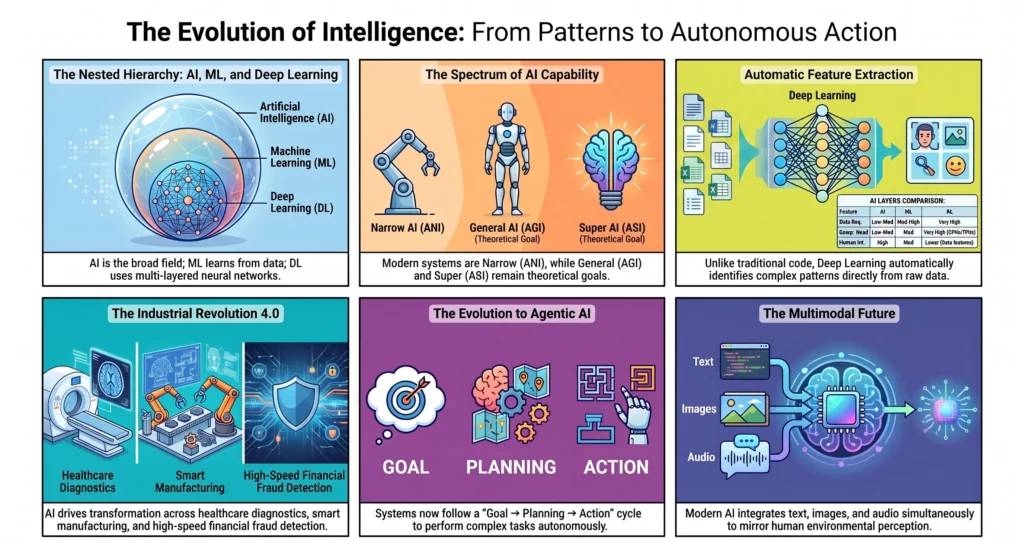
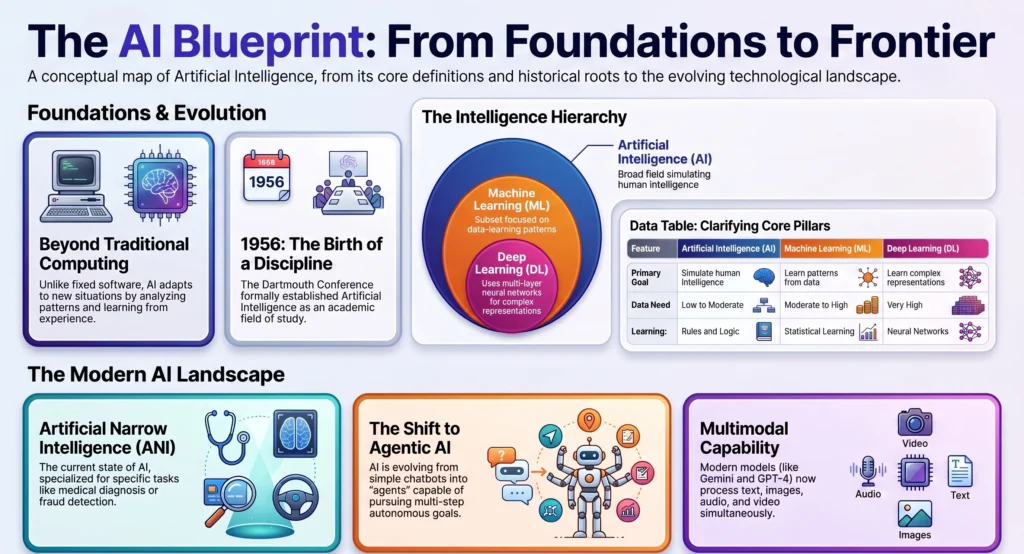
The book begins with the fundamental concepts of Artificial Intelligence, including its definition, scope, history, evolution, types of AI, and the relationship between Artificial Intelligence, Machine Learning, and Deep Learning. It explains how AI has evolved from early rule-based systems and symbolic reasoning to contemporary generative and multimodal systems. The discussion also introduces major modern AI models and paradigms, including GPT-4, GPT-5, Gemini, Claude, DeepSeek, Llama, Multimodal AI, and Agentic AI, helping readers understand the rapidly changing landscape of modern intelligent systems.
A substantial portion of the book is devoted to the fundamentals of Machine Learning. It covers important concepts and terminology, supervised learning, unsupervised learning, reinforcement learning, model evaluation, and validation. Common algorithms and their practical applications are discussed in a structured manner, enabling readers to understand how data-driven models are developed and evaluated for real-world problems.
The book further explores Data Science and Data Preprocessing, emphasizing the importance of data collection, data cleaning, transformation, preparation, and analysis. Since the effectiveness of Artificial Intelligence depends strongly on the quality and relevance of data, these concepts provide an essential foundation for developing reliable AI systems.
Advanced areas of Artificial Intelligence, including Deep Learning, neural networks, Natural Language Processing, Computer Vision, and related technologies, are discussed with their practical applications. The book demonstrates how AI can support healthcare diagnosis, agricultural decision-making, industrial automation, intelligent transportation, security, education, and other domains. Computer Vision applications, for example, extend from medical image analysis and patient monitoring to intelligent surveillance and automated inspection.
A distinctive feature of the book is its focus on AI in Academic Research. It explains how Artificial Intelligence can assist scientific discovery by processing massive datasets, identifying hidden patterns, improving experimental analysis, supporting hypothesis generation, and accelerating research across medicine, engineering, agriculture, environmental science, physics, chemistry, and other disciplines.
The book also introduces practical AI development and deployment environments, including cloud-based AI platforms, open-source tools, popular frameworks and libraries such as TensorFlow, PyTorch, Scikit-learn, Keras, OpenCV, NumPy, Pandas, and Natural Language Processing tools. It further addresses model deployment, monitoring, optimization, security, and continuous maintenance, thereby connecting theoretical AI knowledge with practical implementation.
Another important dimension of the book is responsible Artificial Intelligence. Dedicated discussion of ethics, security, privacy, fairness, accountability, human oversight, misinformation, workforce transformation, and environmental sustainability highlights the importance of developing AI systems that are not only powerful but also safe, transparent, trustworthy, and socially responsible.
Finally, the book looks toward the future of Artificial Intelligence through emerging areas such as Explainable AI, Continual Learning, Privacy-Preserving Machine Learning, Quantum AI, Neuromorphic Computing, Digital Twins, Sustainable AI, Human-AI Collaboration, and Industry 5.0.
Designed for students, researchers, academicians, technology professionals, industry practitioners, entrepreneurs, and readers seeking a broad understanding of Artificial Intelligence, this book aims to bridge the gap between fundamental concepts, research applications, and industrial implementation. It provides a foundation for understanding not only what Artificial Intelligence can do today, but also how intelligent systems are likely to evolve and influence research, industry, and society in the future.
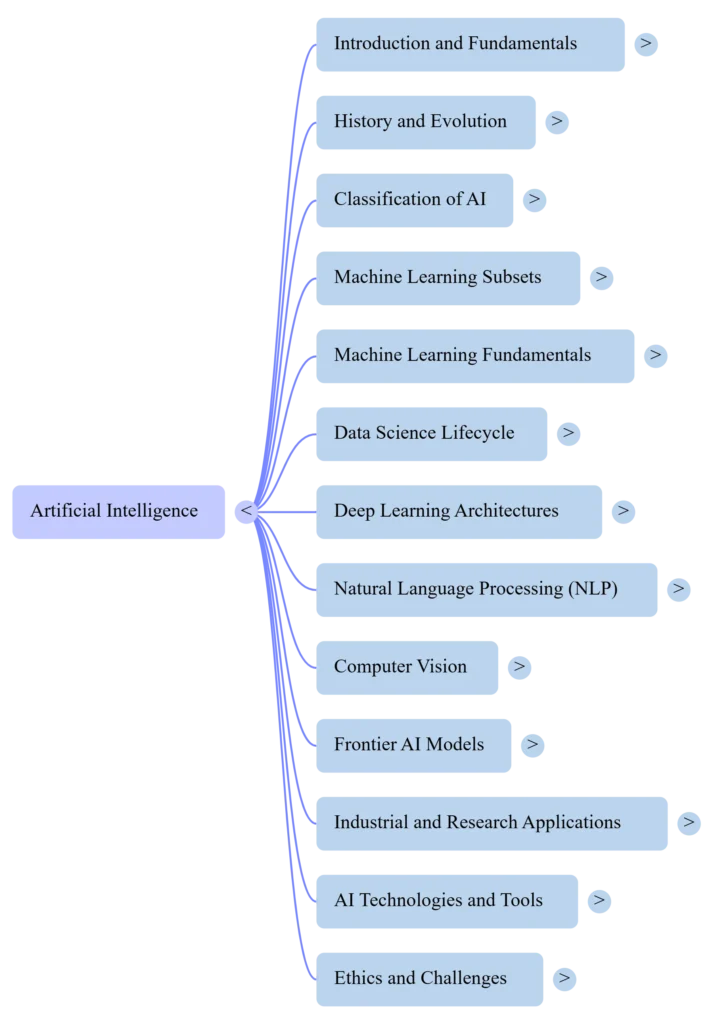
BOOK MAP
CHAPTERS
Chapter 1: Introduction to Artificial Intelligence
This chapter introduces the fundamental concepts, history, types, and evolution of Artificial Intelligence. It also explains the differences between AI, Machine Learning, and Deep Learning along with their real-world applications.
Chapter 2: Fundamentals of Machine Learning
This chapter presents the core principles of Machine Learning, including supervised, unsupervised, and reinforcement learning techniques. It also discusses model training, evaluation, and validation methods for developing reliable predictive models.
Chapter 3: Data Science and Data Preprocessing
This chapter explains the importance of data collection, cleaning, transformation, and feature engineering in AI projects. It also introduces data visualization techniques and methods for handling large-scale datasets.
Chapter 4: Deep Learning and Neural Networks
This chapter explores neural network architectures and deep learning algorithms used for complex pattern recognition. It covers CNNs, RNNs, transfer learning, and optimization techniques for high-performance AI models.
Chapter 5: Natural Language Processing (NLP)
This chapter focuses on techniques that enable computers to understand, process, and generate human language. It includes text preprocessing, language models, sentiment analysis, and industrial NLP applications.
Chapter 6: Computer Vision Systems
This chapter introduces computer vision technologies used for image and video analysis. It discusses object detection, image segmentation, and applications in healthcare, surveillance, and security.
Chapter 7: AI in Academic Research
This chapter demonstrates how AI supports scientific research through automated data analysis and literature review. It also highlights AI-driven research workflows and ethical considerations in academic investigations.
Chapter 8: AI in Industrial Applications
This chapter explains how AI enhances industrial operations through automation, predictive analytics, and intelligent decision-making. It covers manufacturing, supply chain management, finance, banking, and marketing applications.
Chapter 9: AI Technologies and Tools
This chapter introduces widely used AI frameworks, libraries, cloud platforms, and deployment tools. It also explores open-source resources and Edge AI technologies for real-time intelligent applications.
Chapter 10: AI System Design and Implementation
This chapter describes the complete lifecycle of AI system development, from project planning to deployment. It covers system architecture, model development, testing, validation, and continuous monitoring.
Chapter 11: Ethics, Security, and Challenges in AI
This chapter discusses ethical issues, algorithmic bias, privacy protection, and security concerns associated with AI systems. It also examines regulatory frameworks and the current limitations of AI technologies.
Chapter 12: Future Trends and Innovations in AI
This chapter explores emerging AI technologies and their role in Industry 5.0 and human-AI collaboration. It concludes with sustainable AI development strategies and future research opportunities in the field.