₹ 999.00
$99.00
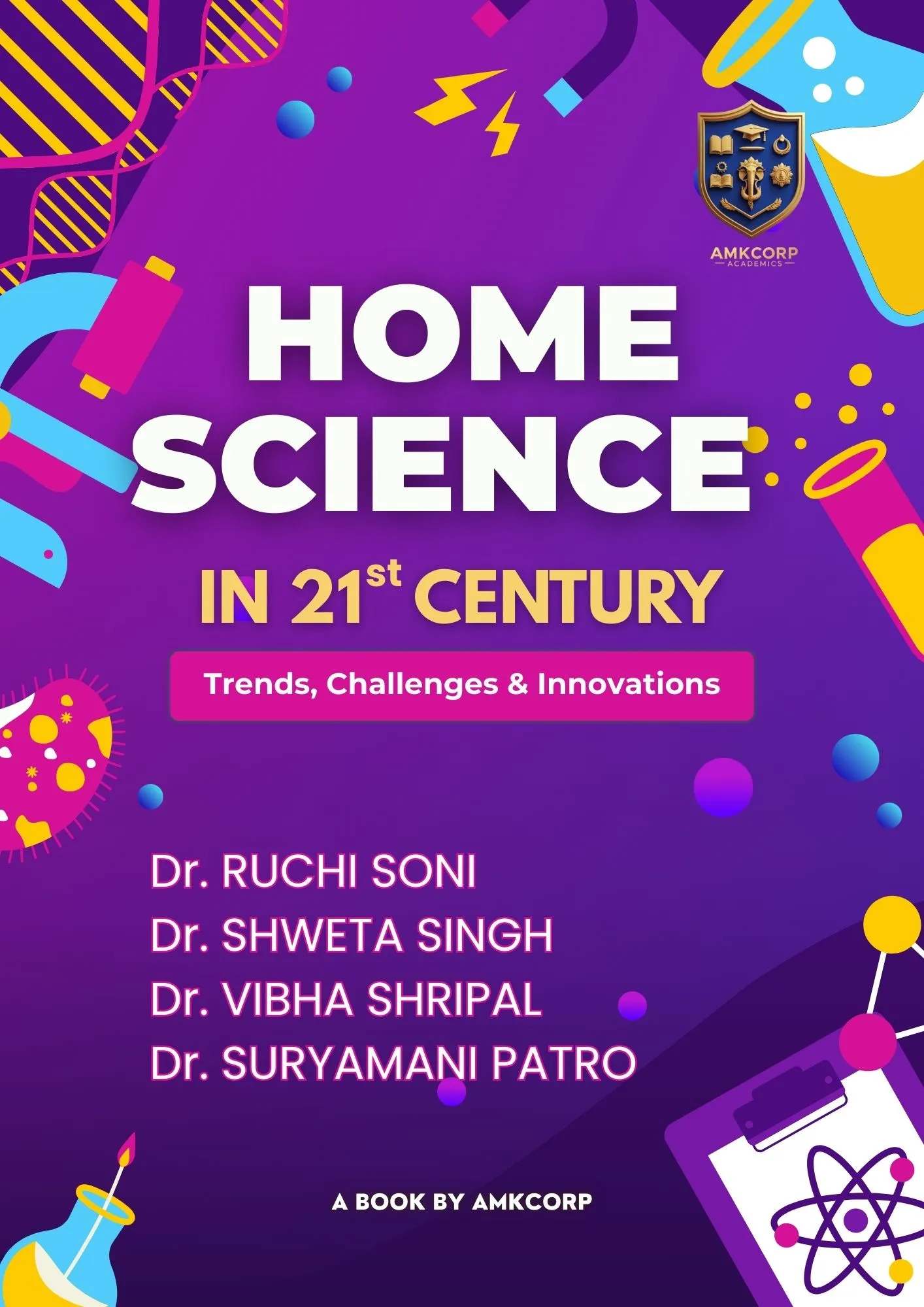
HOME SCIENCE IN 21ST CENTURY
TRENDS, CHALLENGES & INNOVATIONS
AUTHOR(S) -
Dr. RUCHI SONI, Dr. SHWETA SINGH,
Dr. VIBHA SHRIPAL, Dr. SURYAMANI PATRO
DOI – 10.61909/AMKEDTB022651
Genre/Subject – Home Science
Book code – AMKEDTB022651 pgs: 220
ISBN(P) – 978-93-6556-347-4
ISBN(E) – 978-93-6556-252-1
Published – 05/02/2026
Edition – 1
BUY PRINT
BUY EBOOK
INTRODUCTION VIDEO
AUTHORS
Dr. RUCHI SONI
I am Dr. Ruchi Soni, Assistant Professor in the Department of Home Science, specializing in Human Development. With six years of academic experience, I am committed to providing high-quality teaching, engaging in active research, and contributing meaningfully to the department’s academic and institutional goals. My research interests focus on emotional maturity and all aspects of human development. I am particularly interested in problem-solving, guidance, and counseling. I have created e-content on various topics in Home Science.
Dr. SHWETA SINGH
I am Dr. Shweta Singh, Subject Matter Specialist – Home Science at Mahayogi Gorakhnath Krishi Vigyaan Kendra,Pipiganj, Gorakhpur. I have 12 years of academic experience and 5 years experience in extension field with farm women to empowers rural families, particularly women, by introducing scientific techniques to improve nutrition, health, and income while reducing household and farm drudgery. I train communities in food processing, value addition, and resource management. I am committed to high quality active research engagement, and contributing meaningfully to the departmental and institutional objectives.My research interests center on the skill development of rural women for their economic development.
Dr. VIBHA SHRIPAL
Dr. Vibha Shripal, a dedicated academic professional with over six years of experience in higher education, currently serving as an Assistant Professor. I possess extensive teaching experience at both undergraduate and postgraduate levels and am recognized for adopting learner-centered and innovative pedagogical approaches that promote analytical and critical thinking skills among students. I am also a committed researcher and have published numerous research papers in reputed national and international journals, thereby contributing significantly to academic scholarship and the advancement of my discipline.
Dr. SURYAMANI PATRO
Dr. Suryamani Patro is an Associate Professor of Home Science at Rama Devi Women’s University, Odisha, with over 23 years of teaching and research experience. She has published extensively in peer-reviewed and Scopus-indexed journalsand has contributed chapters to edited academic volumes. She is the recipient of a major ICSSRfunded research projecton indigenous food systems and child nutrition among tribal communities of Odisha. Her academic interests focus on Food Science, Public Health Nutrition, Indigenous Food Systems, and Sustainable Diets.
ABOUT BOOK / ABSTRACT
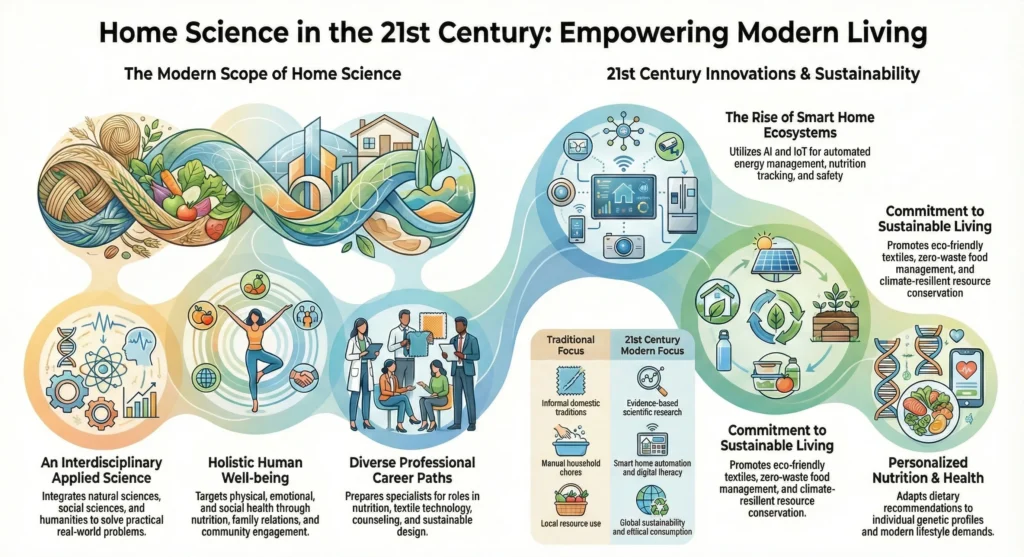
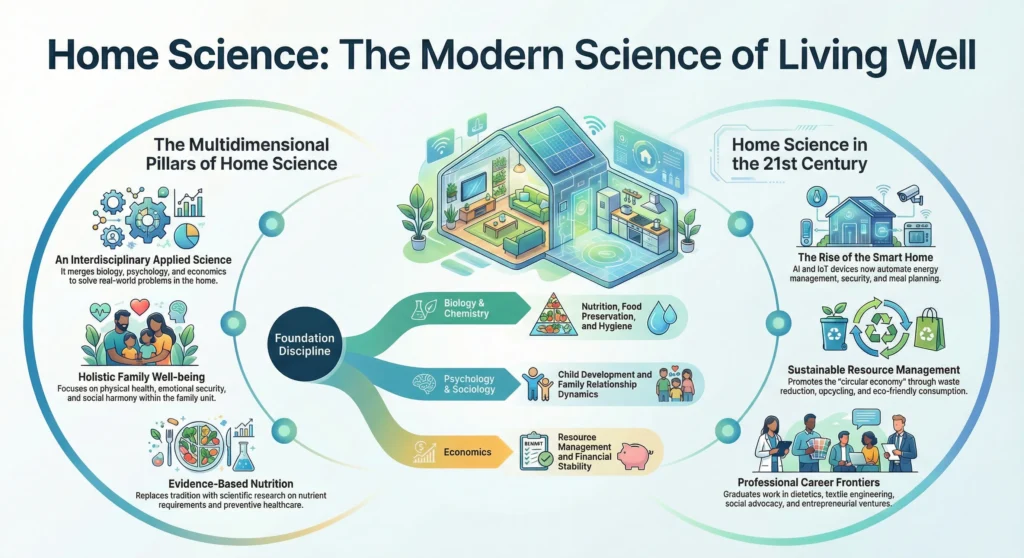
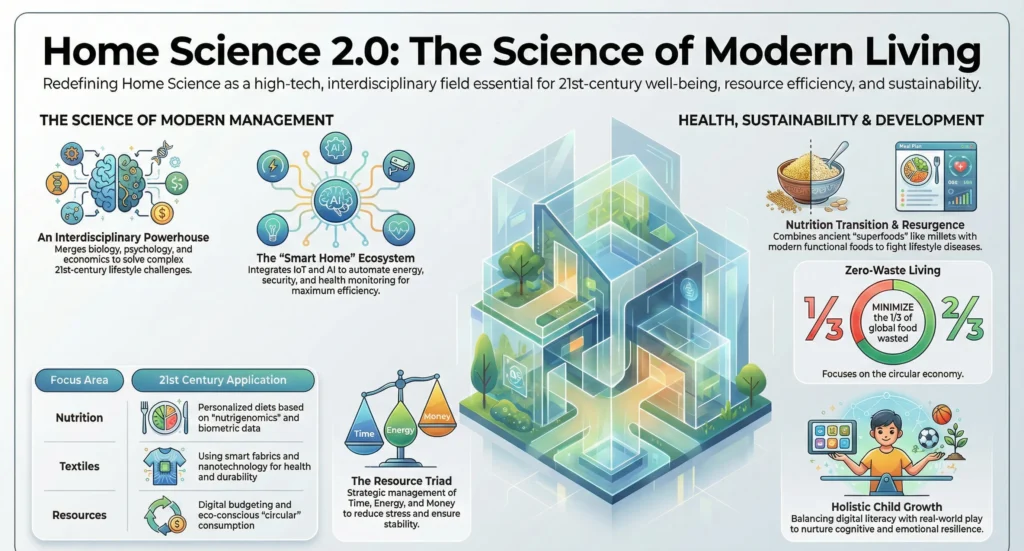
Home Science in the 21st Century: Trends, Challenges & Innovations presents a comprehensive and contemporary perspective on the evolving discipline of Home Science in response to rapid social, technological, and economic changes. The book explores how Home Science has transformed from a traditional, home-centric subject into a dynamic, interdisciplinary field that contributes significantly to individual well-being, family welfare, community development, and national progress.
In the modern era, issues such as nutrition transition, lifestyle disorders, food security, sustainability, family transformation, child development, textile innovations, and community empowerment demand integrated and practical solutions. This book critically examines these emerging concerns while highlighting the relevance of Home Science in addressing real-world challenges through scientific knowledge, innovation, and human-centered approaches.
The chapters are thoughtfully structured to bridge theory with practice, covering key areas like nutrition and health, family and social change, resource management, textiles and apparel, hygiene and wellness, and extension education. Special emphasis is placed on sustainability, digitalization, smart living, women empowerment, skill development, and the role of technology—including artificial intelligence—in shaping the future of Home Science education and practice.
Designed for undergraduate and postgraduate students, educators, researchers, and professionals, this book serves as a valuable academic resource as well as a practical guide. By integrating traditional knowledge with modern advancements, Home Science in the 21st Century aims to strengthen the discipline’s relevance and prepare learners to contribute effectively to sustainable development and improved quality of life in a rapidly changing world.
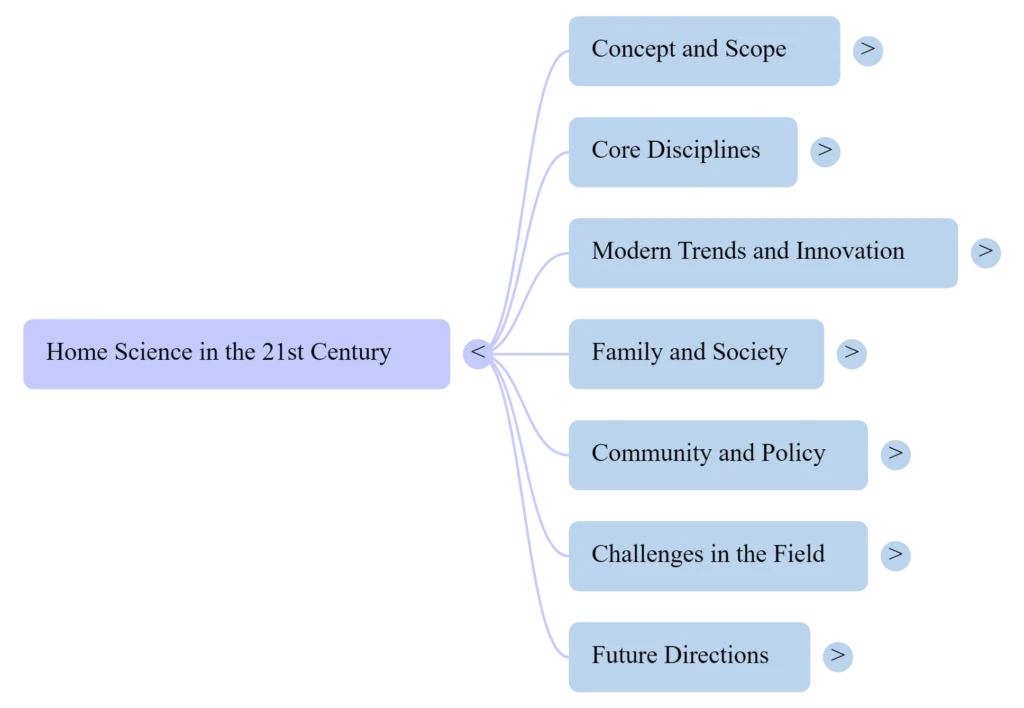
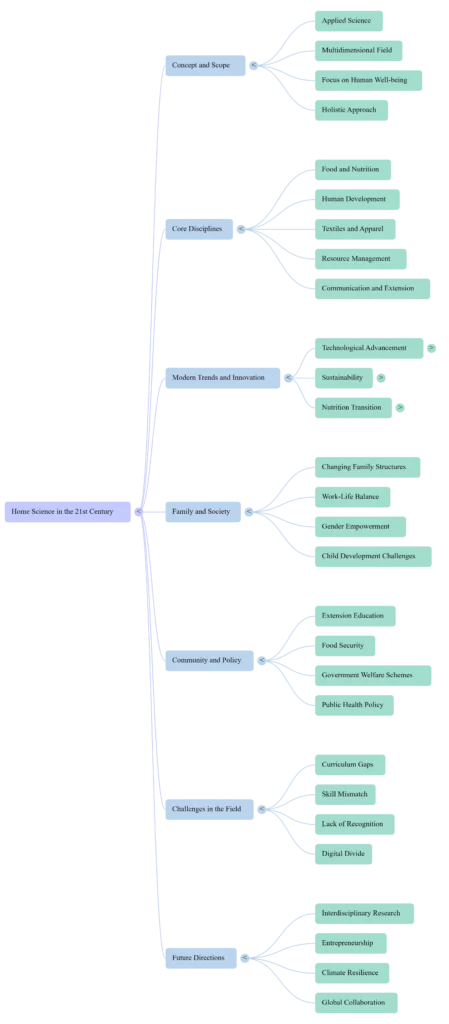
BOOK MAP
TOC / BOOK MAP (Extd.)
CHAPTERS
Chapter 1: Introduction to Home Science in the Modern Era
This chapter introduces the concept, scope, and evolution of Home Science as an academic discipline. It highlights its interdisciplinary nature and emphasizes its role in improving quality of life in the 21st century.
Chapter 2: Emerging Trends in Home Science
The chapter discusses technological advancements, digitalization, smart homes, and changing lifestyle patterns. It also examines globalization’s influence and future prospects of Home Science.
Chapter 3: Nutrition Transition and Modern Dietary Practices
This chapter explores changing food habits, functional foods, nutraceuticals, and the importance of traditional diets. It also addresses lifestyle disorders and the growing relevance of personalized nutrition.
Chapter 4: Food Security, Safety and Sustainability
The focus here is on food security concepts, safety standards, sustainable food systems, and waste management. The chapter also links climate change with food sustainability challenges.
Chapter 5: Child Development in Contemporary Society
This chapter analyzes growth and development patterns of children in modern contexts. It highlights the impact of technology, parenting styles, and challenges faced in child development today.
Chapter 6: Family Dynamics and Social Change
The chapter examines changing family structures, work–life balance, gender roles, and stress management. It underscores the contribution of Home Science in enhancing family well-being.
Chapter 7: Textiles and Apparel in the 21st Century
This chapter covers advances in textile technology, sustainable fashion, consumer behavior, and smart textiles. It also addresses textile waste management and recycling practices.
Chapter 8: Resource Management and Sustainable Living
The chapter focuses on efficient management of time, energy, and money. It promotes sustainable household practices, environmental responsibility, and green living concepts.
Chapter 9: Health, Hygiene and Wellness
This chapter emphasizes holistic health, personal and community hygiene, mental health, and stress management. It also highlights fitness, physical activity, and preventive healthcare.
Chapter 10: Community Development and Extension Education
The chapter discusses principles of community development and the role of Home Science extension services. It highlights women empowerment, skill development, entrepreneurship, and welfare schemes.
Chapter 11: Challenges in Home Science Education and Practice
This chapter identifies curriculum gaps, technological challenges, and professional constraints. It also suggests strategies to strengthen Home Science education and practice.
Chapter 12: Innovations, Research and Future Directions
The final chapter explores recent research trends, innovative teaching methods, and the role of AI and technology. It presents policy perspectives and a forward-looking vision for Home Science.