₹ 999.00
$99.00
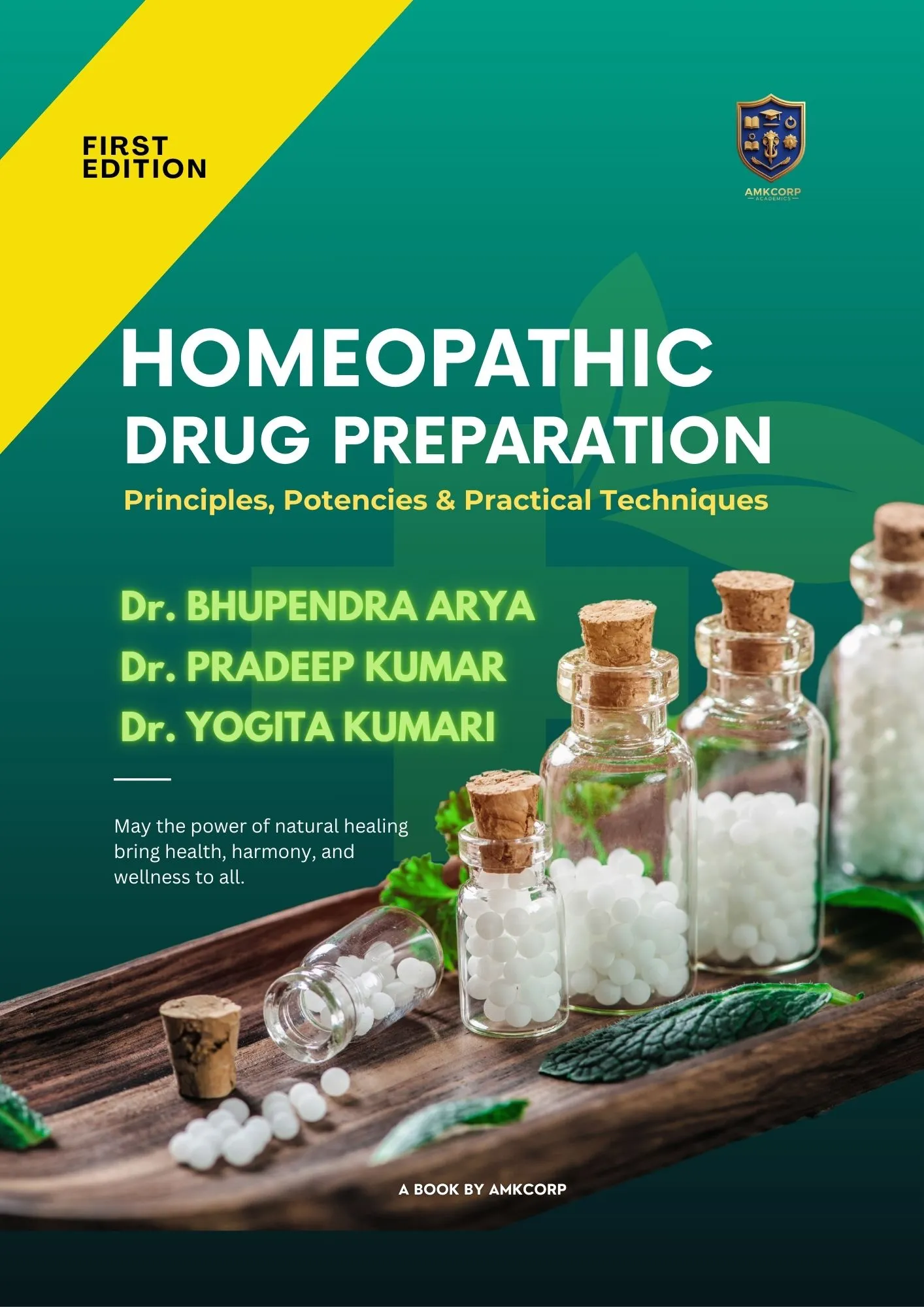
HOMEOPATHIC DRUG PREPARATION
PRINCIPLES, POTENCIES & PRACTICAL TECHNIQUES
AUTHOR(S) -
Dr. BHUPENDRA ARYA, Dr. PRADEEP KUMAR
Dr. YOGITA KUMARI

DOI – 10.61909/AMKEDTB022655
Genre/Subject – Homeopathy, Drug Preparation
Book code – AMKEDTB022655 pgs: 236
ISBN(P) – 978-93-6556-429-7
ISBN(E) – 978-93-6556-025-1
Published – 28/02/2026
Edition – 1
BUY PRINT

BUY EBOOK
INTRODUCTION VIDEO

AUTHORS
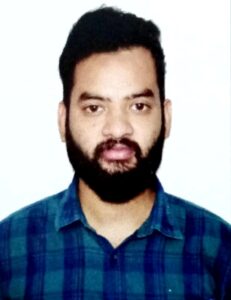
Dr. BHUPENDRA ARYA
Dr. Bhupendra Arya is a passionate academician and committed clinician currently serving as an Assistant Professor in the Department of Homoeopathic Pharmacy at Madhav Homoeopathic Medical College & Hospital. With nearly four years of dedicated teaching experience and extensive departmental exposure, he has been actively shaping undergraduate homoeopathic education through a blend of clinical insight and academic excellence.
he completed his Post-Graduation (M.D. Homoeopathy) in Practice of Medicine from Dr. MPK Homoeopathic Medical College and Research Centre, affiliated with Homoeopathy University, Jaipur. he also earned his Bachelor of Homoeopathic Medicine and Surgery (B.H.M.S.) from the same esteemed institution, building a strong foundation in both theoretical knowledge and clinical practice.
Dr. Bhupendra Arya is deeply committed to academic innovation and quality education. he actively engages in research initiatives and continuously explores progressive teaching–learning methodologies to enhance student understanding and professional competence. His involvement in curricular and co-curricular activities reflects his holistic approach toward student development and institutional growth.
His core areas of interest include clinical practice, medical research, homoeopathic pharmacy, medical education, and lifelong professional learning. Through his dedication, enthusiasm, and forward-thinking mindset, Dr. Arya strives to contribute meaningfully to the advancement of homoeopathic education and healthcare.
Dr. PRADEEP KUMAR
Dr. Pradeep Kumar is a committed academician, dedicated clinician, and passionate educator currently serving as an Assistant Professor in the Department of Obstetrics and Surgery at Sri Ganganagar Homoeopathic Medical College Hospital & Research Institute. With a strong foundation in homoeopathic principles and clinical practice, he plays an active role in shaping the academic and professional growth of undergraduate students in the field of Homoeopathy.
Dr. Kumar brings nearly two years of rich teaching experience, during which he has been consistently involved in delivering lectures, conducting practical demonstrations, supervising clinical training, and mentoring students in both theoretical and applied aspects of Homoeopathic medicine. His teaching methodology emphasizes clarity of concepts, clinical correlation, and evidence-based understanding of classical homoeopathic philosophy. He is particularly dedicated to nurturing analytical thinking and case-taking skills among students, preparing them to become competent and ethical practitioners.
In addition to his academic responsibilities, Dr. Kumar possesses two years of hands-on clinical experience in the Department of Surgery. This clinical exposure has enabled him to develop practical insight into surgical conditions, patient management, and integrative homoeopathic approaches to surgical cases. His combined academic and clinical experience allows him to bridge the gap between classroom learning and real-world patient care.
Dr. Pradeep Kumar completed his Post-Graduation (M.D. Homoeopathy) in the subject of Organon of Medicine from Dr. MPK Homoeopathic Medical College and Research Centre, affiliated with Homoeopathy University. During his postgraduate studies, he developed deep expertise in homoeopathic philosophy, principles laid down by Dr. Samuel Hahnemann, case analysis, and advanced repertorial techniques. His academic training strengthened his understanding of the scientific and philosophical foundations of Homoeopathy, which he continues to apply in both teaching and clinical practice.
Throughout his professional journey, Dr. Kumar has demonstrated a sincere commitment to academic excellence, patient-centered care, and continuous professional development. He actively contributes to academic discussions, departmental activities, and institutional responsibilities, striving to uphold high standards of medical education and ethical clinical practice.
His vision is to contribute meaningfully to the advancement of Homoeopathic education and healthcare by combining traditional principles with modern educational approaches, thereby fostering competent, compassionate, and responsible homoeopathic practitioners.

Dr. YOGITA KUMARI
Dr. Yogita Kumari is a dedicated academician and clinician currently serving as an Assistant Professor in the Department of Obstetrics and Gynaecology at Nootan Homoeopathic Medical College and Hospital, affiliated with Sankalchand Patel University, Visnagar, Gujarat.
She possesses nearly four years of teaching experience along with two years of experience in the Department of Obstetrics and Gynaecology , contributing effectively to undergraduate homoeopathic education. Dr. Yogita Kumari completed her Post-Graduation (M.D. Homoeopathy) in the subject of Practice of Medicine from Dr MPK Homoeopathic Medical College and Research Centre, Homoeopathy University , Jaipur. She earned her Undergraduate degree (B.H.M.S.) from Swasthya Kalyan Homoeopathic Medical College and Research Centre, Jaipur which is affiliated with DRSRRAU , Jodhpur .
She is actively involved in research activities, with a keen interest in progressive and innovative teaching–learning methodologies. Dr. Yogita Kumari consistently participates in and contributes to curricular and co-curricular activities, demonstrating commitment to academic excellence, professional development, and holistic student enrichment.
Her areas of interest include clinical practice, academic research, medical education, and continuous professional learning, reflecting her dedication to advancing homoeopathic education and practice.
ABOUT BOOK / ABSTRACT
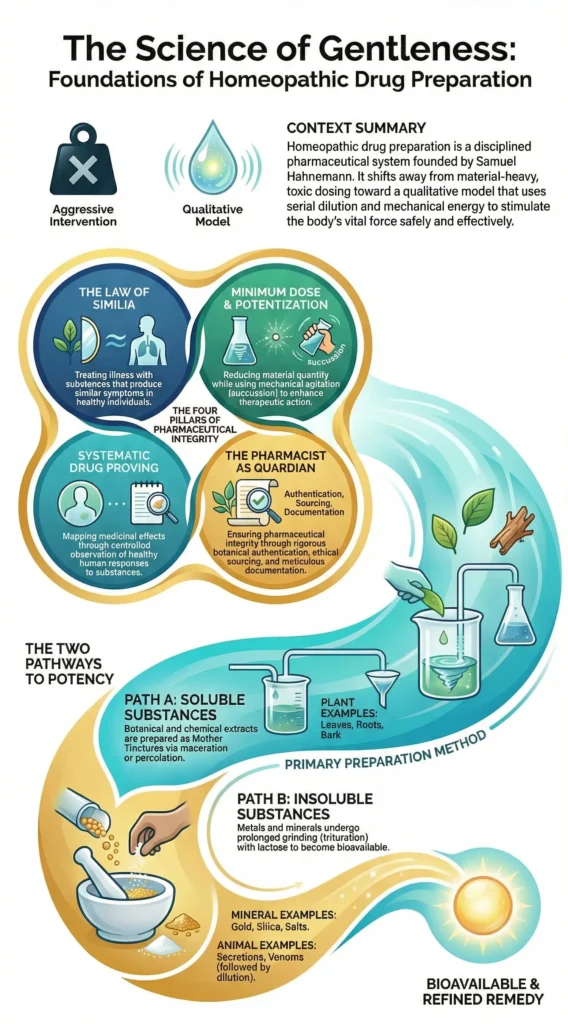
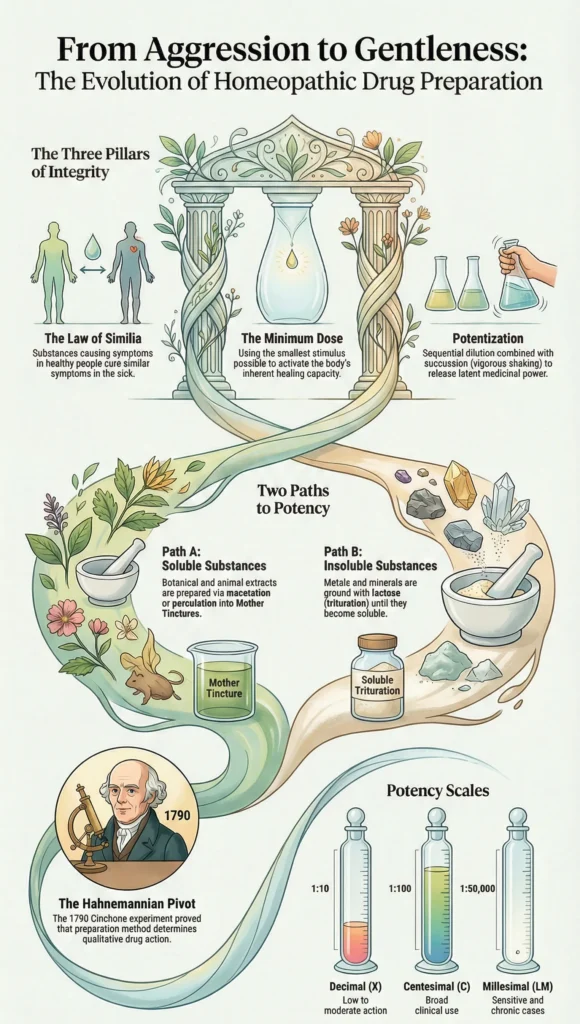
Homeopathic Drug Preparation: Principles, Potencies & Practical Techniques is a comprehensive and authoritative text designed to bridge classical homeopathic philosophy with modern pharmaceutical practice. The book presents a systematic and scientifically structured approach to the preparation, standardization, and dispensing of homeopathic medicines, making it an essential resource for students, educators, pharmacists, and practitioners of homeopathy.
Rooted in the foundational principles laid down by Samuel Hahnemann, the book explores the historical evolution of homeopathic pharmacy while clearly explaining the scientific rationale behind potentization, trituration, and succussion. Special emphasis is given to the law of minimum dose, drug dynamization, and the relevance of pharmaceutical calculations in ensuring accuracy, safety, and reproducibility of remedies. The text also integrates ethical standards and professional responsibilities, highlighting the importance of quality assurance and regulatory compliance in contemporary practice.
The book offers detailed coverage of raw material collection from botanical, mineral, and animal sources, along with correct methods of processing, preservation, and storage. Classical techniques such as maceration, percolation, and hand trituration are explained alongside modern mechanical and automated methods. This balanced approach ensures that readers understand both traditional procedures and emerging technological advancements in homeopathic drug manufacturing.
In addition to preparation techniques, the book addresses dosage forms, dispensing practices, labeling standards, shelf life, and legal requirements. Dedicated chapters on quality control, pharmacopoeial standards, and Good Manufacturing Practices (GMP) ensure alignment with national and international regulations. The inclusion of modern analytical tools, nano-research, and digital inventory systems reflects the evolving nature of homeopathic pharmacy in the global healthcare landscape.
Overall, this book serves as a complete guide to homeopathic drug preparation, combining theory, practical application, and professional insight. It is structured to support academic curricula, laboratory training, industrial production, and lifelong professional development in homeopathic pharmacy.
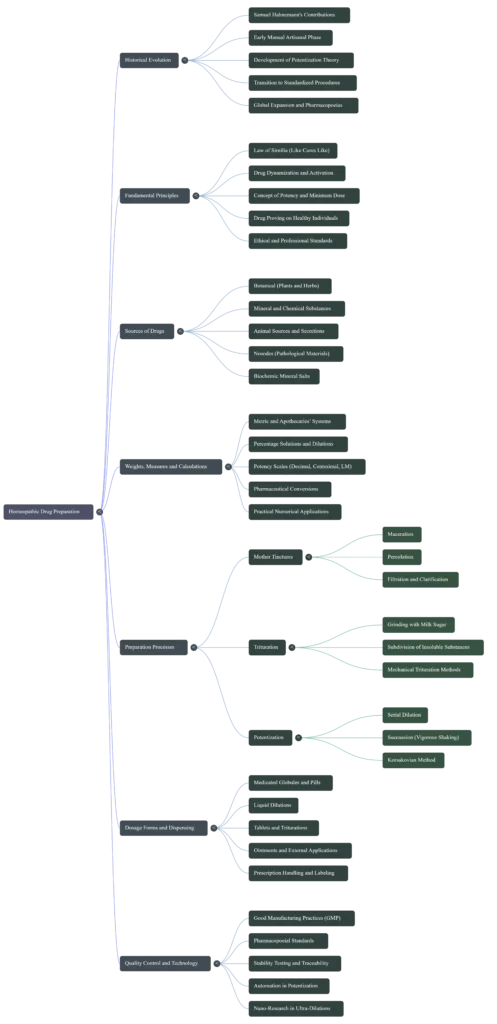
BOOK MAP
CHAPTERS
Chapter 1: Historical Evolution of Homeopathic Drug Preparation
This chapter traces the origin and development of homeopathic pharmacy from Hahnemann’s era to modern times. It highlights key pharmaceutical contributions, the evolution of potentization theory, and the global growth of homeopathic pharmacies.
Chapter 2: Fundamental Principles of Drug Preparation
The core philosophical and scientific principles governing homeopathic medicines are explained here. Topics include the law of similars, minimum dose, drug proving, sources of drugs, and ethical responsibilities of the pharmacist.
Chapter 3: Pharmaceutical Weights, Measures and Calculations
This chapter provides a clear understanding of metric and apothecaries’ systems, dilution calculations, potency scales, and pharmaceutical conversions essential for accurate drug preparation.
Chapter 4: Collection and Processing of Raw Materials
Detailed guidance is given on the collection, authentication, and processing of botanical, mineral, and animal drug sources. Environmental, seasonal, and storage considerations are also discussed.
Chapter 5: Preparation of Mother Tinctures
The chapter explains the definition, importance, and standard methods of preparing mother tinctures. It also covers alcohol strength selection, filtration techniques, quality evaluation, and storage.
Chapter 6: Trituration Process
This chapter focuses on the principles and procedures of trituration, especially for insoluble substances. Both manual and mechanical methods are explained with quality control measures.
Chapter 7: Succussion and Liquid Potentization
The science and practice of succussion are detailed here, including preparation of decimal, centesimal, LM, and Korsakovian potencies according to pharmacopoeial standards.
Chapter 8: Preparation of Different Dosage Forms
Various homeopathic dosage forms such as globules, liquid dilutions, tablets, ointments, and biochemic preparations are described with preparation and application methods.
Chapter 9: Practical Techniques in Dispensing
This chapter addresses real-world pharmacy practices including prescription handling, dispensing techniques, labeling norms, storage conditions, and legal record maintenance.
Chapter 10: Quality Control and Standardization
An in-depth discussion on GMP, pharmacopoeial standards, organoleptic and physicochemical evaluation, stability testing, and batch documentation is provided.
Chapter 11: Modern Technologies in Drug Preparation
The role of automation, advanced analytical tools, nano-research, and digital inventory systems in modern homeopathic pharmacy is explored.
Chapter 12: Industrial and Professional Applications
The final chapter focuses on industrial-scale manufacturing, regulatory compliance, professional roles, career opportunities, and the future scope of high-tech potentization.