₹ 999.00
$99.00
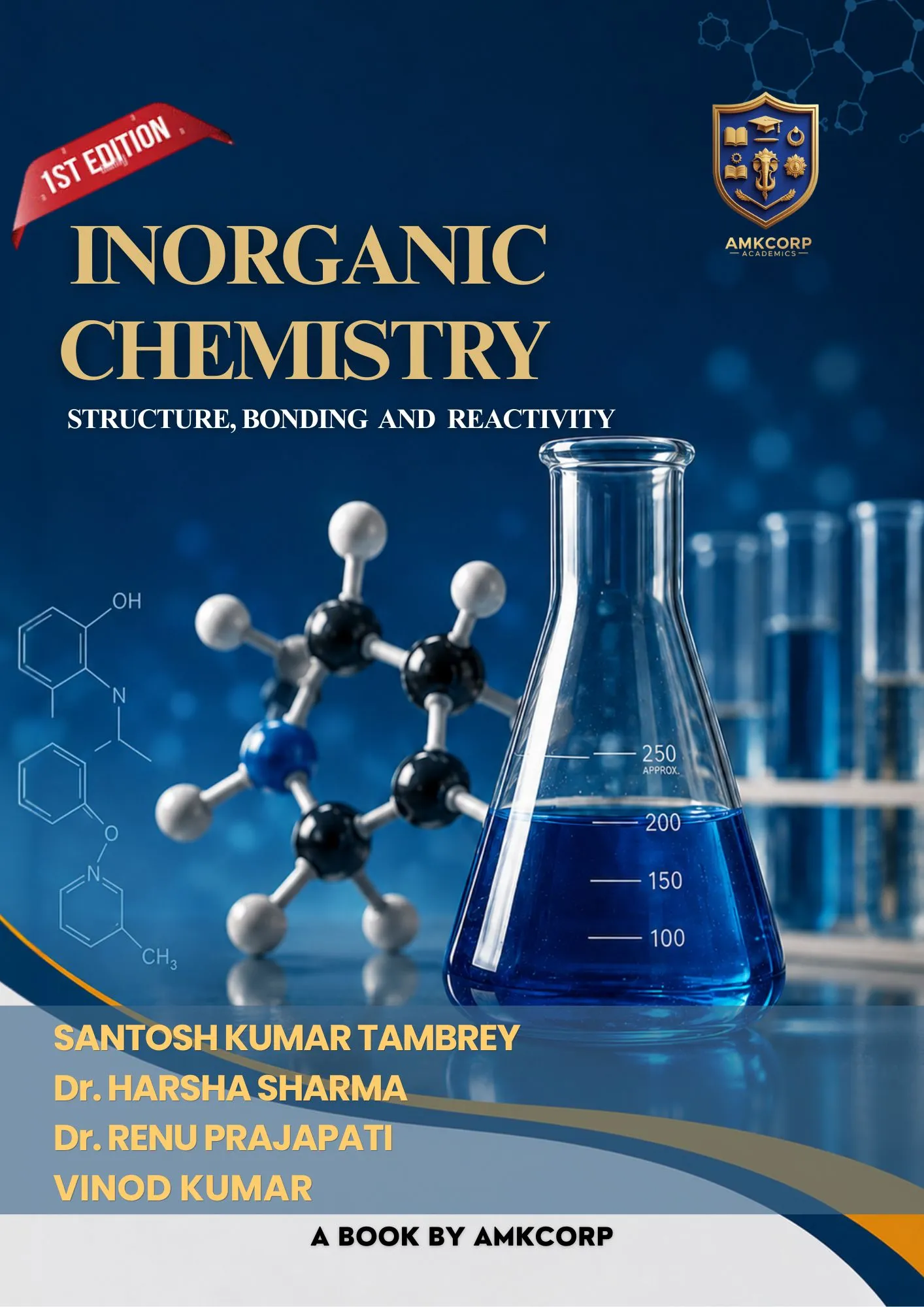
INORGANIC CHEMISTRY
STRUCTURE, BONDING, AND REACTIVITY
AUTHOR(S) -
SANTOSH KUMAR TAMBREY, Dr. HARSHA SHARMA,
Dr. RENU PRAJAPATI, VINOD KUMAR

DOI-10.61909/AMKEDTB052676
Genre/Subject – Chemistry, Inorganic Chemistry
Book code -AMKEDTB052676
pgs: 229
ISBN(P) -978-93-6556-007-7
ISBN(E) – 978-93-6556-006-0
Published – 28/05/2026
Edition – 1
BUY PRINT
BUY EBOOK
INTRODUCTION VIDEO

AUTHORS

SANTOSH KUMAR TAMBREY
Santosh Kumar Tambrey is an accomplished academician with over 17 years of teaching experience in Chemistry since 2008. He completed his M.Sc. in Chemistry in 2003 and qualified CSIR-NET (Lectureship), CSIR-NET (JRF), and CG-SET, reflecting his strong academic foundation. He is currently pursuing his Ph.D.
His areas of interest include Phytochemistry, Organic Synthesis, Green Chemistry, and Heterocyclic Chemistry.
Santosh Kumar Tambrey has published 5 research papers and contributed to a book chapter. He is known for his dedication to teaching, research, and promoting practical and concept-based learning among students.

Dr. HARSHA SHARMA
Dr. Harsha Sharma is presently serving as an Associate Professor at CMD PG College. Bilaspur C G She began her academic career as an Assistant Professor on 2nd March 1998 and has been continuously engaged in teaching Undergraduate (UG) and Postgraduate (PG) students since then.
Her contribution to the field of education and research has been highly commendable. She has successfully guided 12 M.Phil. scholars and has published 24 research papers in various national and international journals.
Dr. Sharma is also a Member of the Board of Studies of Atal Bihari Vajpayee University Bilaspur and is associated with several reputed research journals. She actively participates in academic, curriculum development, and research activities. Her vast teaching experience, dedication, discipline, and student-centered approach have established her as an inspiring educator and respected academician.
Her continuous contribution to education and research has always been a source of inspiration for students and colleagues alike.

Dr. RENU PRAJAPATI
Dr. Renu Prajapati is a distinguished academician and researcher with over 14 years of teaching experience at Govt. Vivekanand P.G. College. She holds M.Sc., M.Phil., and Ph.D. degrees in Chemistry and has developed strong expertise in the fields of Spectroscopy and Diffraction Methods.
Dr. Prajapati has made significant contributions to academic research through the publication of 15 research papers in reputed national and international journals. She is also the author of the book “Group Theory, Spectroscopy and Diffraction Method,” which reflects her deep understanding and dedication to the subject of Chemistry.
In recognition of her academic excellence and research potential, she was awarded the prestigious RGNF-JRF Fellowship. Her commitment to teaching, research, and scientific advancement continues to inspire students and scholars in the field of Chemical Sciences.

VINOD KUMAR
Vinod Kumar is working as a Guest Lecturer in the Department of Chemistry. He completed his B.Sc. in 2019 and M.Sc. in Chemistry in 2021 from Pt. Ravishankar Shukla University, Raipur (C.G.). He qualified CSIR-UGC NET (Chemical Science) in June 2023 and December 2023, along with MP SET 2023 in Chemical Science. He has around 3 years of teaching experience in the field of Chemistry. He has actively participated in various national and international seminars and workshops, including the International Conference on Recent Trends in Chemical Science and a State Level Workshop on Operation and Maintenance of Equipments. His academic interests include inorganic chemistry, chemical bonding, and reaction mechanisms.
ABOUT BOOK / ABSTRACT
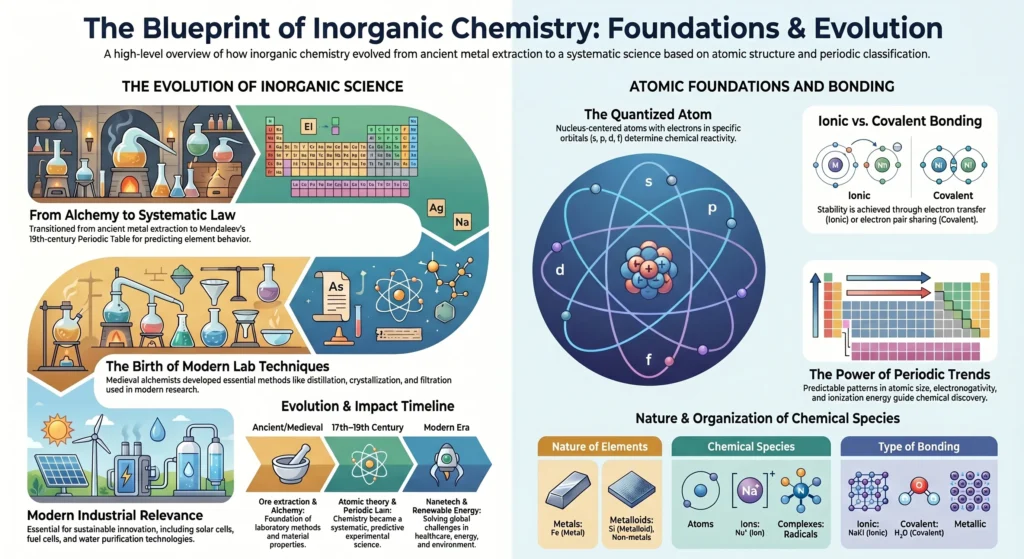
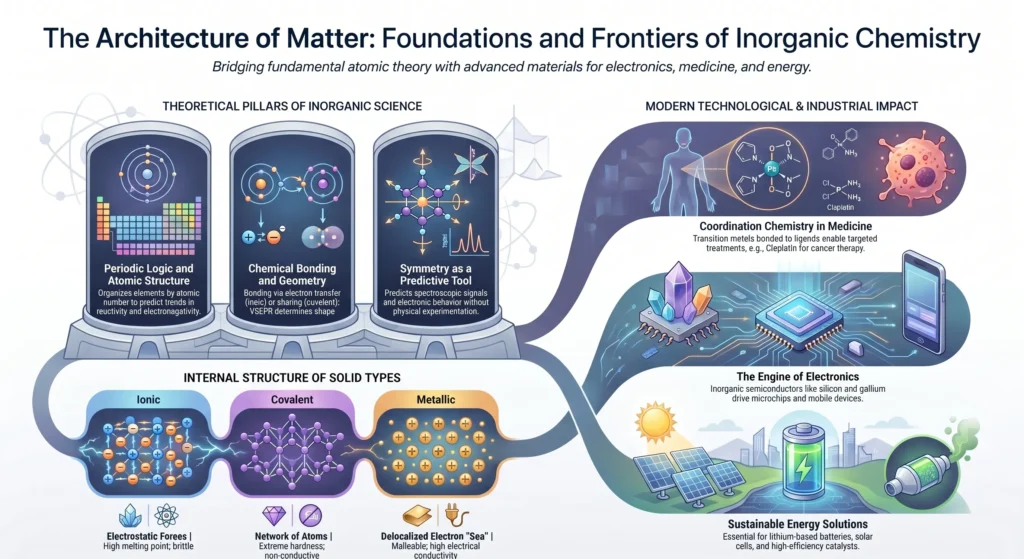
Inorganic Chemistry: Structure, Bonding, and Reactivity is a comprehensive and modern textbook designed to provide students, researchers, and educators with a strong foundation in the principles and applications of inorganic chemistry. The book systematically explores the fundamental concepts governing atomic structure, chemical bonding, molecular symmetry, coordination chemistry, solid-state materials, and the chemistry of main group and transition elements. Written in a clear and student-friendly manner, it bridges classical theories with modern scientific advancements to help readers understand both theoretical and practical aspects of inorganic science.
The book begins with an introduction to the nature, evolution, and importance of inorganic chemistry in scientific and industrial development. It then discusses atomic theory and periodic classification, enabling readers to understand periodic trends, electronic configurations, and the behavior of elements. Detailed chapters on chemical bonding and molecular symmetry provide insight into the structure and stability of compounds using modern theoretical approaches such as VSEPR theory, molecular orbital theory, and group theory.
Special emphasis has been given to coordination chemistry, crystal field theory, ligand field theory, and the behavior of transition metal complexes, which form the backbone of modern inorganic research and industrial catalysis. The text also introduces solid-state chemistry, including crystal structures, defects, conductivity, and magnetic properties of materials that are widely used in technology and engineering applications.
The book further explores acid-base theories and solvent systems, helping readers understand chemical reactions in different media. Comprehensive coverage of main group elements and transition elements provides detailed knowledge of their physical and chemical properties, reactivity patterns, and industrial significance. In addition, the final chapter introduces organometallic chemistry and bioinorganic systems, highlighting the role of metals in biological processes, catalysis, medicine, and advanced materials science.
Designed according to modern academic curricula, this book serves as an ideal resource for undergraduate and postgraduate students of chemistry and related disciplines. The structured presentation, conceptual clarity, and practical relevance make it valuable not only for academic learning but also for competitive examinations and research preparation. By integrating theory with applications, the book encourages readers to appreciate the significance of inorganic chemistry in everyday life, environmental sustainability, medicine, nanotechnology, and industrial innovation.
Overall, Inorganic Chemistry: Structure, Bonding, and Reactivity aims to develop analytical thinking, conceptual understanding, and scientific curiosity among readers while providing a strong platform for advanced studies and future research in chemical sciences.
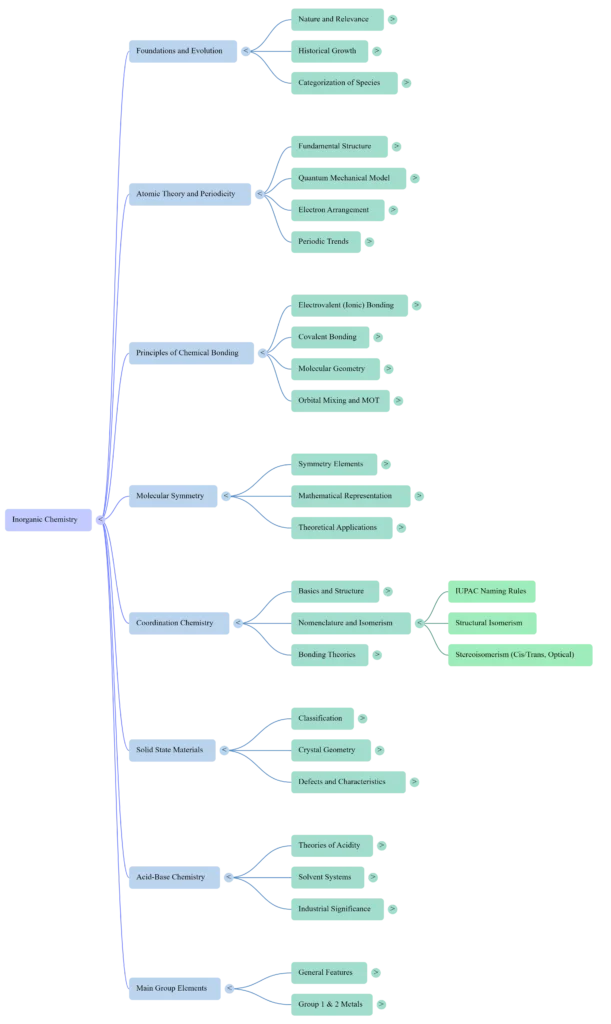
BOOK MAP
CHAPTERS
Chapter 1: Foundations and Evolution of Inorganic Chemistry
This chapter introduces the basic nature, scope, and historical development of inorganic chemistry. It explains the importance of inorganic compounds in science, technology, and industrial applications.
Chapter 2: Atomic Theory and Periodic Classification
This chapter discusses atomic structure, quantum mechanical concepts, and electronic configurations. It also explains periodic trends and the organization of elements in the periodic table.
Chapter 3: Principles of Chemical Bond Formation
The chapter focuses on ionic and covalent bonding, molecular geometry, hybridization, and molecular orbital theory. It helps readers understand how atoms combine to form stable compounds.
Chapter 4: Molecular Symmetry and Theoretical Applications
This chapter explains symmetry elements, symmetry operations, and group theory concepts. It highlights the role of symmetry in molecular structure determination and spectroscopy.
Chapter 5: Concepts and Theories of Coordination Compounds
The chapter introduces coordination chemistry, nomenclature, bonding theories, crystal field theory, and ligand field concepts. It provides insight into the behavior and applications of metal complexes.
Chapter 6: Fundamentals of Solid State Materials
This chapter covers crystal structures, unit cells, lattice systems, defects, and solid-state properties. It also discusses conductivity, magnetism, and technological applications of solid materials.
Chapter 7: Acid-Base Chemistry and Solvent Systems
The chapter explains different acid-base theories and the behavior of reactions in various solvents. It also explores industrial and commercial applications of acid-base chemistry.
Chapter 8: Chemistry of Main Group Elements
This chapter discusses the chemistry of representative elements, including alkali metals, alkaline earth metals, and p-block elements. It explains their properties, compounds, and periodic behavior.
Chapter 9: Chemistry of Transition and f-Block Elements
The chapter focuses on transition metals, lanthanides, and actinides, including their oxidation states, coordination behavior, and catalytic importance in industries.
Chapter 10: Organometallic and Biological Inorganic Systems
This chapter introduces organometallic compounds, metal-carbon bonding, catalytic processes, and the biological role of metals in living systems. It also highlights recent developments in inorganic chemistry.