₹ 999.00
$99.00
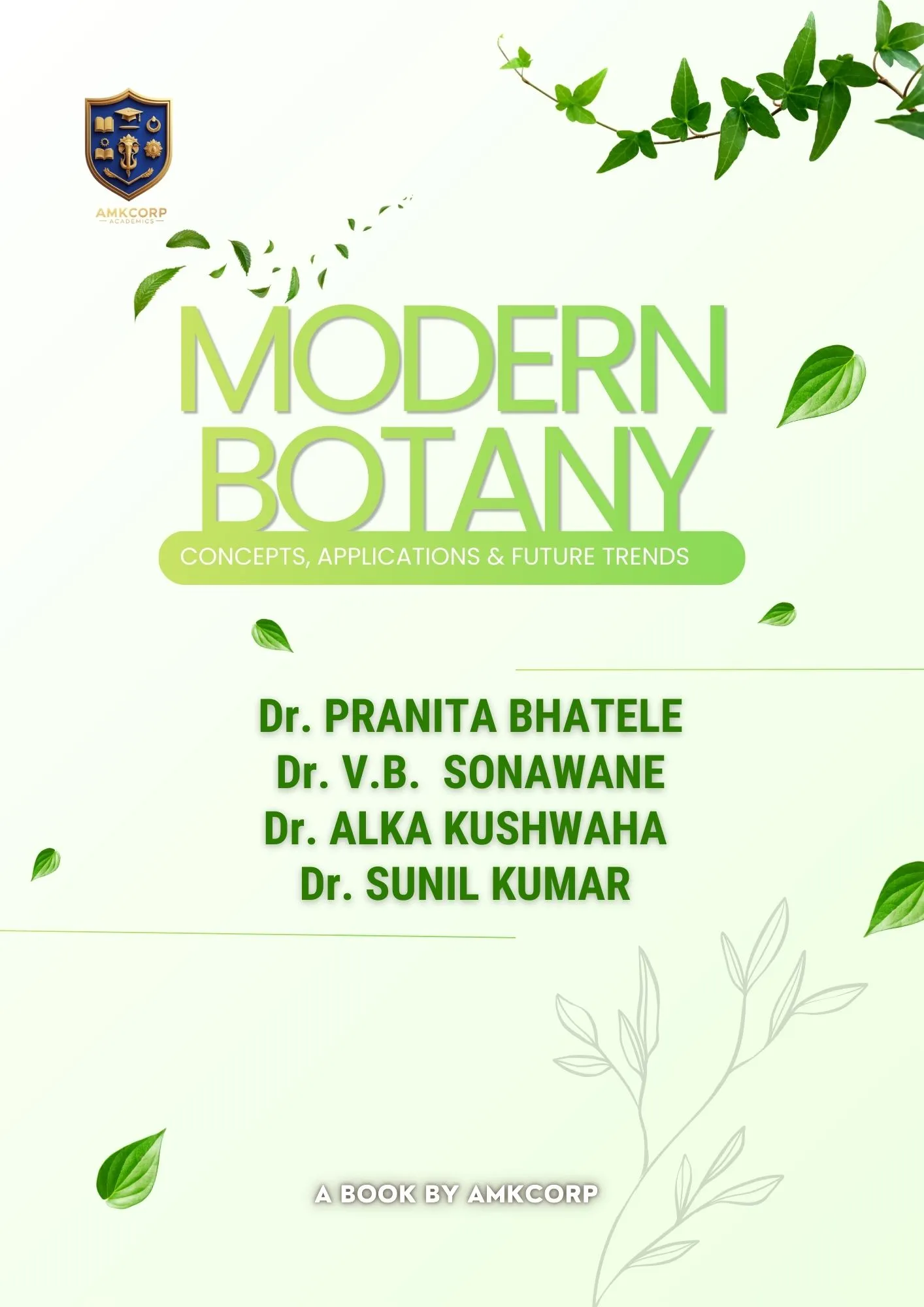
MODERN BOTANY
CONCEPTS, APPLICATIONS & FUTURE TRENDS
AUTHOR(S) -
Dr. PRANITA BHATELE,
Dr. VITTHAL BHAGAWAN SONAWANE,
Dr. ALKA KUSHWAHA, Dr. SUNIL KUMAR

DOI – 10.61909/AMKEDTB032658
Genre/Subject – Botany
Book code – AMKEDTB032658 pgs: 216
ISBN(P) – 978-93-6556-409-9
ISBN(E) – 978-93-6556-051-0
Published – 14/03/2026
Edition – 1
BUY PRINT

BUY EBOOK
INTRODUCTION VIDEO

AUTHORS

Dr. PRANITA BHATELE
Dr. Pranita Bhatele is an Assistant Professor of Botany at Government College Kundam, Jabalpur, with expertise in Molecular Biology and Bioinformatics. She holds a Ph.D. in Biotechnology from IIT Roorkee and has qualified prestigious national examinations including DBT-JRF, CSIR-NET (LS), ASRB-NET, and MPSET. With over a decade of experience in teaching and research, she has served in various academic roles across government and autonomous colleges. Her research spans plant molecular biology, genetic diversity analysis, bioinformatics, and functional genomics, reflected in numerous peer-reviewed publications, book chapters with international publishers, and funded fellowships from DBT, INSA, and JNCASR. She actively contributes to academic development through research training programs, workshops, scientific writing, and interdisciplinary collaborations.

Dr. VITTHAL BHAGAWAN SONAWANE
Dr. V. B. Sonawane is currently working as an Assistant Professor at the Maratha Vidya Prasarak Samaj’s Arts, Commerce and Science College, Try ambakeshwar, District Nashik, Maharashtra. He obtained his Ph.D. in 2016 from the Department of Botany, Research Centre, K.T.H.M. College, Nashik, affiliated with Savitribai Phule Pune University, Pune.
He has been teaching Botany at the Undergraduate and Postgraduate levels for more than 20 years. He has participated in and presented several Research papers at National and International Seminars and Conferences. He has published a Patent and book chapters and has successfully completed one UGC Minor Research Project. In addition, he has received awards from different agencies and is a recognized Research Guide at Savitribai Phule Pune University, Pune.

Dr. ALKA KUSHWAHA
Dr. Alka Kushwaha is Associate Professor ,Department of Botany, D.A-V College, Kanpur ,(U.P.). She has worked as Assistant Professor in D.G. College, Kanpur during 2004-2010 .She acquired Doctorate in Plant Pathology from C.S.J.M.University, Kanpur( U.P.).She is Councillor of The Society of Plant Protection Sciences, New Delhi.Executive Member of Kanpur University Teacher Association and is Life Member of 6 different Scientific Societies. She has been awarded with Saraswat Samman (2018) by Indian Thinker Society and has received Certificate of Honour (2018) from Pyramid Spiritual Society Movement India and also awarded with Best Poster Presentation Award(2018) by ICAR-NCIPM, New Delhi. She has been Organising Committee Member of two National Conferences, has availed 2 fellowships and has published4books, 32 research papers in various National and International symposia.
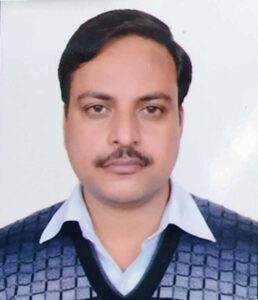
Dr. SUNIL KUMAR
Dr. Sunil Kumar is currently working as an Assistant Professor in Botany at Dayanand Anglo-Vedic (P. G.) College, Kanpur, Uttar Pradesh (India). He has total teaching experience of 06 years at U. G. and P. G. level. He has completed his Ph.D. from M. J. P. Rohilkhand University, Bareilly, Uttar Pradesh (India). He is the author of onebooksand published 06 International and 03 National research papers Scopus and Web of Science indexed. He also has 01 patent publication to his credit. He has vast experience in the field of Plant stress Physiology, Medicinal plants, Ethnobotany, Ecology and Plant Pathology. Apart from academic work, hehas been engaged in administrative work also at Institute level.
ABOUT BOOK / ABSTRACT
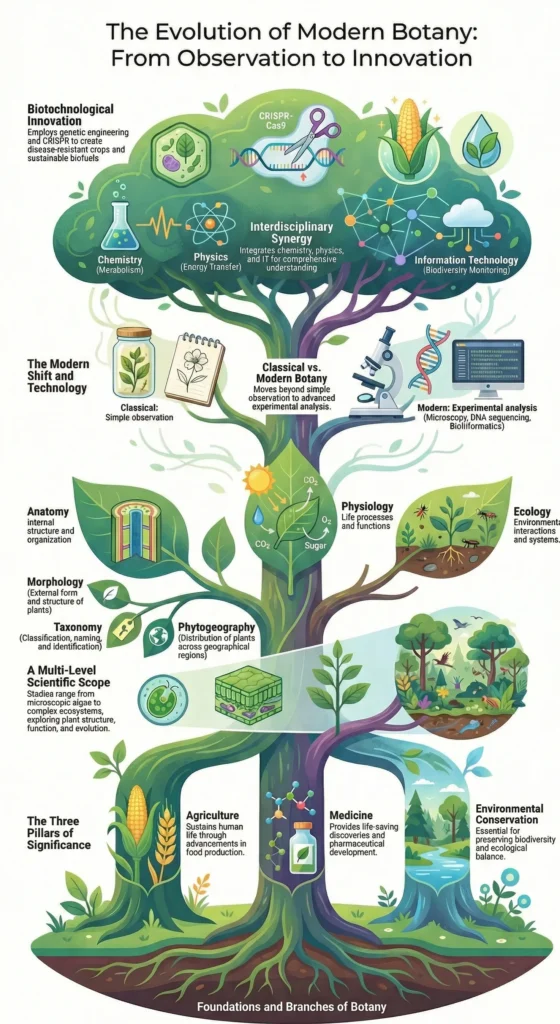
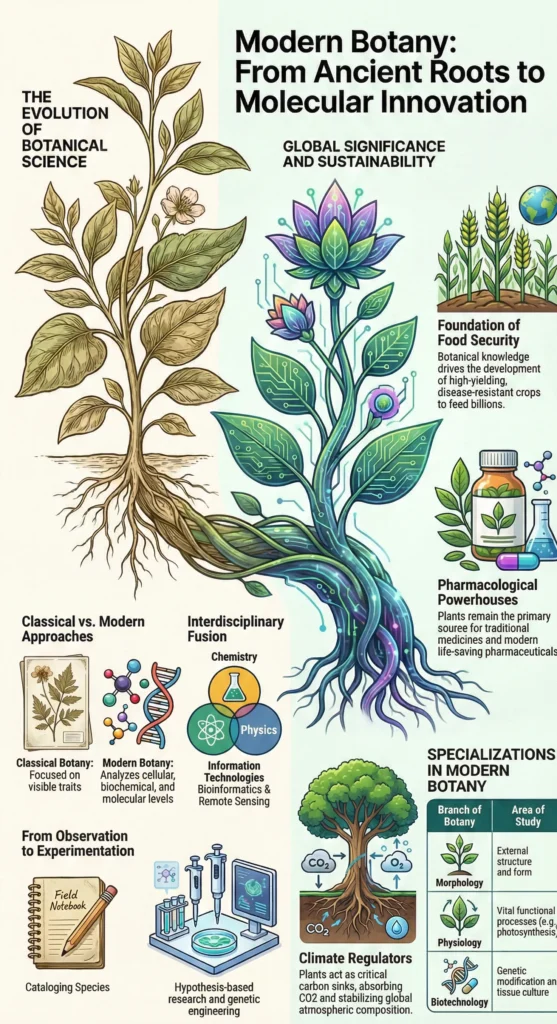
Modern Botany: Concepts, Applications & Future Trends offers a comprehensive and contemporary exploration of plant sciences, integrating classical botanical knowledge with cutting-edge advances in molecular biology, biotechnology, ecology, and digital innovations. Designed for undergraduate and postgraduate students, researchers, and educators, this book presents botany as a dynamic and interdisciplinary science that plays a crucial role in addressing global challenges such as food security, climate change, biodiversity loss, and sustainable development.
The book begins by establishing a strong conceptual foundation, introducing the scope, significance, and evolving nature of botany in the modern scientific landscape. It highlights the transition from traditional descriptive approaches to experimental, molecular, and systems-based plant sciences. Core biological principles such as plant cell structure, biomolecules, metabolism, anatomy, physiology, growth, and development are explained with clarity, enabling readers to understand plants as integrated living systems.
A significant strength of this book lies in its balanced coverage of both structure and function—from cellular signaling and gene regulation to whole-plant physiology and ecological interactions. Detailed discussions on plant reproduction, genetics, and molecular biology bridge the gap between fundamental biology and applied research. The inclusion of advanced topics such as epigenetics, genomic tools, and CRISPR-based genome editing reflects the rapidly evolving nature of plant science and prepares readers for modern research and industrial applications.
The book also emphasizes the practical relevance of botany through dedicated chapters on plant biotechnology, genetic engineering, sustainable agriculture, medicinal botany, and environmental conservation. Emerging areas such as artificial intelligence in plant research, digital phenotyping, urban green systems, and smart agriculture are explored to provide a forward-looking perspective. These sections highlight how technological innovations are reshaping plant science and contributing to sustainable and resilient ecosystems.
Written in a clear, systematic, and student-friendly manner, Modern Botany: Concepts, Applications & Future Trends encourages critical thinking and interdisciplinary learning. It not only equips readers with essential theoretical knowledge but also inspires them to appreciate plants as vital components of life on Earth and as key drivers of future scientific and technological progress.
BOOK MAP
CHAPTERS
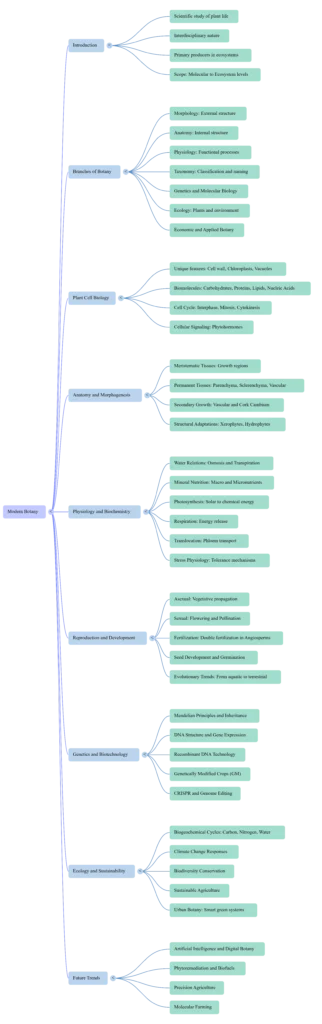
Chapter 1: Introduction to Modern Botany
Introduces the scope, significance, and evolution of botany from classical roots to modern interdisciplinary plant sciences. It highlights the role of botany in sustainability, environmental management, and global development.
Chapter 2: Plant Cell Biology and Biomolecules
Explains plant cell organization, cell wall structure, biomolecules, metabolism, and cellular signaling. The chapter provides a molecular foundation for understanding plant structure and function.
Chapter 3: Plant Anatomy and Morphogenesis
Covers internal plant structure, tissue systems, secondary growth, and developmental processes. It emphasizes structural adaptations and morphogenetic patterns in plants.
Chapter 4: Plant Physiology and Biochemical Processes
Focuses on vital physiological processes such as water relations, photosynthesis, respiration, nutrient transport, growth regulators, and stress physiology.
Chapter 5: Plant Reproduction and Development
Describes asexual and sexual reproduction, pollination, fertilization, seed development, embryogenesis, and evolutionary reproductive strategies.
Chapter 6: Plant Genetics and Molecular Biology
Introduces principles of inheritance, DNA structure, gene expression, plant genomes, epigenetics, and genetic regulation of traits.
Chapter 7: Plant Biotechnology and Genetic Engineering
Explores tissue culture, recombinant DNA technology, genetically modified crops, and genome editing tools such as CRISPR.
Chapter 8: Plant Diversity, Taxonomy, and Evolution
Discusses plant classification, major plant groups, molecular taxonomy, phylogeny, and evolutionary trends.
Chapter 9: Plant Ecology and Environmental Botany
Examines plant–environment interactions, ecosystems, climate change responses, stress adaptations, and biodiversity conservation.
Chapter 10: Future Trends and Applied Botany
Highlights emerging fields including AI in botany, sustainable agriculture, medicinal plants, urban green systems, and future challenges in plant science.