₹ 999.00
$99.00
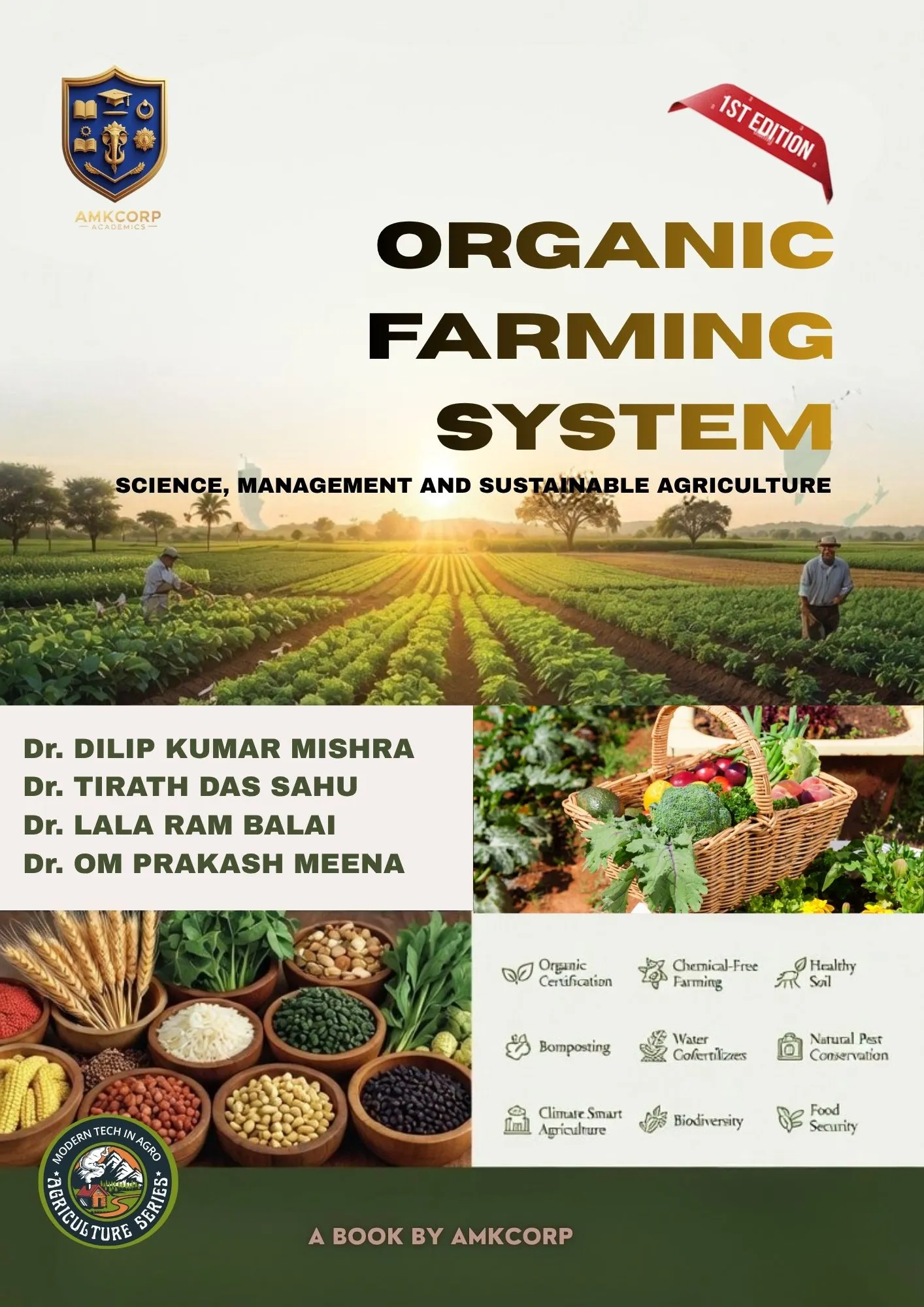
ORGANIC FARMING SYSTEM
SCIENCE, MANAGEMENT AND SUSTAINABLE AGRICULTURE
AUTHOR(S) -
Dr. DILIP KUMAR MISHRA
Dr. TIRATH DAS SAHU
Dr. LALA RAM BALAI
Dr. OM PRAKASH MEENA

DOI – 10.61909/AMKEDTB072680
Genre/Subject – Agriculture, Organic Farming
Book code -AMKEDTB072680
pgs: 223
ISBN(P) -978-93-6556-017-6
ISBN(E) – 978-93-6556-016-9
Published – 06/07/2026
Edition – 1
BUY PRINT

BUY EBOOK
INTRODUCTION VIDEO
AUTHORS
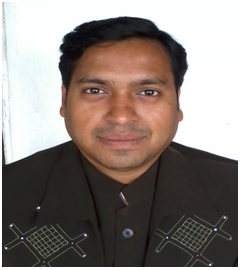
Dr. DILIP KUMAR MISHRA
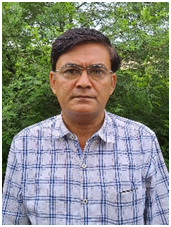
Dr. D. K. Mishra passed M.Sc. (Ag.) in Horticulture from Allahabad Agricultural Institute, Naini, Prayagraj (formerly Allahabad), Uttar Pradesh, and obtained his Ph.D. from Chhatrapati Shahu Ji Maharaj University, Kanpur. He qualified the ASRB-NET examination in 1998. He is currently working as a Subject Matter Specialist (Horticulture) at Krishi Vigyan Kendra, Kasturbagram, Indore, Madhya Pradesh. Having more than 25 years of experience in the field of agriculture, Dr. D. K. Mishra has guided 20 M.Sc. (Ag.) students. He has received 12 national-level awards and honours from various professional societies. He has published 35 research papers in national and international journals, 2 books, 4 book chapters, 2 manuals, 15 technical bulletins, and 45 popular articles. Dr. Mishra has delivered 150 lectures at state- and national-level seminars and workshops. He has also delivered 40 radio talks and participated in 45 television programmes broadcast by Prasar Bharati and other national channels.
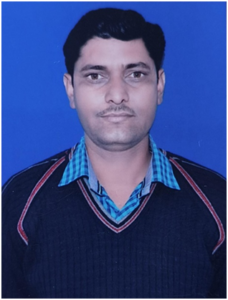
Dr. TIRATH DAS SAHU
Tirath Das Sahu completed his B. Sc. (Agriculture) from Indira Gandhi KrishiVishwavidyalaya, Raipur (Chhattisgarh) during the year 1999-2000, M. Sc. (Agriculture) from Bidhan Chandra KrishiVishwavidyalay, Mohanpur (West Bengal) in the Department of Agricultural Chemistry and Soil Science during 2003-2004 and Ph.D. (Agriculture) from Indira Gandhi KrishiVishwavidyalaya, Raipur (Chhattisgarh) in the Department of Soil Science during 2010-2011. He is presently posted as Assistant Professor in Soil Science and Agricultural Chemistry at College of Agriculture and Research Station, Bemetara (Indira Gandhi KrishiVishwavidyalaya, Raipur) Chhattisgarh. He has 18 years’ experience of teaching and research in the field of Agriculture. He has guided 4 M. Sc. students as major adviser and 3 students as member of advisory committee for their thesis work. He has published more than 20 papers in international, national and local journals.
Dr. LALA RAM BALAI
Dr. Lala Ram Balai is an Assistant Professor in the Department of Agronomy at the College of Agriculture, Lalsot, Dausa, under Sri Karan Narendra Agriculture University, Jobner, Rajasthan. He earned his M.Sc. (Ag.) and Ph.D. in Agronomy from Swami Keshwanand Rajasthan Agriculture University, Bikaner, and completed his B.Sc. (Ag.) from BBD Government College, Chimanpura, Shahpura, Jaipur (affiliated with the University of Rajasthan, Jaipur). He has qualified the ICAR–ASRB NET examination. With over 14 years of experience in teaching, research, and extension, he has developed expertise in crop production management, organic farming, and integrated nutrient management. Dr. Balai has published extensively in reputed national and international journals and has made significant contributions to research on green gram, wheat, groundnut, and Indian mustard.

Dr. OM PRAKASH MEENA
Dr. Om Prakash Meena is a Distinguished University Professor of Agronomy and Assitant Director Student Welfare, College of Agriculture, Jhilai, Niwai, Tonk (SKNAU, Jobner). Prof. Meena obtained Ph. D Agronomy (2005) from College of Agriculture, (MPUAT, Udaipur); Prof. Meena have made outstanding research contribution in the field of Cropping Systems Research, Plant Nutrition and crop Management in AINP arid legumes. He has published 35 research papers, 7 annual reports, 07 conference/symposia/seminar papers, 02 extended summaries and 03 abstracts. As a distinguished academician, he is teaching advance courses of Agronomy to the students of PhD (Agronomy), MSc (Ag) Agronomy and BSc (Hons) Agriculture and guiding PhD (Agronomy) and MSc (Ag) Agronomy students. Prof. Meena have three significant achievements. First achievement a long-term experiment was initiated to evaluate the production potential, sustainability, resource-use efficiency and economics of nine pearl millet based cropping systems for the purpose continuous adoption of this pear millet-wheat system in the region with poor crop management practices results in loss of soil fertility due to multiple nutrient deficiencies at same root zone level. This decline in soil quality results in a decrease in factor productivity. Crop diversification has been recognized as an effective strategy for achieving the objectives of food security, nutrition security, income growth, poverty alleviation, and employment generation, judicious use of land and water resources, sustainable agricultural development and environmental improvement. Diversification of pearl millet-wheat based system to increase productivity per unit resource and fulfil basic needs for pulses, cereals, oilseeds and medicinal and regulating farm income, with standing weather aberrations, controlling price fluctuation, ensuring balanced food supply, conserving natural resources reducing the chemical fertilizer and pesticide loads ensuring environmental safety and creating employment opportunity.
ABOUT BOOK / ABSTRACT
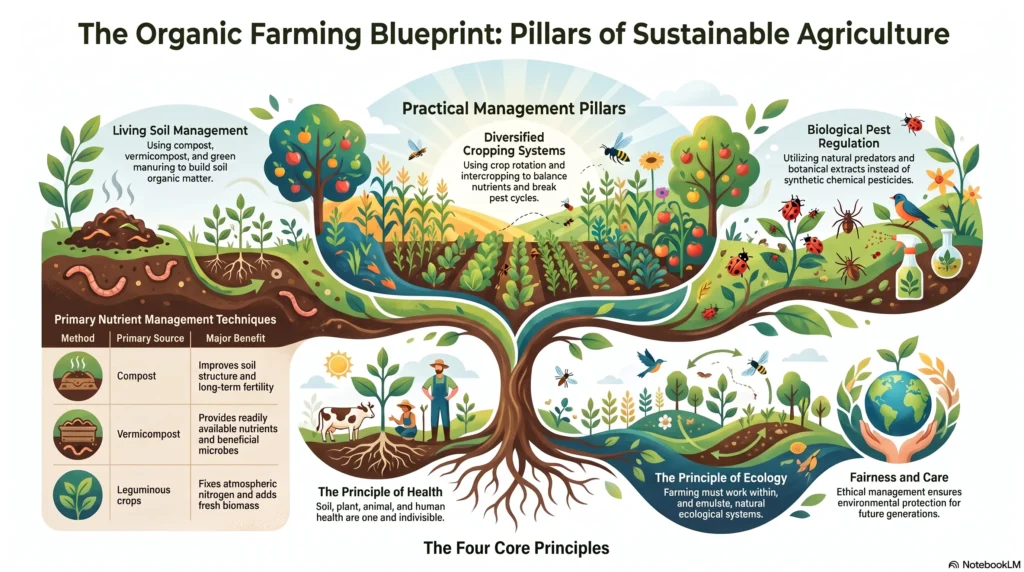
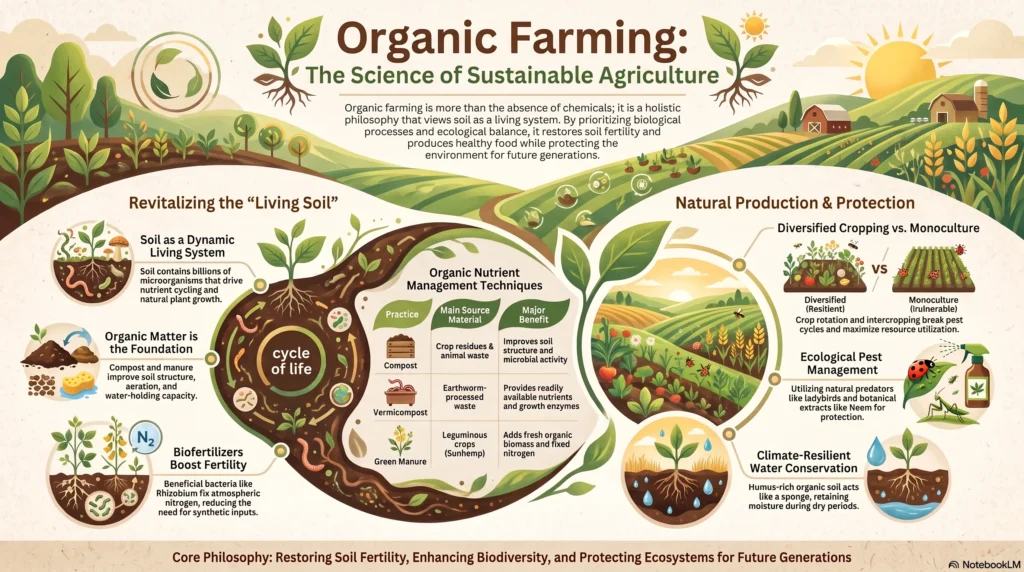
Ogranic Farming System: Science, Management and Sustainable Agriculture is a comprehensive academic resource that presents the scientific principles, practical approaches, and modern developments shaping organic agriculture across the world. Designed for undergraduate and postgraduate students, researchers, extension professionals, policymakers, and progressive farmers, the book provides a balanced understanding of ecological farming systems while addressing the growing need for sustainable food production. As concerns over environmental degradation, declining soil fertility, biodiversity loss, and food safety continue to rise, organic farming has become a globally recognized approach for achieving resilient and climate-smart agriculture. This book explains the fundamental concepts of organic farming in a clear and systematic manner, enabling readers to understand both the philosophy and practical implementation of organic production systems. Beginning with the historical evolution, guiding principles, and global status of organic agriculture, the book explores the importance of maintaining healthy soils through organic nutrient management, composting, green manuring, biofertilizers, and efficient nutrient cycling. It further discusses sustainable crop production practices including crop rotation, intercropping, weed management, irrigation, and quality seed management. Special emphasis is given to eco-friendly pest and disease management strategies using biological control agents, botanical extracts, and integrated approaches that minimize environmental impact while maintaining crop productivity. The book also covers organic horticulture, diversified farming systems, livestock integration, farm waste recycling, and resource conservation practices that contribute to long-term agricultural sustainability. Recognizing the importance of quality assurance and consumer confidence, dedicated chapters explain national and international organic certification systems, labeling standards, and participatory guarantee frameworks. Readers are also introduced to the economic aspects of organic agriculture, including value addition, marketing channels, export opportunities, entrepreneurship, and government support schemes. The book highlights the crucial role of agricultural extension, digital technologies, farmer training, and knowledge dissemination in accelerating the adoption of organic farming practices. Real-world examples, practical insights, and emerging innovations provide a strong connection between scientific knowledge and field application. The concluding chapters examine the future of organic agriculture in the context of climate change, precision farming technologies, urban agriculture, Sustainable Development Goals, and ongoing research priorities. Written in a reader-friendly style with updated concepts and logical organization, this book serves as an excellent learning resource for academic institutions and a practical reference for professionals working in sustainable agriculture. By integrating scientific evidence with practical management strategies, it promotes environmentally responsible farming, improved soil health, enhanced biodiversity, safer food production, and economically viable agricultural systems. Overall, this book aims to inspire a deeper understanding of organic agriculture and support the transition toward resilient, productive, and sustainable farming systems for present and future generations.
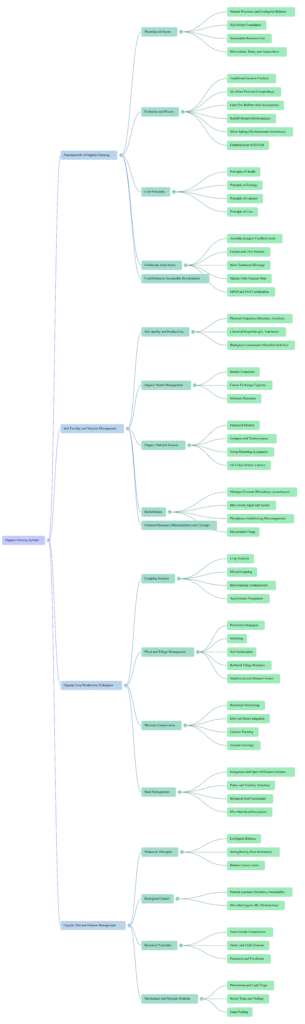
BOOK MAP
CHAPTERS
Chapter 1: Farming Fundamentals of Organic
This chapter introduces the concept, history, principles, and objectives of organic farming. It provides an understanding of the global and national significance of organic agriculture and its contribution to sustainable development.
Chapter 2: Soil Fertility and Organic Nutrient Management
This chapter explains soil health, organic nutrient sources, composting techniques, green manuring, and biofertilizers. It emphasizes sustainable soil fertility management for long-term agricultural productivity.
Chapter 3: Organic Crop Production Techniques
This chapter discusses crop rotation, mixed cropping, intercropping, weed management, irrigation practices, and seed management. It focuses on environmentally sound cultivation techniques that enhance productivity while conserving natural resources.
Chapter 4: Organic Pest and Disease Management
This chapter presents biological control methods, botanical pesticides, integrated pest management, and preventive crop protection strategies. It demonstrates eco-friendly approaches to minimizing crop losses without synthetic chemicals.
Chapter 5: Organic Horticultural Production
This chapter covers organic cultivation of fruits, vegetables, spices, medicinal plants, protected cultivation, and agroforestry systems. It highlights diversified production methods that improve farm profitability and sustainability.
Chapter 6: Integrated Organic Farming Systems
This chapter explains the integration of livestock, dairy, poultry, waste recycling, and crop production into a unified farming system. It illustrates how resource recycling improves efficiency and farm resilience.
Chapter 7: Organic Standards and Certification
This chapter provides detailed information on certification procedures, organic standards, quality assurance systems, labeling requirements, and Participatory Guarantee Systems (PGS). It helps readers understand regulatory frameworks for organic products.
Chapter 8: Organic Agribusiness and Marketing
This chapter explores the economics of organic farming, value addition, processing, marketing channels, export opportunities, and government support. It prepares readers to understand commercial aspects of organic agriculture.
Chapter 9: Extension, Education and Adoption
This chapter discusses agricultural extension services, farmer training, digital technologies, successful adoption models, and challenges in expanding organic farming. It emphasizes knowledge transfer and capacity building for sustainable agriculture.
Chapter 10: Emerging Trends in Organic Agriculture
This chapter examines climate-resilient organic farming, precision agriculture, urban organic farming, Sustainable Development Goals, and future research opportunities. It offers insights into innovations that will shape the future of sustainable agricultural systems.